
Your Kids Can Solve Their Own Fights
Three moves that turn screaming matches into the moment you realize your children are better negotiators than most adults.
Kids who solve their own fights are practicing a skill most adults never learned.
- Kids who negotiate screen time, split resources, and recover from blowups without needing you to pick a winner.
- The move: narrate both sides, name the stalemate, then hand them the problem and wait.
Last Tuesday, two kids wanted the same seat on the couch. Forty-five seconds of yelling. Then one said, "What if we switch at the commercial break?" The other thought about it, countered with "every ten minutes," and they shook on it.
Nobody told them to do that. They just... did it. Because they'd practiced.
That moment? That's the whole game. Not the fight stopping -- that's just noise reduction. The real win is watching your kids build a skill most adults still struggle with: solving a conflict without a third party making the call.
Here's how you get there.
Refereeing teaches kids that conflict gets them a judge.
Mediating teaches them they can work it out.
The Problem With Playing Referee
When you jump in and pick a side, you're not actually resolving anything. You're just making a ruling. And what do kids learn from rulings? How to build a better case next time. How to cry louder, tattle faster, look more innocent.
Research on sibling conflict backs this up: when parents act as judges, children get better at fighting for validation, not at finding solutions. When parents act as mediators -- helping each child feel heard, then stepping back -- kids develop negotiation skills they carry into every relationship for the rest of their lives.
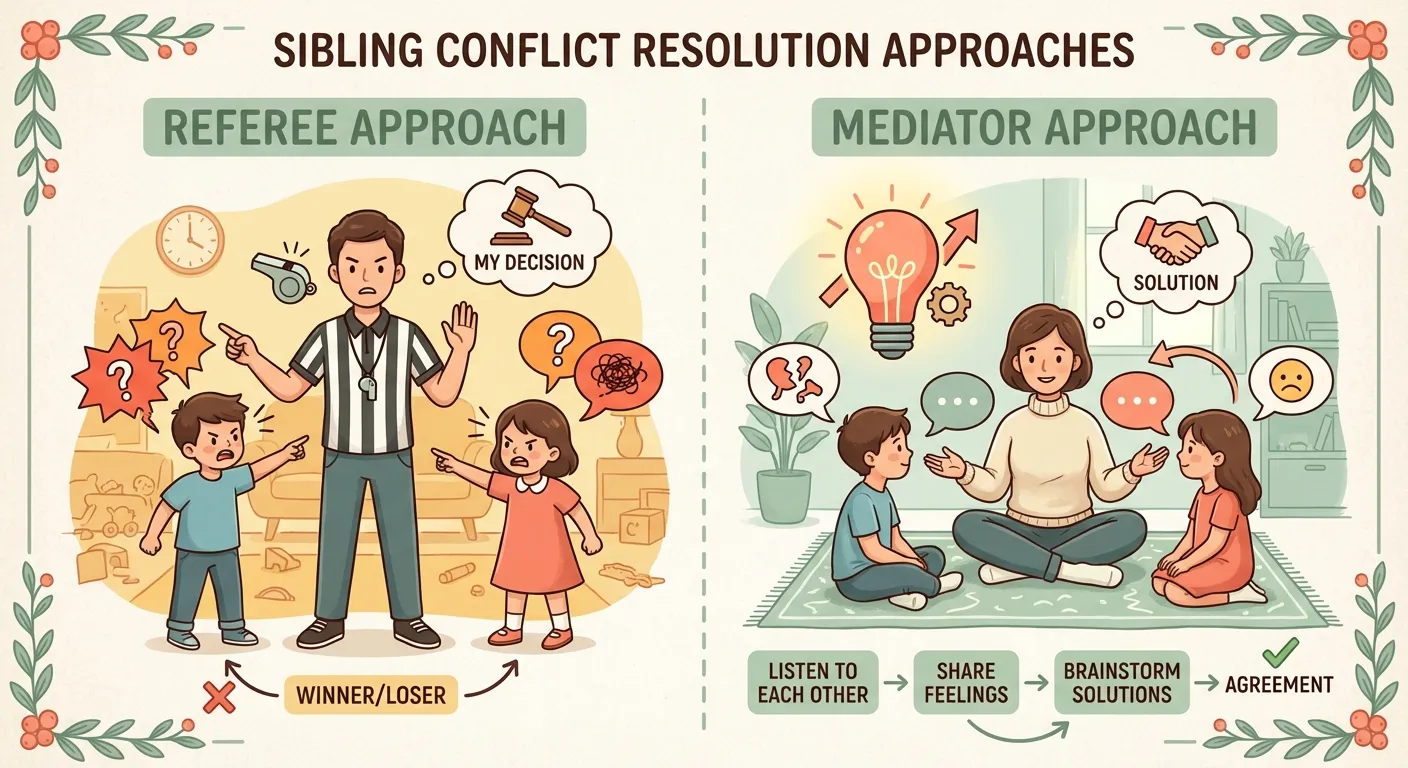
Same fight, completely different outcome depending on how you step in.
| Situation | Referee Says | Mediator Says |
|---|---|---|
| Tablet fight | "Give it back, it's her turn" | "You both want the tablet and there's only one. That's a real problem." |
| Hurt feelings | "Say sorry to your brother" | "Something happened that really upset you. And something happened that really upset you." |
| TV remote | "You picked last time, it's his turn" | "Two people want to pick tonight's show and there's one TV. Tough one." |
| What kids learn | Whoever argues better wins | Problems are solvable when you work together |
The Three Moves
This isn't complicated. Three moves, in order. You'll get faster at them every time. Within a few weeks, your kids start doing them on their own -- and that's when it gets fun.
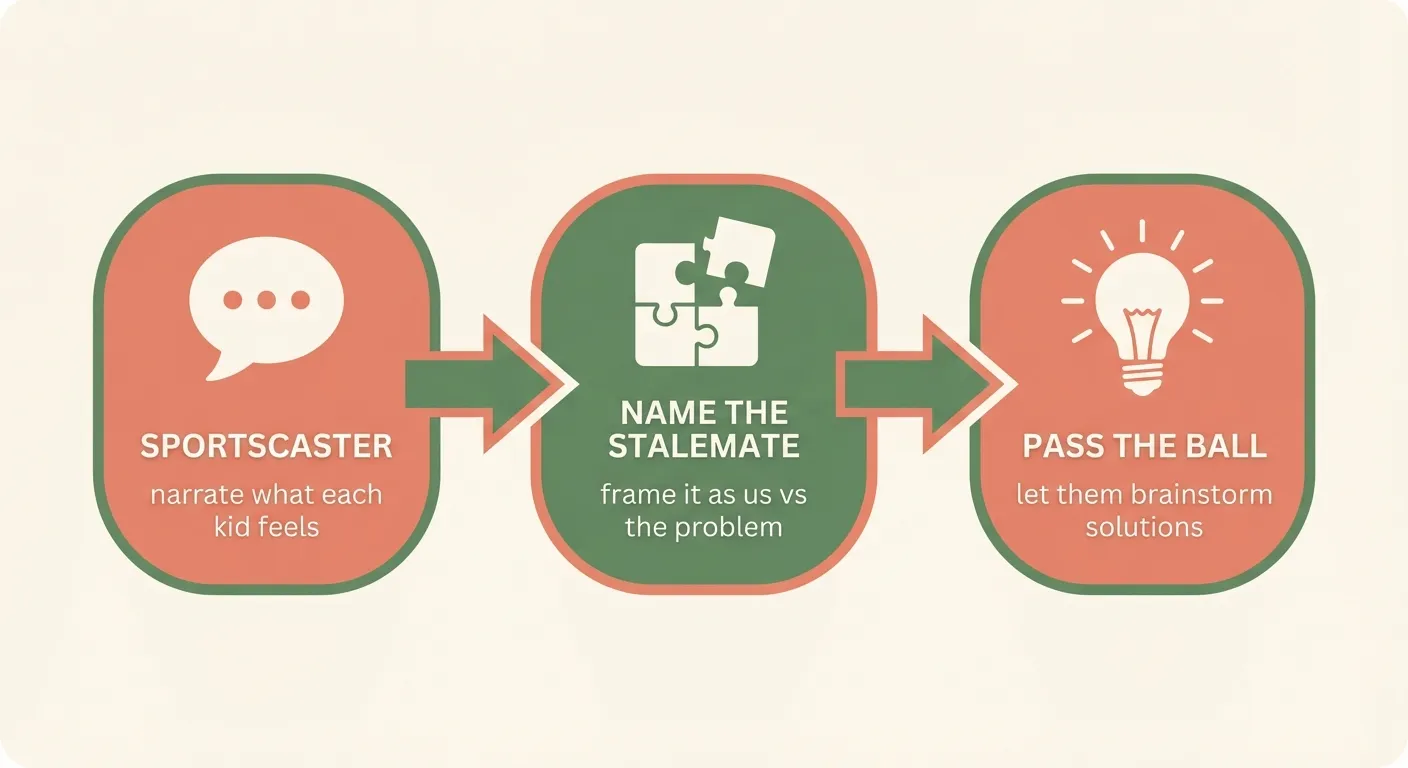
Be the Sportscaster
Narrate what each kid is feeling. No sides, no judgment.
Name the Stalemate
Frame the conflict as one neutral sentence. Us vs. the problem.
Pass the Ball
Ask for their ideas. Write them all down. Let them pick the winner.
Move 1: Be the Sportscaster
Your instinct says figure out who's right. Resist it. Instead, narrate what each child is experiencing -- like a commentator describing a match, not a judge ruling on it.
When a kid hears their own perspective reflected back accurately, something shifts. The volume drops. The fists unclench. They stop performing for the judge and start thinking again.
Often this is enough. When children feel genuinely heard, the need to fight for validation disappears and they solve it themselves.
Name both sides without minimizing either. To them, these are real problems.
Move 2: Name the Stalemate
One neutral sentence. No spin. No "it's not a big deal." Treat the conflict as a real problem worth solving -- because to them, it is. This does something powerful: it shifts both kids from "me versus you" to "us versus the problem."
Watch for the physical shift: shoulders drop, eyes come up, brains re-engage.
Move 3: Pass the Ball
This is where it gets good. And where most parents short-circuit by imposing their own solution. Don't. Ask for ideas. Then wait. The silence feels excruciating. Sit in it anyway.
Write down or repeat back every suggestion. "Take turns by the hour... get a second tablet... throw the tablet out the window..." All of it. Filtering comes next.
Once the ideas are out, go through them together. Which ones work for both people? Which ones are off the table? Let them cross things out. Let them circle the winner.
If the plan doesn't stick, that's fine. Come back and brainstorm again. The process is the skill, not the outcome.
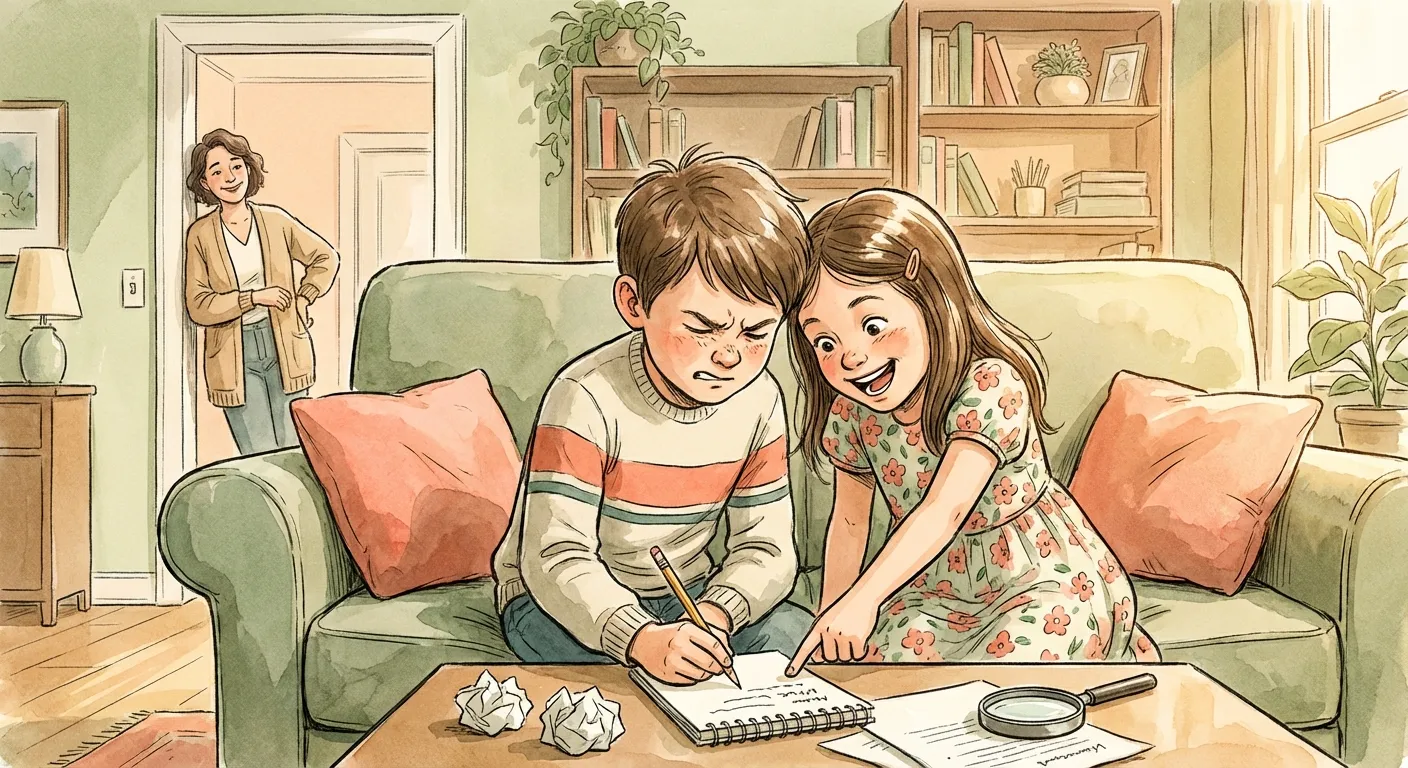
The goal: kids who solve it while you watch from the doorway.
If Someone's Getting Hurt Right Now
Step in physically. Separate them. Your only job is safety. Not fairness, not lessons, not who started it.
Once they're apart and the adrenaline is dropping:
Don't mediate while anyone is in fight-or-flight. Wait until breathing slows. Two minutes. Maybe twenty. Then run the three moves.
The Long Game: Fewer Fights Over Time
The three moves handle what's happening right now. These four habits reduce how often it happens in the first place.
Solo Time With Each Kid
Much sibling fighting is competition for your attention. Even ten minutes of undivided time daily changes the math entirely.
Stop Comparing
"Your sister finished her homework already" doesn't motivate. It poisons. Each kid needs to feel valued for who they are, not ranked.
Leave the Room
If nobody's getting hurt, try walking away. Kids solve a surprising number of disagreements when there's no audience and no judge available.
Celebrate Their Wins
"You two figured out how to share the hammock without anyone falling off. That took real teamwork." Name it when you see it.
When One Kid Keeps Starting It
The one who keeps starting fights usually has a backlog of grievances they haven't been able to express. Find a quiet moment -- not right after a blowup -- and open the door.
Listen to the whole list. Don't defend the other child. Don't fix anything yet. Then help them pick one specific thing they want to address -- and practice how to bring it up without fists or insults.
When You're Running on Empty
Full mediation takes bandwidth. You won't always have it. On those days, do the minimum: name each position in one sentence, separate them, come back later.
This is still better than refereeing. You're being honest about your limits rather than making a snap judgment about who's right.
Picking a winner teaches kids to fight harder next time.
Helping them find a solution teaches them they don't need you to.
That's the whole goal.