
The Invisible Flip
When you accidentally ask your kid to be your therapist -- and the one move that stops it
The anger you feel at your child is almost never about your child.
- Kids raised by a parent who broke the cycle sleep easier, play louder, cry when they need to, and grow up knowing that conflict doesn't destroy love.
- The shift: kill the threats, move toward the storm, and when you slip — go back, say sorry, mean it. Repair is the whole lesson.
Here's a scene that happens in thousands of homes every day. A four-year-old knocks over a glass of milk. The parent slams a hand on the table. The child freezes -- then reaches out and pats the parent's arm. "It's okay, Mommy."
Adorable, right? Except look closer. A small child just stopped their own fear response to manage an adult's emotions. The relationship flipped. And nobody noticed.
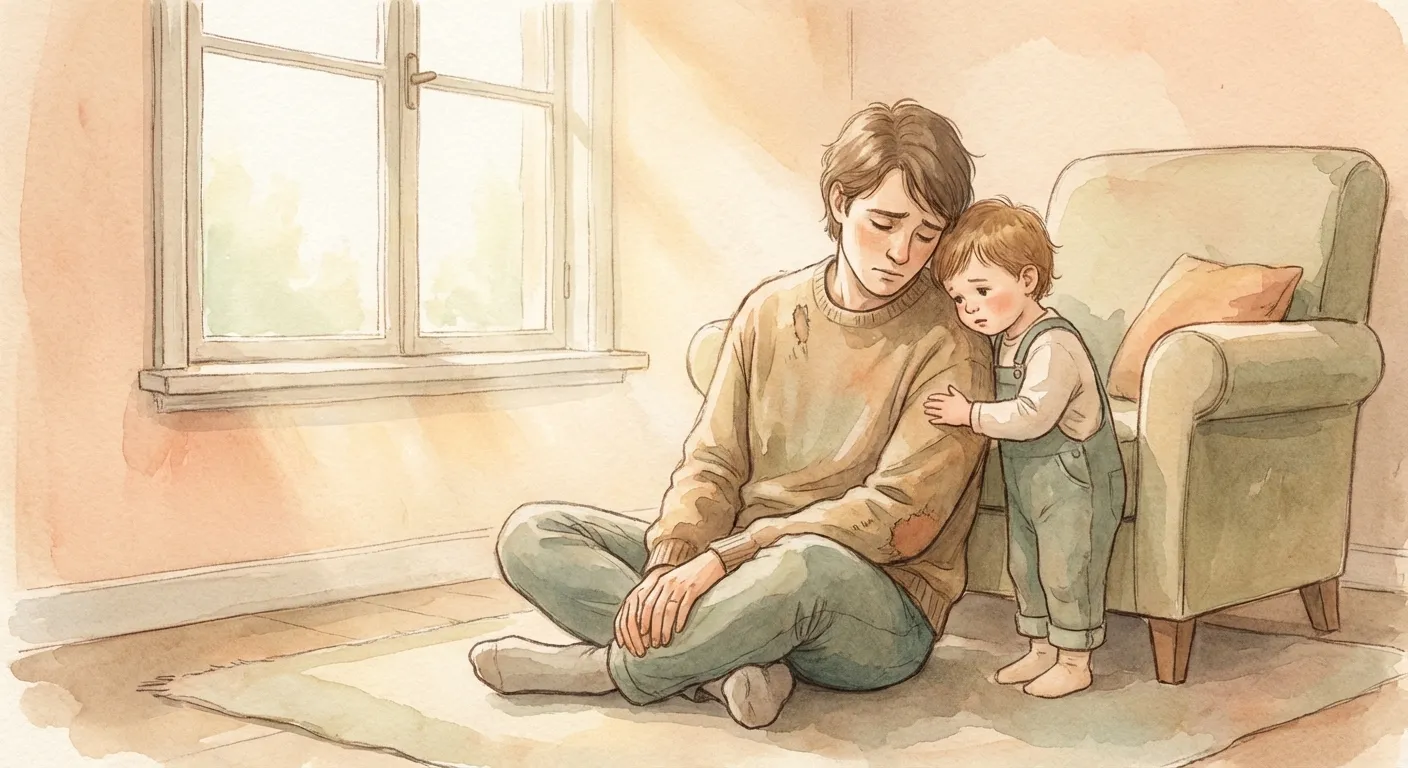
The flip is subtle. It often looks like a sweet, caring child.
This is what researchers call role reversal -- the moment a child becomes the emotional caretaker in the relationship. It's one of the primary ways harsh parenting reproduces itself across generations. And it's almost always invisible to the parent doing it.
The reason it matters: parents who grew up without reliable comfort often carry an emotional deficit into adulthood. When their child can't fill that gap -- and instead demands care, as children do -- the old pain surfaces as rage. The child learns to manage the parent's mood to stay safe. And the cycle locks in.
The core insight
Harsh parenting isn't random cruelty. It's what happens when someone who never learned to feel safe tries to manage the most vulnerable relationship of their life.
The Flip Test
Most parents don't realize the relationship has turned upside down. Here's how to spot it:
| Situation | Flipped (watch for this) | Right-side-up |
|---|---|---|
| Your child is crying | You feel attacked. Your first impulse is anger, not concern. | You move toward them. Comfort first, questions later. |
| You had a terrible day | You feel hurt that your child doesn't notice or care about your mood. | You get support from another adult. Your child stays a child. |
| A disagreement starts | It goes zero-to-shouting with no middle gears. Someone has to "win." | You can disagree without it becoming a crisis. |
| Your child misbehaves | You reach for threats that hit at the deepest level -- abandonment, withdrawal of love. | You set the limit without threatening the relationship. |
| Someone asks about your childhood | You say "it was fine" -- but specific memories tell a different story. | You can describe what happened honestly, without minimizing or drowning in it. |
If the middle column hits close, that's not a verdict. It's information. And information is exactly what you need to do something different.
Where the Anger Actually Comes From
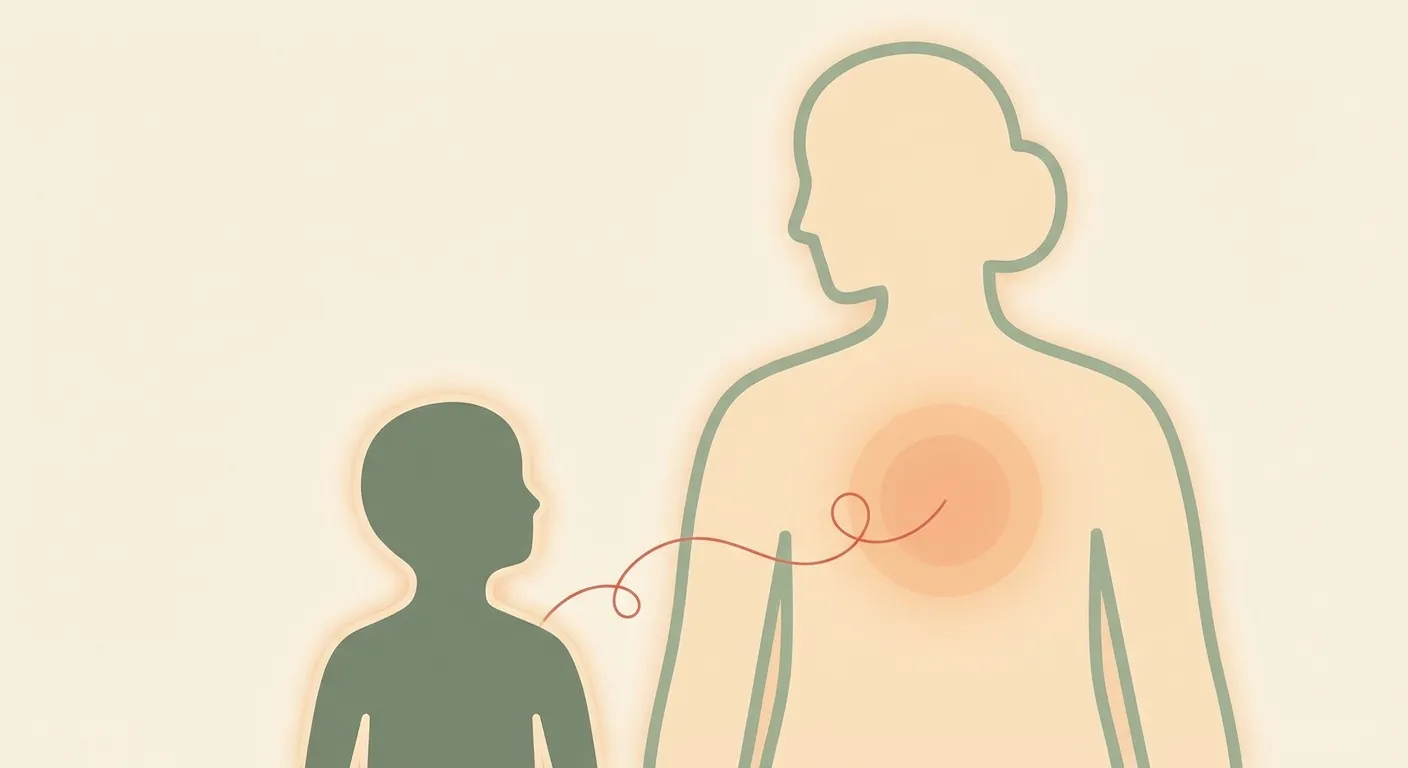
The anger in front of you is rarely about the moment in front of you.
When your child's tantrum triggers volcanic rage, the intensity is the clue. Spilled cereal doesn't warrant that level of fury. Something older is driving it.
Here's how the pattern actually wires in, stage by stage:
Childhood: comfort never came
A child grows up without reliable safety. Their needs for connection are ignored, punished, or met with hostility.
Brain wires the wrong lesson
"Needing people is dangerous. Being upset means something bad will happen. The only way to get what I need is to force it."
Adulthood: the deficit surfaces
As a parent, those unmet needs come flooding back. You unconsciously look to your child for the emotional care you never received.
Trigger: the child can't fill the gap
When the child demands care instead of providing it -- as every child must -- the old pain floods in as rage. The loop closes.
Naming this changes everything. Even silently thinking "this is old pain" in the middle of a heated moment reduces its grip. You're no longer fighting your child. You're recognizing a feeling that has nothing to do with them.
The Four Moves That Break It
You don't need to overhaul your personality. You need four specific moves, practiced consistently.
Move 1: Find your person
"I should be able to handle this alone."
The shift
One trusted person -- therapist, friend, group -- who shows up without judgment. Trying to solo this is itself part of the old pattern.
Move 2: Trace it back
"My kid is driving me insane right now."
The shift
"Is this about what they just did, or something much older?" Ask it every time. The answer is almost always: older.
Move 3: Kill the threats
"If you don't stop, I'm leaving." / "You'll go to a home."
The shift
"I'm angry, but I'm not going anywhere." Eliminate abandonment threats entirely. This single change rewires the background from terror to safety.
Move 4: Move toward the storm
Shut it down. Walk away. "Stop crying or I'll give you something to cry about."
The shift
Stay present. If the intensity overwhelms you, step away briefly and breathe -- but always come back. The coming-back is the whole lesson.
Lines that should never get crossed
- Threatening to leave your child or send them away
- Using physical force to settle disagreements
- Treating a baby's crying as deliberate manipulation
- Demanding your child keep what happens at home secret
- Expecting your child to be your emotional support system
When You Slip (You Will)
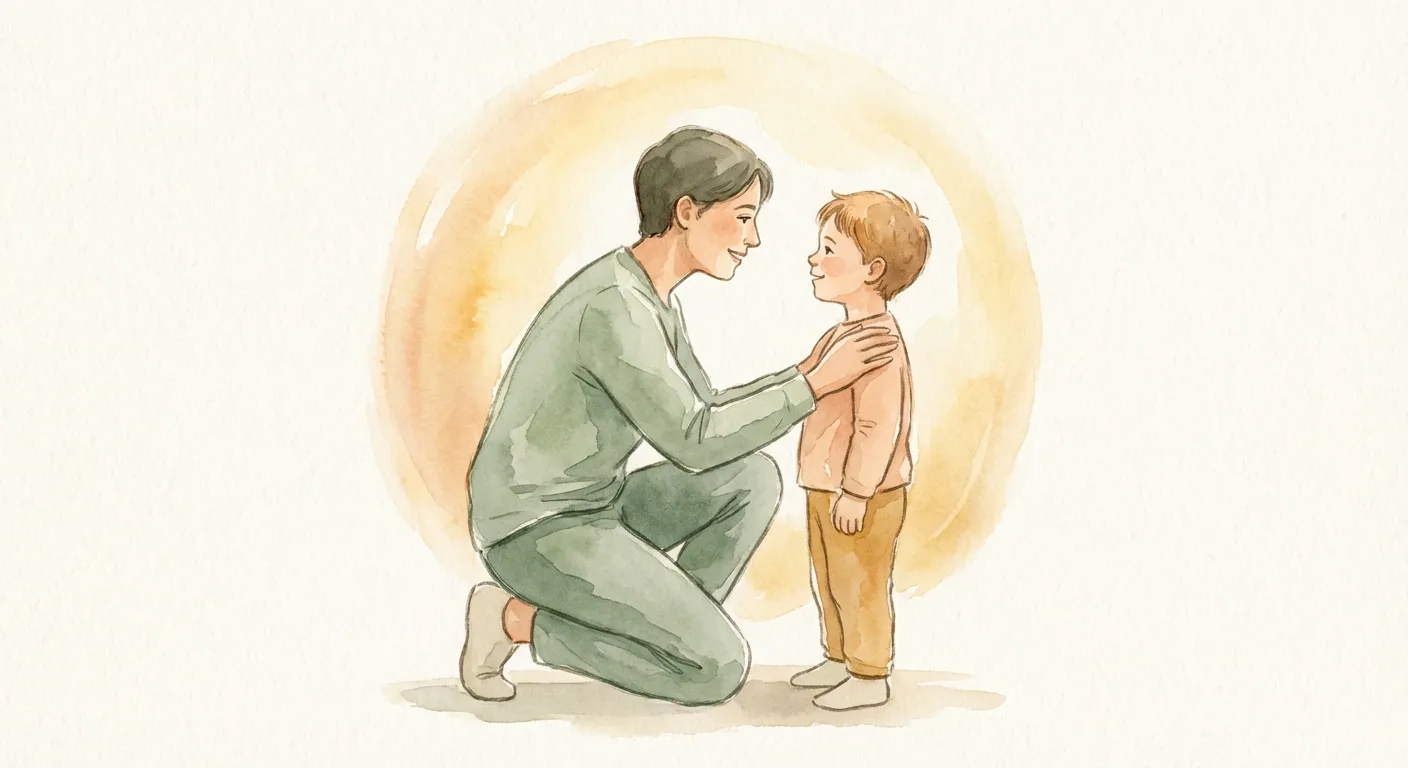
Repair doesn't undo the moment. It teaches something better: that mistakes don't destroy love.
Nobody does this perfectly. The old wiring fires fast and hard. What matters is what happens next.
The old pattern
Blow up. Feel guilty. Pretend it didn't happen. Hope the child forgets.
The child learns: conflict is dangerous, and nobody talks about it.
The new pattern
Blow up. Catch yourself. Go back. Say: "I got too angry. That wasn't okay. I'm sorry."
The child learns: mistakes don't destroy relationships. People can come back.
That second version teaches your child something that can change a family line. Not perfection -- repair.
Staying Power
The pattern didn't form overnight and it won't dissolve overnight. Four things keep you on track:
Know your warning lights
Tightness in your chest. Rising voice. The thought "they're doing this on purpose." These are signals to slow down, not speed up.
Fill the tank during calm
Connection built during peaceful moments is what you draw on during hard ones. Play when things are good. It makes the storms survivable.
Manage the risk factors
Tired, hungry, overwhelmed, isolated -- these states make old patterns more likely to surface. Treat them like the risk factors they are.
Get honest about your own story
The parents who break the cycle can look at their own childhood clearly -- not minimizing, not drowning in it, but seeing it for what it was. This often means working with a therapist. Not to blame your parents. To understand what you absorbed so you can choose something different.
The bottom line
A harsh childhood doesn't make you a harsh parent.
It means you need more support, not less.
The pattern breaks the moment someone gets help.