
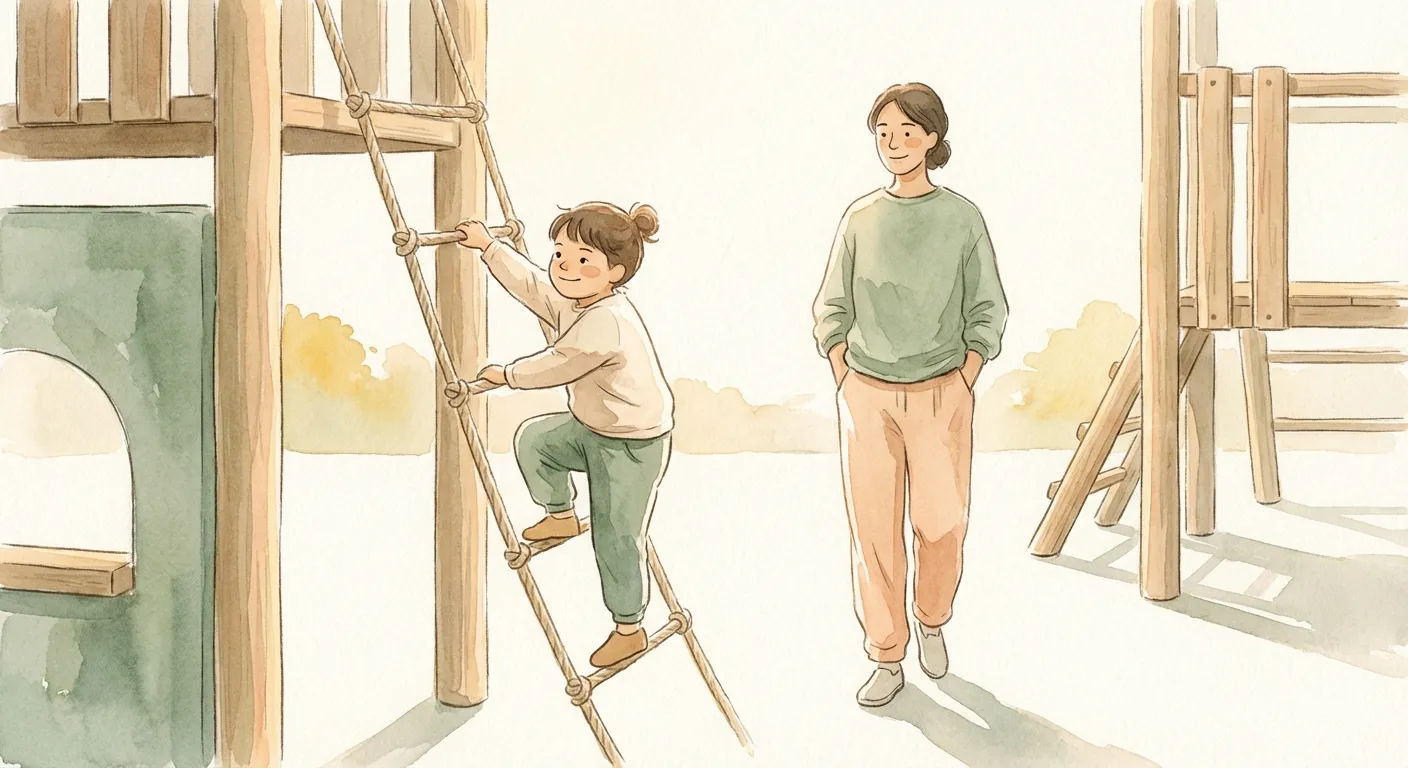
The Two Gears Every Parent Needs
One pushes them forward. The other catches them when they fall.
Security isn't about being the gentle parent or the tough parent. It's about switching.
- Kids raised this way ask for help without shame, persist through frustration, and build friendships that stick — because they learned both brave and vulnerable at home.
- The shift: stop defaulting to your comfortable gear — lean into the one that's harder for you.
Here's something nobody tells you about raising a confident kid: it doesn't come from a single parenting style. It comes from switching between two.
Think of it like driving. You wouldn't stay in first gear on the highway. You wouldn't downshift to fifth on a steep hill. Great parents shift gears constantly, all day long, based on what their kid is telling them right now.
The two gears: Stretch (push them into the world) and Steady (be the place they come back to). Every kid needs both. Every single day.
When they're calm and curious, stretch them forward.
When they're overwhelmed, be their steady ground.
What Each Gear Looks Like
| Stretch Mode | Steady Mode |
|---|---|
| Let them lead — unstructured time where they pick the game | Stay through the meltdown — don't teach, just be there |
| Coach from behind — show one piece of the puzzle, then back off | Build daily rituals — 15 minutes of phone-away, kid-chosen time |
| Be nearby, not on top of them — proximity without hovering | Make home a no-harm zone — safe from hurt, words included |
| Name what you notice — specific observations, not generic praise | Regulate yourself first — step away for two minutes, then come back |
Reading the Signals
Your kid is already broadcasting which gear they need. You just have to tune in.
Ready to stretch
- Calm, curious, asking questions
- Reaching outward, wanting to try alone
- Looking at you for a nod before jumping in
- Energy is forward-facing
Needs steadying
- Clingy, tearful, or withdrawn
- Aggressive or shutting down
- Body tense, overwhelmed
- Energy is pulling inward
When You're Not Sure
Start with steady. Always. A child who feels safe will naturally reach outward again on their own. You can't push someone into confidence — but you can build the ground they launch from.
Stretch Mode in Action
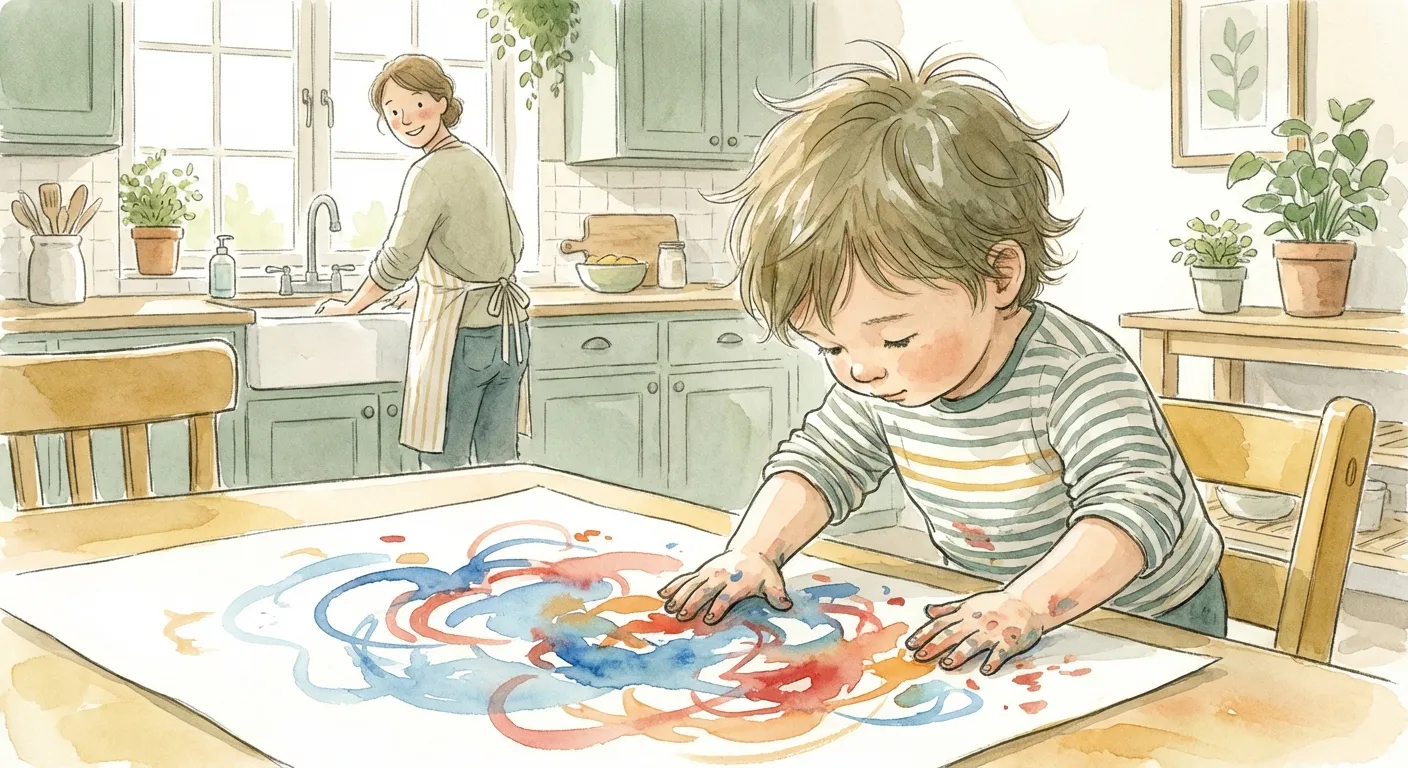
Stretch doesn't mean pushing. It means creating space for them to surprise themselves. The magic is in what you don't do — you don't take over the puzzle, you don't correct the crayon grip, you don't narrate their play.
The "Coach from Behind" Move
When they hit a wall, the instinct is to swoop in and fix it. Instead:
Let them wrestle with it
Sit on your hands for a beat longer than feels comfortable
Step alongside, not in front
Show one small piece of the puzzle — then pull back
Describe what they did
Specific observations land; "good job" floats away
And when they get it:
Notice the difference? You're not praising the result. You're naming the effort, the persistence, the quality of attention. That's what builds a kid who tries hard things willingly.
Replace "Good Job" with What You Actually See
Steady Mode in Action
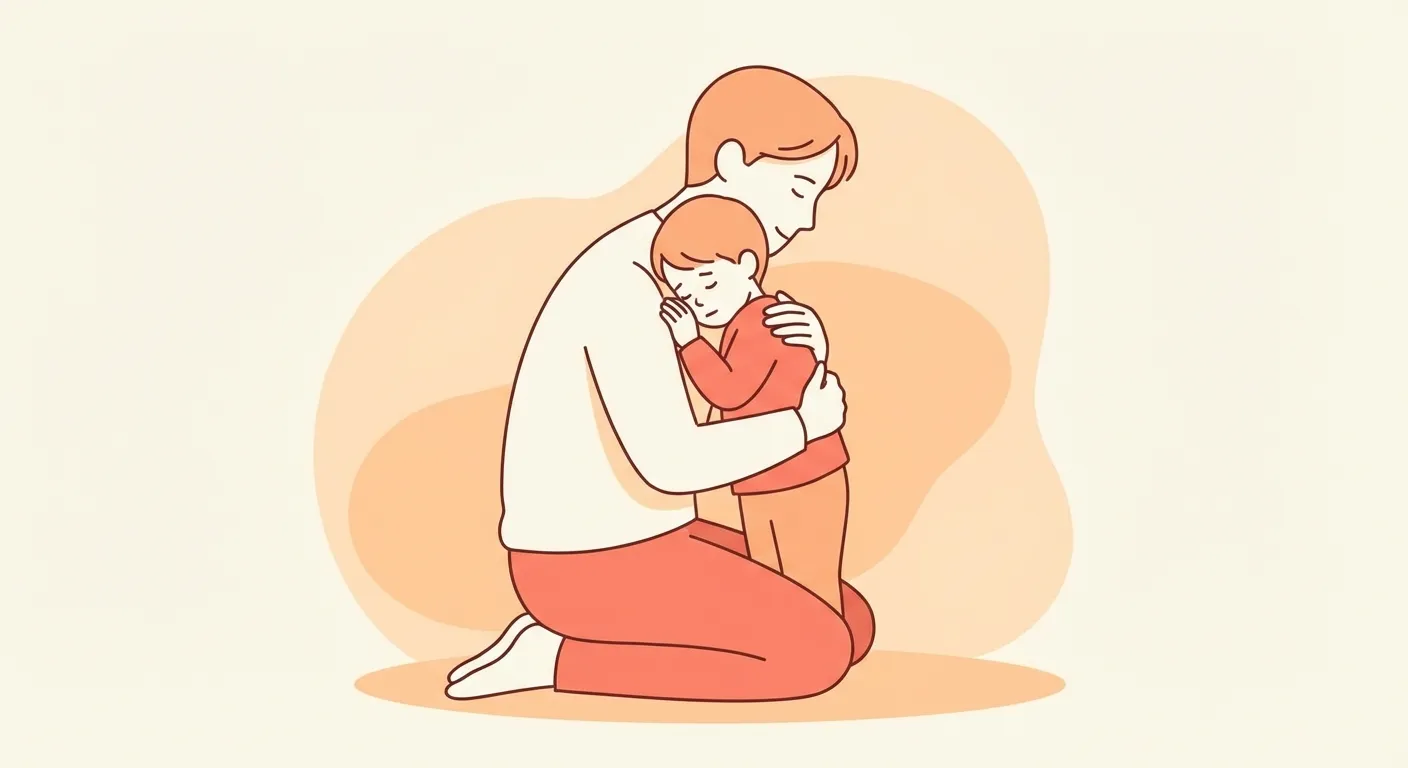
Steady mode is not about fixing. It's not about teaching a lesson. It's about being the warm, calm thing in the room when their world gets too loud.
When They're Falling Apart
Your presence is the intervention. Get close. Lower your voice. Let them know you're not going anywhere. The lesson comes later — once their body has settled and their brain is back online.
For kids who struggle to name their feelings, paint the picture instead of slapping a label on it. "You look angry" is less helpful than describing what you actually see happening in their body.
When You're About to Lose It
You can't be someone else's calm place if you're flooded yourself. It's okay — and actually powerful — to name it and step away.
Then come back. The coming back is the part that matters. You're modeling exactly the skill you want them to learn: noticing your limits, taking a pause, and returning to the relationship.
The Long Game
Notice which gear is hard for you
Worriers find stretch scary. Independence-lovers find steady feels like coddling. Your biggest growth is in your uncomfortable gear.
Adjust the ratio as they grow
Three-year-olds need tons of steady, careful stretching. Ten-year-olds need bigger stretches and trust that steady is there. More rope, same anchor.
Let them see you shift gears
Be excited about your own challenges. Ask for help when you need it. You're the living proof that a person can be brave and vulnerable — that's what security looks like.
Security isn't being the perfect parent.
It's showing up in both gears — stretching them forward when they're ready, steadying them close when they're not.