
The Secret Superpower Already Inside Your Kid's Head
Teach three brain zones in a single casual chat. Next time the alarm goes off, they'll know exactly what's happening — and how to reset it.
Slow breathing is the fastest way to bring a kid's thinking brain back online.
- Kids who practice the reset handle rejection, recover from friend drama, and make better choices mid-frustration without waiting for a parent to fix it.
- The shift: stop telling kids to calm down and start teaching them why breathing actually works on their brain.
Your kid is mid-meltdown. Fists clenched, face red, tears streaming. You say something calm and reasonable. They hear nothing.
This isn't defiance. It's brain architecture. Their alarm system just hijacked the thinking part of their brain, and no amount of logic can get through until it calms down.
But here's what changes everything: when kids understand why this happens, they stop feeling broken by big emotions. They start catching the alarm before it takes over. And the whole thing starts with one relaxed conversation — maybe tonight, maybe over pancakes this weekend.

The setup: colored pencils, paper, and a casual "want to know something cool about your brain?"
The Three Zones (and How to Explain Them)
You don't need a neuroscience degree. You need three ideas and a piece of paper. Draw a rough brain outline together — kids love this part — and walk through it zone by zone.
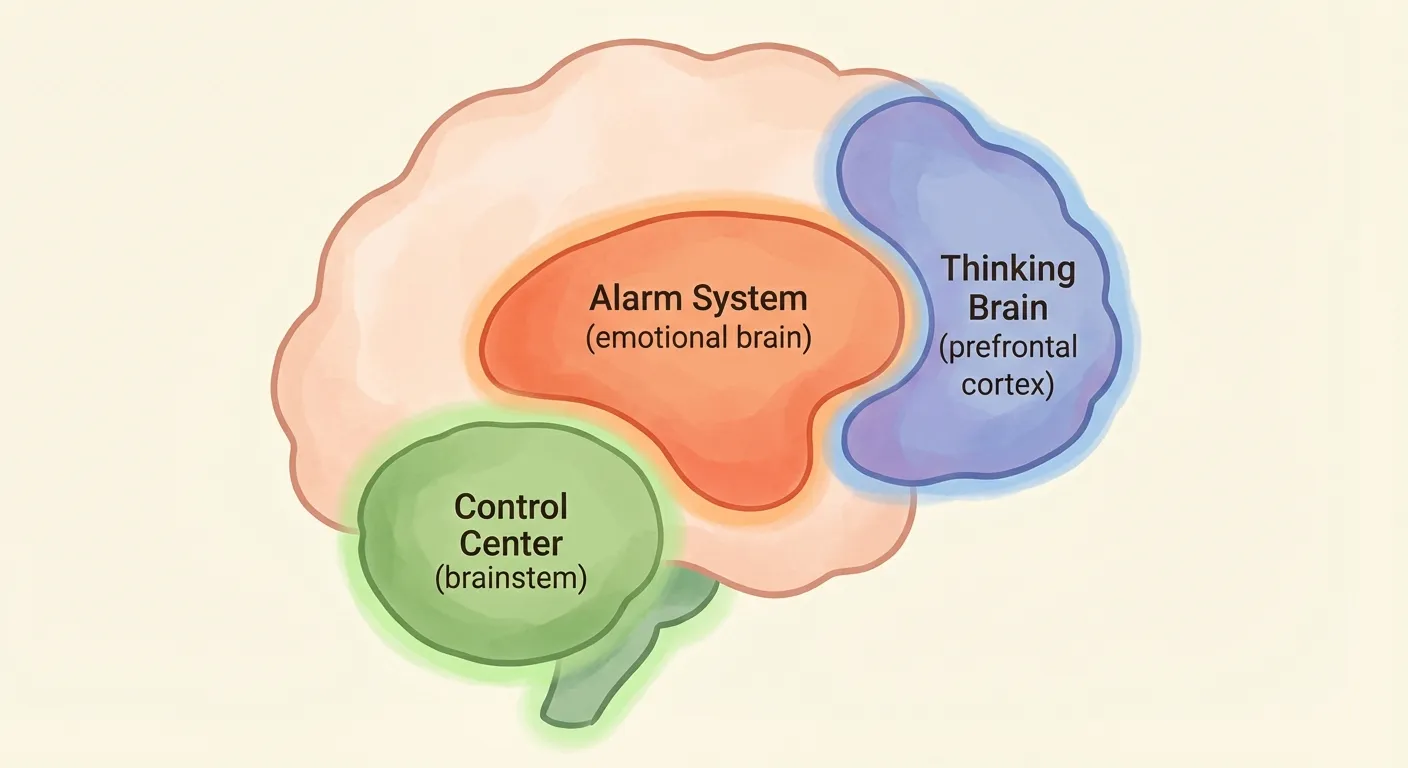
Three zones. That's it. This is the whole framework.
Zone 1 The Control Center
The brainstem. Runs the basics — heartbeat, breathing, swallowing. Autopilot.
"The bottom part of your brain is like mission control. It keeps your heart beating and your lungs breathing without you ever thinking about it. Pretty cool, right?"
Zone 2 The Alarm System
The emotional brain. Scans for danger, triggers fight/flight/freeze. Also fires for excitement.
"In the middle, there's an alarm system. When something feels scary or wrong, it sends signals: heart pounds, hands sweat, stomach goes tight."
"But here's the tricky part — it can't always tell real danger from just being upset. So it might go off when your sibling grabs your toy, even though that's not actually dangerous."
Zone 3 The Thinking Brain
The prefrontal cortex. Problem-solving, planning, calming down. The part that goes quiet when the alarm is screaming.
"The front part, right behind your forehead, is the thinking zone. It solves problems and helps you calm down."
"But when the alarm is really loud, the thinking zone gets quiet. That's why it's hard to make good choices when you're super upset. The trick is breathing — it turns the thinking zone back on."
Why This Conversation Matters
Once kids have this framework, emotions stop being a mystery that happens to them and become something they can observe. That shift is enormous.
| Without brain knowledge | With brain knowledge |
|---|---|
| "I'm bad because I yelled" | "My alarm went off and I reacted" |
| Feels overwhelmed, no explanation | "My heart is racing — alarm system" |
| Can't articulate what they need | "I need to let my thinking brain come back" |
| Waits for parent to fix it | Starts breathing on their own |
Make It Real: Connect to Their Life
The brain zones only stick if you connect them to experiences your kid actually recognizes. After the explanation, ask two questions:
"When did your alarm system go off and it actually helped you?"
(Jumping away from a bike, ducking a ball, running from a dog)
"When did your alarm go off but it WASN'T helpful?"
(Yelling at a sibling, freezing during a test, crying when picked last)
This is the moment kids realize: the alarm isn't the enemy. It just needs calibration. And they're the ones who can calibrate it.
Teach the Reset
The payoff of the whole conversation. Slow breathing is the simplest, most reliable way to turn the thinking brain back on. Kids need to know why it works, not just be told to do it.
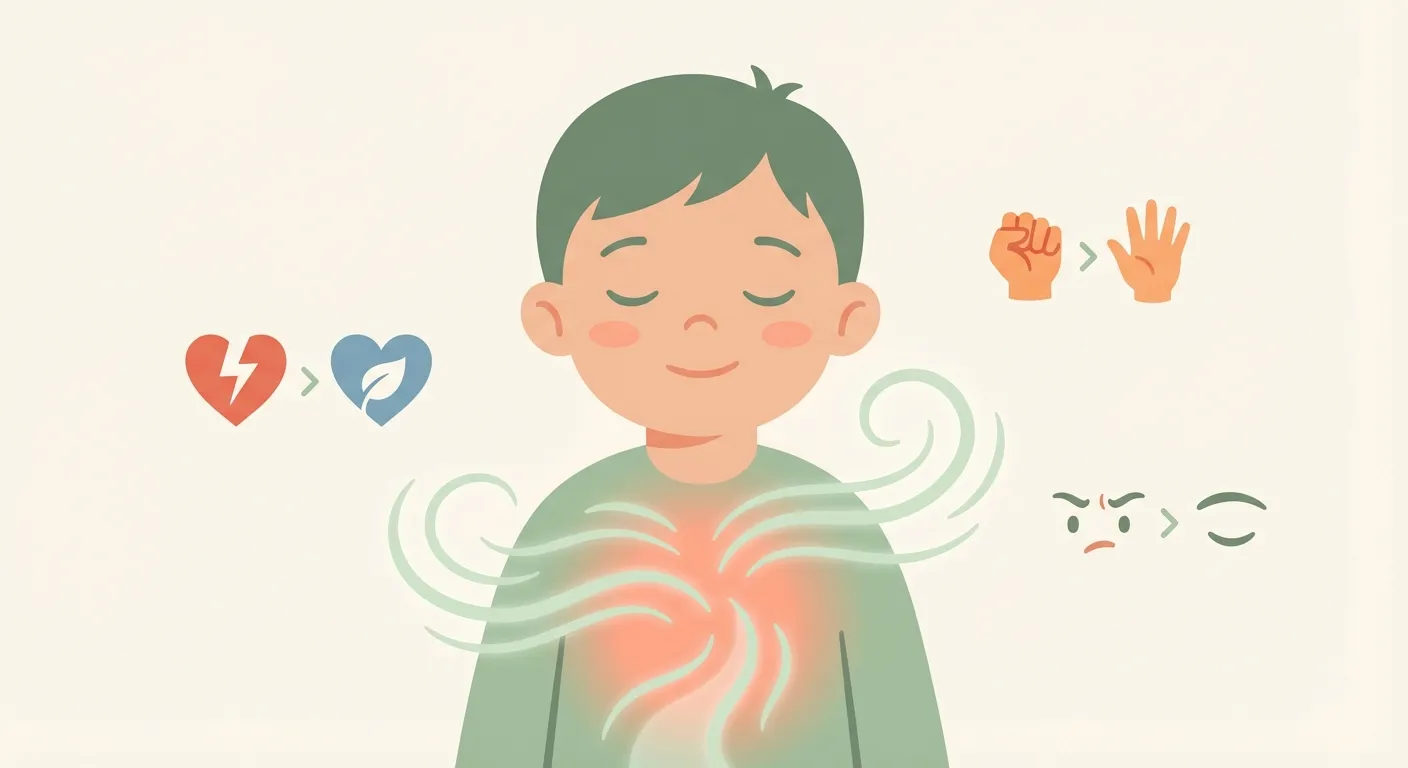
Slow breathing quiets the alarm and brings the thinking brain back online.
"Here's the amazing part: you can reset your alarm. When you feel those signals — heart racing, hands sweaty — take a few slow breaths and count to ten. While you breathe, the alarm gets quieter and your thinking zone wakes back up."
"Want to try right now? Let's breathe together."
Key move: Practice when they're already calm. Bedtime is perfect. "Let's practice resetting our brains." When the real meltdown comes, the breathing pattern is already familiar — it's muscle memory, not a new concept introduced at the worst possible moment.
The Daily 30-Second Check-In
One conversation plants the seed. Daily check-ins make it stick. These take 30 seconds, max.
After school or before bed, casually ask:
"Did your alarm system go off today? What happened? Did you try breathing to reset?"
That's it. No lecture needed. Kids start noticing their own patterns and reporting them like weather updates: "My alarm went off during math, but I breathed and it was fine."
Four Moves That Lock It In
Catch it early
"I see your hands are in fists — alarm starting to go off?" Spotting it early makes resetting easier.
Model it yourself
When YOU get frustrated, narrate it: "My alarm is going off. I'm going to breathe and let my thinking brain help." They learn more from what you do.
Name it, don't shame it
Replace "Stop overreacting" with "Your alarm is really loud right now. Let's help it settle." Removes blame, gives them something to do.
Reinforce the wins
"You felt really upset and you took breaths and figured it out. That's your thinking brain doing its job." This builds real confidence in self-regulation.
The bottom line: One casual conversation gives your kid a framework for every big emotion that follows. They stop blaming themselves for meltdowns and start managing them. That's not a small thing. That's a superpower you handed them over pancakes.