
The Trick That Turns Siblings Into Teammates
Peer influence is the most underused tool in a parent's kit.
- Kids who hold each other accountable at the dinner table, during homework, and through bedtime — without you raising your voice once.
- The move: short timed rounds with clear rules, calm violation marks, and instant rewards when the team wins.
When kids share the same scoreboard, something unexpected happens.
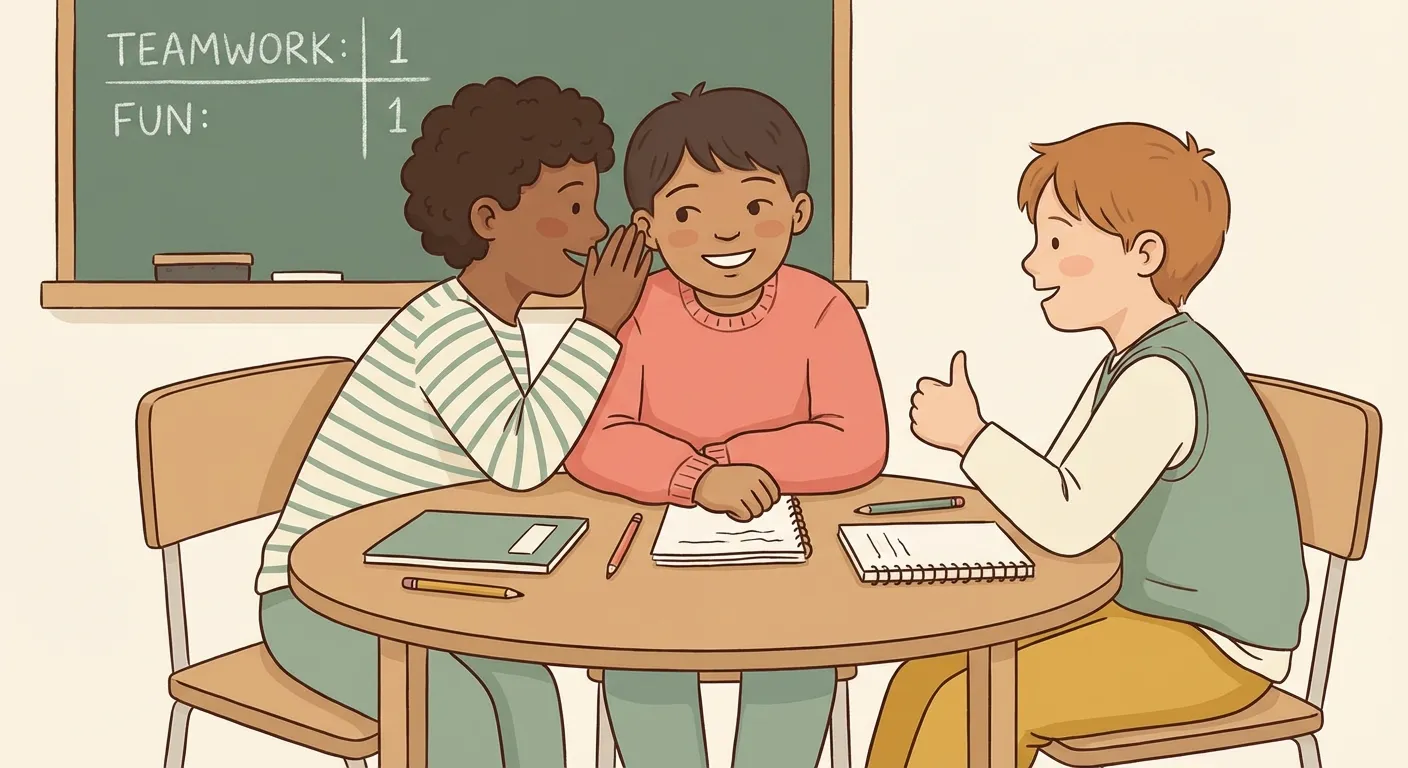
Picture this: your seven-year-old whispers to your five-year-old, "Hey, don't leave your plate on the table -- we'll lose a point!" And the five-year-old actually listens. Not because you said it. Because his teammate did.
That is the magic of a team points system. You stop being the enforcer. The kids become each other's coaches.
The concept is dead simple. Put kids on the same team, set a few rules, track violations on a shared scoreboard, and let them earn rewards together. The peer dynamic does the heavy lifting.
Why This Works (When Nagging Doesn't)
Decades of behavioral research point to the same conclusion: group-based reward systems often outperform individual consequences. The reason is peer influence. When your teammates are counting on you, you are more motivated to follow through.
This is especially powerful for kids who struggle with self-regulation. Individual punishment makes them feel singled out. A team system spreads the responsibility and makes the whole thing feel less personal -- more like a game, less like a lecture.
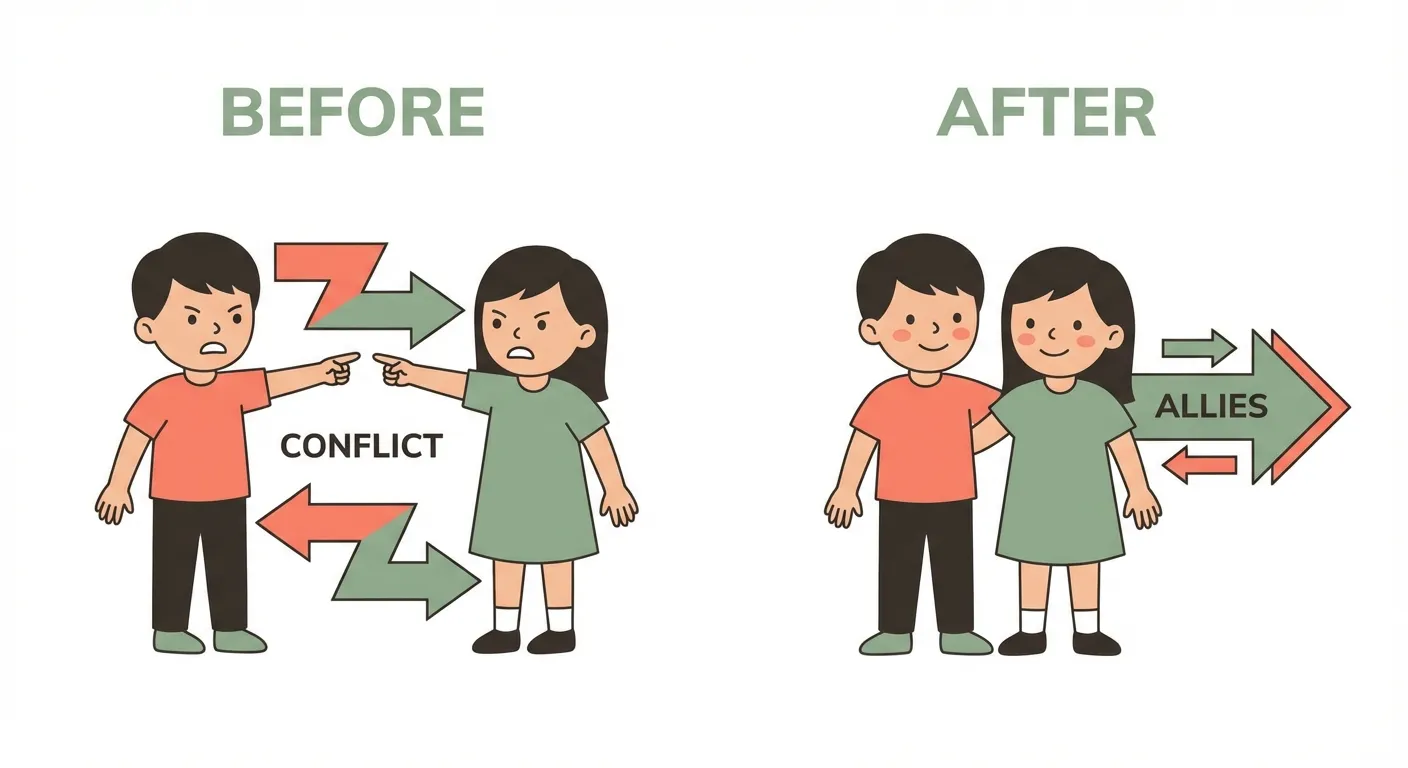
The shift: from pointing fingers to pulling together.
Without Team Points
"Mom! He's not cleaning up!"
"She hit me first!"
"It's not FAIR, I always have to do everything."
You: referee, judge, and constant bad cop.
With Team Points
"Come on, let's clean up fast so we win."
"Shh, quiet voices or we get a point."
"We only need to stay under 4 -- we got this!"
You: scorekeeper. That's it.
Setup in 10 Minutes
Pick 3 Rules
Keep them positive. "Respectful voices" beats "no yelling." Kids follow what TO do more easily than what NOT to do.
Form Teams
At home: all siblings on one team vs. the threshold. At school: mix personalities across 2-3 teams. Balance the challenges.
Set a Threshold
How many violation points before they lose? Start generous (5 points). Tighten as they improve. Aim for 80% win rate.
Build a Reward Menu
Let THEM suggest prizes. Extra screen time, pick the music, choose dinner. Rotate weekly so it stays fresh.
Ask: "What kind of house do YOU want? What makes it hard to focus?" When kids create the rules, they are invested in following them. It shifts from "Mom's rules" to "our rules."
Running a Round
Keep rounds short. 15-20 minutes at first -- during homework time, cleanup, or morning routine. Here is exactly how it flows:
Quick reminder. "Okay, Team Points for homework time. What are our rules?" Let them say the rules back to you.
Start the clock. Use a timer or a bell. Make it obvious when the game is on.
Mark violations calmly. No drama, no lecture. Just: "That's one point for talking during quiet time." Then immediately praise someone doing it right.
Wrap up and reward. Ring the bell. Count the points. If they stayed under threshold, rewards happen immediately. No delays.
What to Actually Say
Bring It Home
This is not just a classroom trick. With siblings, it is even more powerful because the stakes are personal. Here is what it looks like at home:
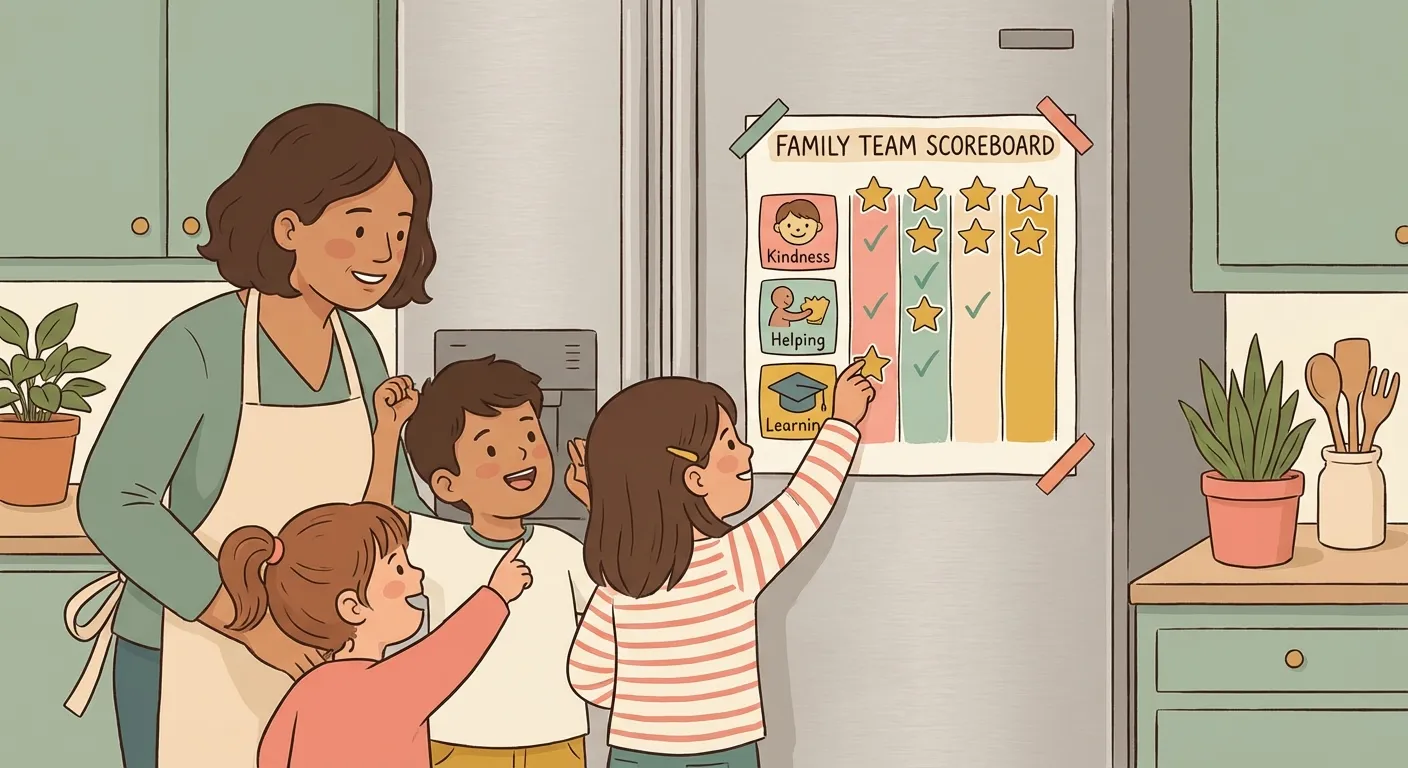
A fridge scoreboard turns routine battles into a team sport.
| When | Round Length | Rules Focus | Reward Ideas |
|---|---|---|---|
| Morning routine | 20 min | Ready on time, respectful voices | Pick the car music |
| Homework time | 15 min | Stay focused, ask for help nicely | Extra screen time |
| Dinner prep + cleanup | 20 min | Helping hands, kind words | Choose tomorrow's dessert |
| Bedtime routine | 15 min | Follow the sequence, no stalling | Extra story, first shower pick |
Keep It Fresh
The system works best when it stays novel. Here is how to prevent it from going stale:
Rotate rules. As one behavior improves, swap it for a new target. This keeps the challenge alive.
Let winners design rewards. "You won three times this week -- what should next week's prize be?" Ownership keeps motivation high.
Celebrate trajectories. "Last week you hit 8 points every round. This week you averaged 4. That is huge." Progress matters more than perfection.
Take breaks. If interest fades, pause for a week. Bring it back with new rules or rewards. Novelty is the fuel.
Know when to phase out. Once behavior sticks, retire the points. The goal is to build habits, not run a permanent game show.
No eye rolls. No sighs. No "Again, Marcus?" Just state the fact and move on. The system only works when violations feel like data, not judgment.