
Stop Explaining. Start Showing.
The Montessori trick that gets kids dressing themselves — by doing less, not more.
Published by kungfu.familyOne skill per frame. No mixing. That's the entire Montessori dressing method.
- Kids who master each fastener in isolation crush real clothing — coats, shoes, buckles — because every skill is already locked in before they combine them.
- The move: isolate each fastener type on its own frame, master it, then move to real clothes as a victory lap.
Here's a scene that plays out in kitchens everywhere: a three-year-old wrestling with a coat zipper while a parent hovers, narrating every micro-movement. "No, grab the bottom part. Hold it steady. Now pull up — not that way, the other way."
The kid gets frustrated. The parent takes over. Everyone's late.
Maria Montessori watched this exact dynamic over a hundred years ago and came to a radical conclusion: the talking is the problem.
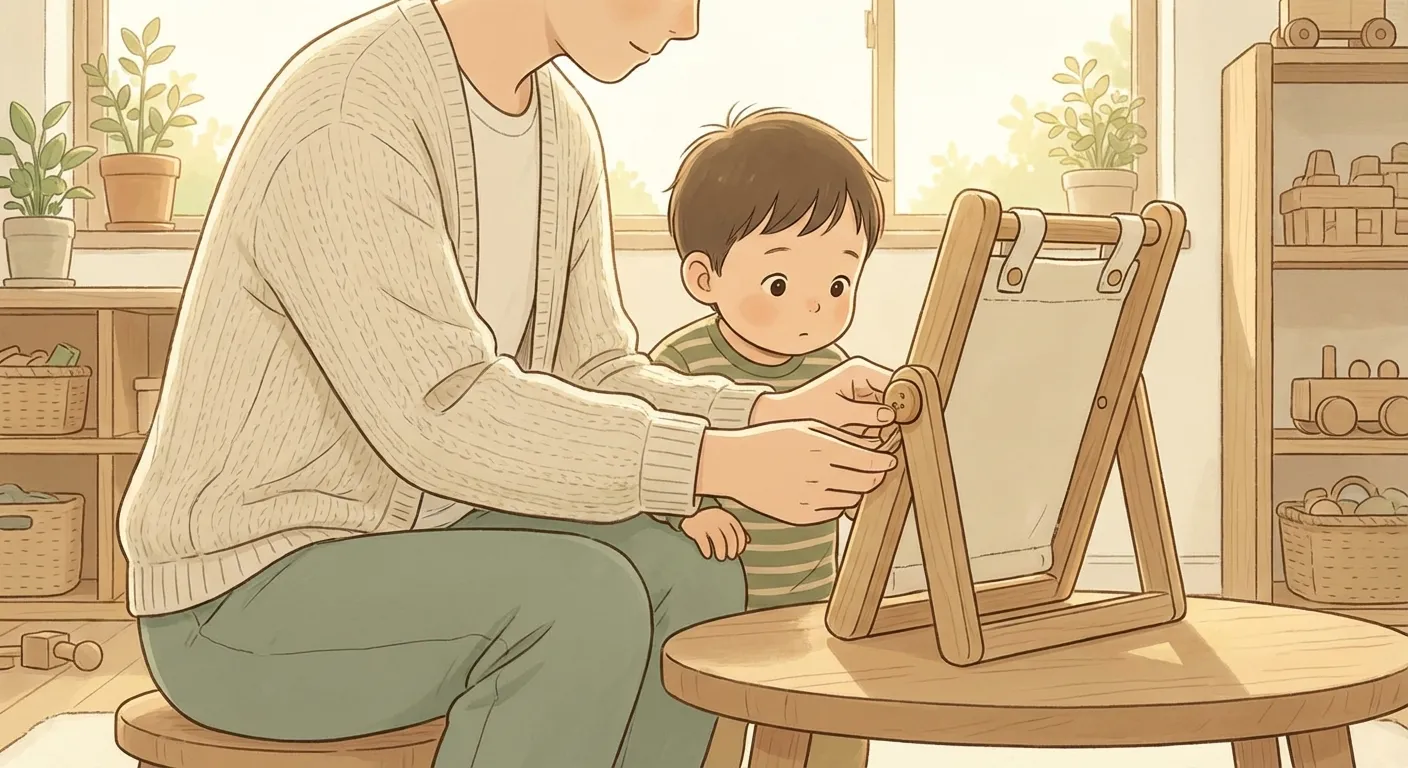
The Counterintuitive Move
Montessori's method doesn't start with real clothing at all. She designed ten wooden frames — each one with two pieces of fabric joined by a single type of fastener. Buttons on one frame. Hooks on another. Laces on a third.
The genius isn't the frames themselves. It's what happens when you present one.
The 6-Step Silent Presentation
That's the whole method. No coaching, no encouragement mid-task, no "almost!" or "try again!" Just a silent demonstration followed by space to figure it out.
Why Silence Beats Instruction
| Verbal Instruction | Silent Demonstration |
|---|---|
| Child processes language AND motor skills at once | Child focuses entirely on what their hands need to do |
| Adult's timing controls the pace | Child's eyes set the pace |
| Corrections create hesitation | Mistakes become self-correcting data |
| "Good job!" becomes the goal | Mastery becomes the goal |
| Child waits for permission to try | Child initiates on their own terms |
When you narrate a demonstration, you're asking a toddler to decode language, map words to movements, AND coordinate their fingers — all at the same time. Remove the language layer and suddenly it's just hands watching hands. Simple.
The 10 Frames — From Easy Wins to Bow-Tying Mastery
Each frame isolates one skill. Montessori arranged them so a child builds from gross motor confidence to fine motor precision. Here's the progression that works:
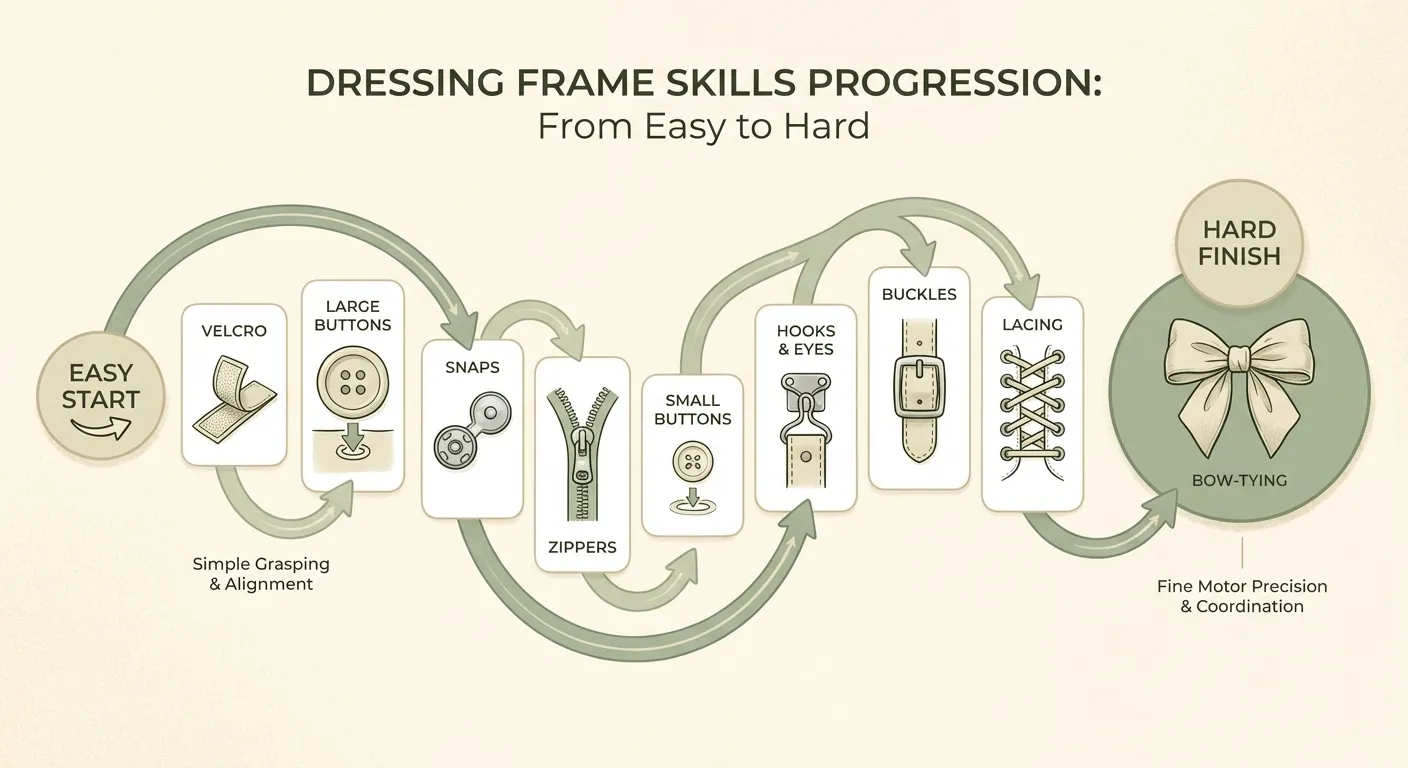
The key insight: never combine skills. A coat has a zipper AND buttons AND snaps? That's three separate challenges at once. Isolate each one on a frame first. When each fastener type clicks, real clothing becomes a victory lap.
"The child is initiated through these exercises into the first movements necessary to help himself in dressing and undressing."
Making This Work at Home
You don't need to buy Montessori frames (though they exist and they're beautiful). Here's how to bring the method home with what you already have:

What's Really Being Built Here
Dressing frames look like they teach buttons and zippers. They do. But Montessori designed them to build something much bigger underneath:
The finger dexterity one surprises people. Montessori found that children who worked extensively with dressing frames developed the precise finger control needed for handwriting — months before they ever picked up a pencil. The frames are stealth writing prep.
The One Thing to Remember
Show it slowly. Say nothing. Step back. The child who masters buttons at three ties bows at four and laces shoes at five — not because you taught them, but because you got out of the way.