
One Sentence That Changes Everything Your Son Hears About Being a Boy
There's a box your son is being pushed into — and he can feel it tightening.
- Boys who hear a different voice at home stay curious longer, ask for help when stuck, and don't need to mock other kids to feel secure.
- The move: don't correct the relative — just steer the spotlight onto who your son actually is.
Grandpa says "What a tough little man!" Your son beams. And something tiny — almost invisible — clicks into place.
It sounds harmless. Flattering, even. But multiply that comment by a thousand — from coaches, uncles, classmates, movies, the dad yelling from the sidelines — and you get something less harmless: a box.
Not a physical one. An invisible set of rules your son absorbs about who he's allowed to be. Tough? Great. Competitive? Excellent. Sad? Scared? Interested in something that isn't sports? That's where the walls close in.
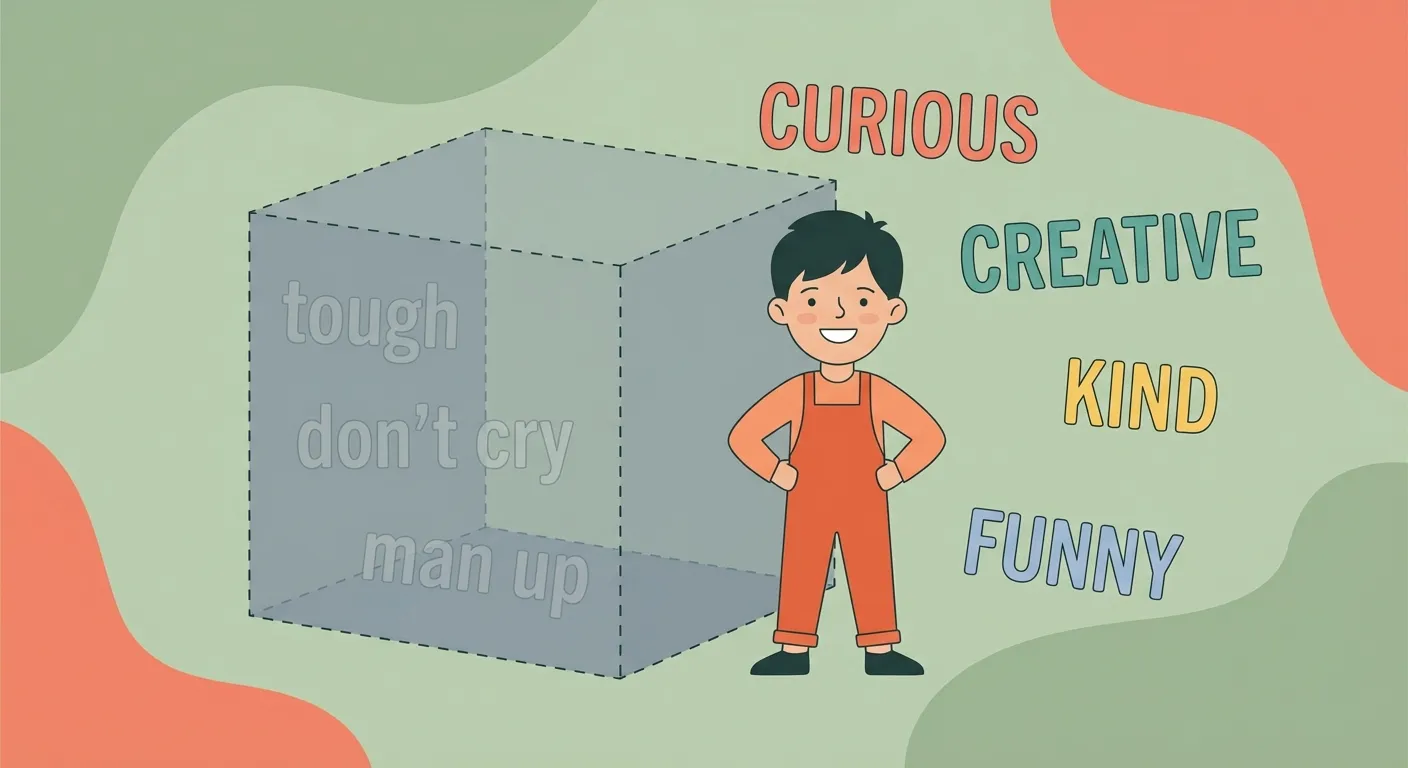
What's Inside the Box (and What Gets Locked Out)
Researcher Paul Kivel mapped this pattern years ago, and it's remarkably consistent — across schools, neighborhoods, cultures. Boys who perform the rules get status. Boys who break them get targeted.
Earns status inside
- Effortless confidence
- Never caring too much
- Physical dominance
- Quick comebacks
- Emotional flatness
Gets punished outside
- Showing sadness or fear
- Caring about school or art
- Asking for help
- Being small or uncoordinated
- Standing up for the targeted kid
The trap is elegant and cruel: boys inside the box feel pressure to stay. Boys outside get targeted. And the easiest way to prove you belong inside? Mock the boys who don't.
The Redirect: One Line, Zero Confrontation
Here's what actually works. You don't need to lecture grandpa. You don't need to start a debate at Thanksgiving. You need one sentence that shifts the spotlight from "tough boy" to "who he actually is."
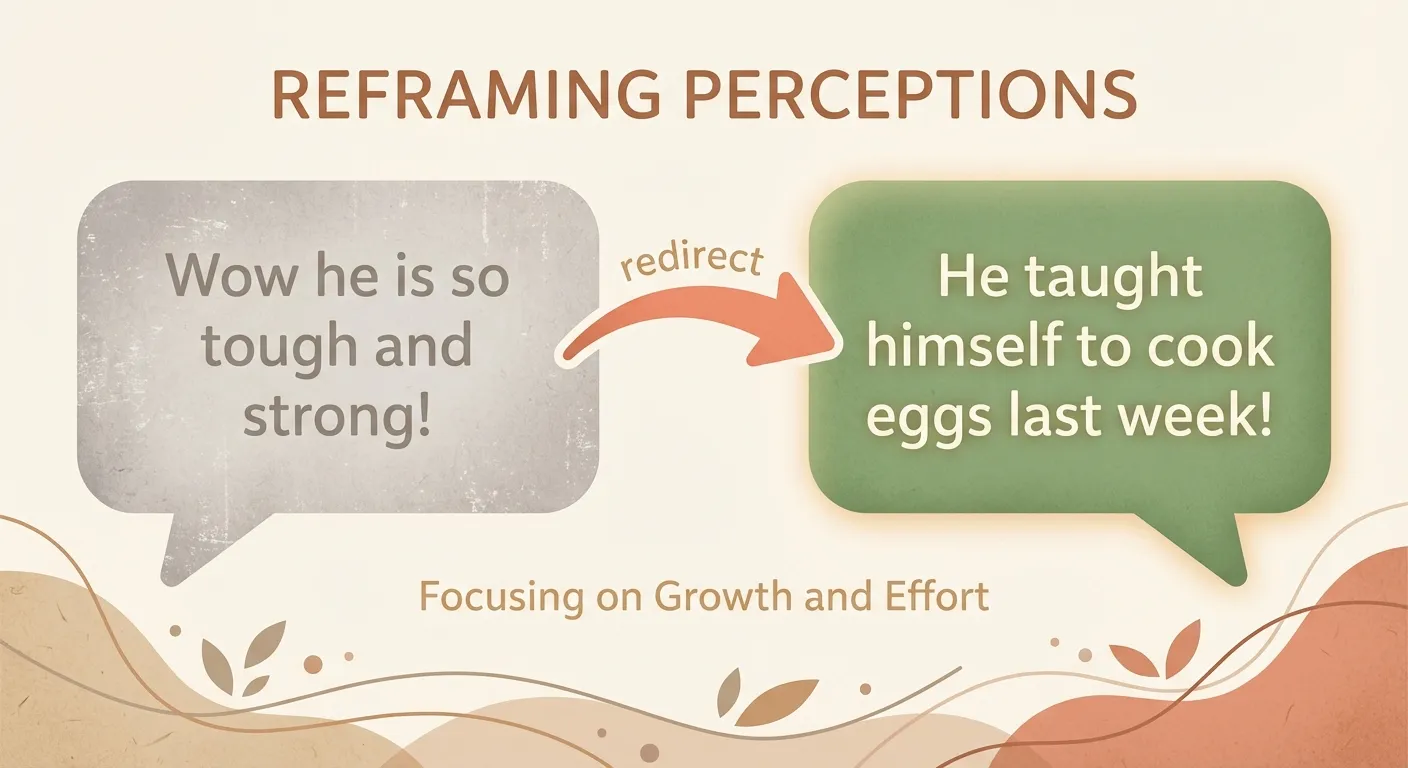
Watch how simple this is:
The Pattern Behind Every Redirect
| What they said | What you do |
|---|---|
| Praises toughness, size, or emotional suppression | Pivot to a specific skill, interest, or accomplishment |
| Tells him to stop feeling something | Name the feeling as normal, protect the space |
| Uses femininity as an insult | Say it's not okay — to the adult, not just your son |
| Reduces him to his body | Add something about his mind or character |
Every redirect does the same thing: it replaces a message about who he's supposed to be with evidence of who he actually is.
You can't dismantle every message your son receives.
But you can make sure he hears a different voice — yours — telling him that who he actually is matters more.
Know When to Spend Your Energy
Not every comment needs a response. Here's the triage:
The Squeeze: Ages 10-14
The box tightens on a schedule. Between ages 10 and 14, peer pressure intensifies and boys start policing each other. If your son suddenly drops activities he used to love, ask yourself: did the box get to him?
Peer Pressure Intensity by Age
This is when your redirects matter most. By high school, many boys inside the box find it exhausting and suffocating — but the performance feels like their actual identity. The earlier you start, the more of himself your son gets to keep.

Four Things to Start This Week
1. Name the box when you see it
"Did you notice that commercial? It's basically saying boys aren't allowed to care about anything." Once he can see the pattern, he can choose whether to follow it.
2. Praise what lives outside the box
When he's kind to his sibling, when he asks a thoughtful question, when he admits he's struggling — notice it out loud. He needs to hear that those things have value.
3. Show him men outside the box
Point out men who are emotionally present, creative, gentle, or vulnerable. He needs evidence that there's a way to be a man that doesn't require performing toughness around the clock.
4. Watch for the squeeze
If he suddenly abandons something he loved, don't assume he lost interest. Ask. The answer might be that the box got tighter this semester.