
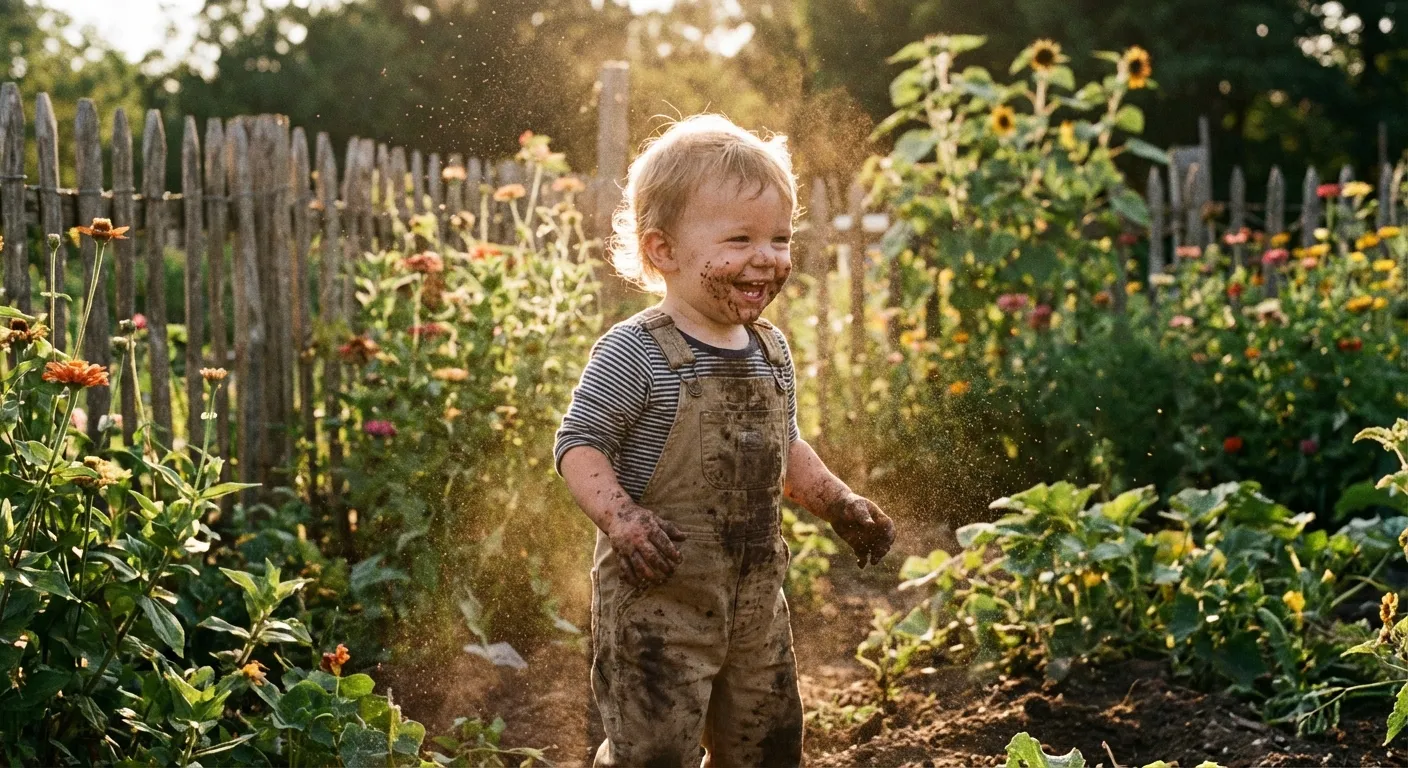
Dirt under fingernails isn't negligence. It's immune training.
- Kids who get regular soil and animal exposure early develop fewer allergies, stronger gut health, and less asthma through adolescence.
- The move: rain boots and mud clothes daily, plain soap only, fermented foods at breakfast, antibiotics as last resort.
Here's something immunologists have known for decades that most parents haven't caught up with yet: the kids who get sick the least aren't the cleanest ones. They're the ones who played in the most dirt.
Not figuratively. Literally. Soil, mud, grass, animal fur, sand at the playground your toddler just tried to eat. All of it is training their immune system in ways that no amount of antibacterial soap ever could.
An immune system that never encounters microbes is like a guard dog that's never seen a stranger. It doesn't get better at protecting. It gets worse.
Your child's body is running a sophisticated training program from birth. Thousands of microbial species in natural environments teach their immune cells what's actually dangerous and what's not. Skip that training, and the immune system starts swinging at everything — pollen, peanuts, pet dander. That's how you get the allergy epidemic.
The Loop That Makes It Worse
Sound familiar?
Your kid gets sick again. You scrub harder, sanitize more, keep them indoors. They get sick again. You buy stronger disinfectant. Repeat.
The problem was never "too many germs." Studies comparing communities across Europe and globally — kids on farms vs. kids in cities, kids with dogs vs. kids without — all land on the same finding: broader microbial exposure early in life means fewer infections, fewer allergies, less asthma.
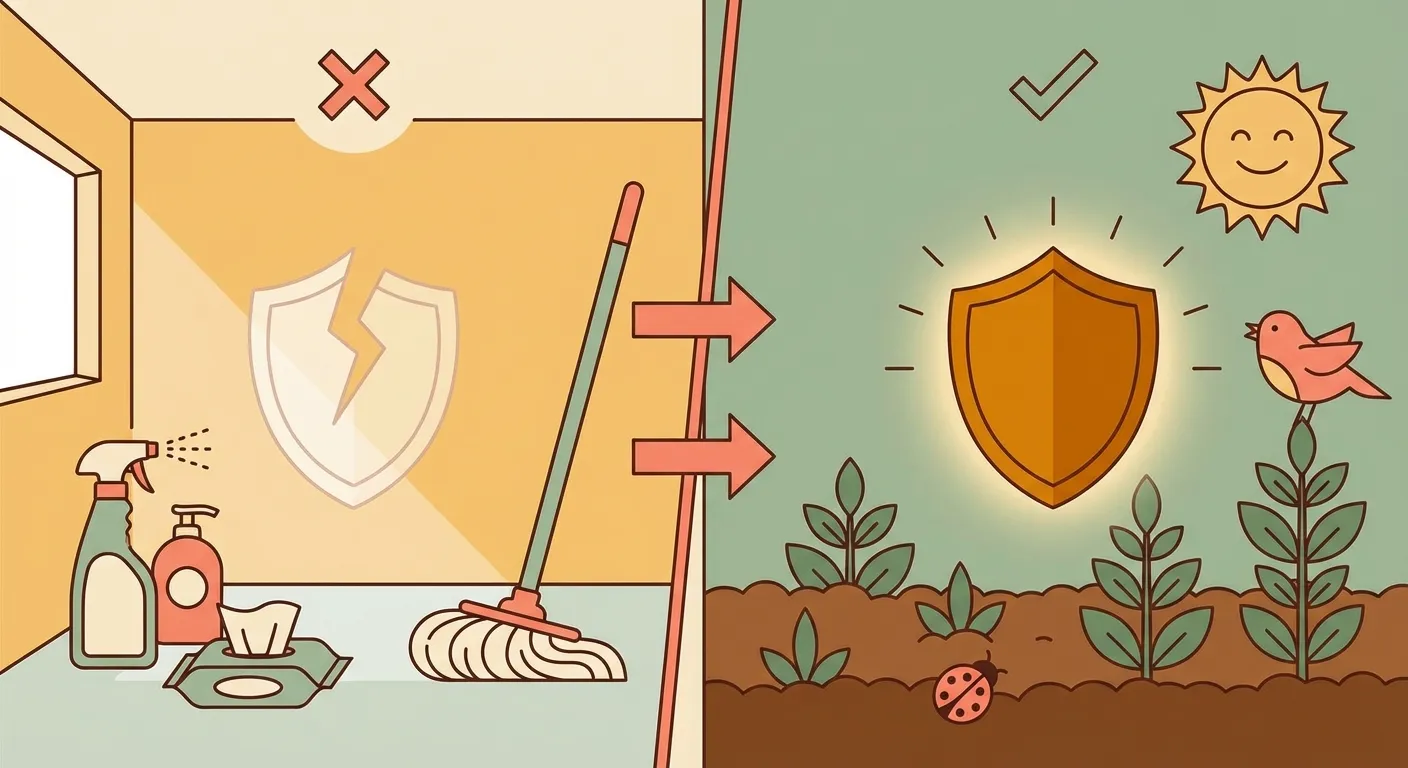
The Quick Swap Guide
You don't need a lifestyle overhaul. These one-for-one swaps shift the balance:
| Over-Sanitized | Microbe-Friendly |
|---|---|
| Antibacterial soap everywhere | Plain castile soap at every sink |
| Bleach-based household cleaners | Vinegar or basic all-purpose cleaner |
| Indoor-heavy routine | Daily outdoor time, rain or shine |
| Quick antibiotic prescriptions | "Is this viral or bacterial?" first |
| Processed snack-heavy diet | Yogurt, kefir, fiber-rich whole foods |
5 Shifts That Build Immune Strength
Each of these brings beneficial microbes back into your child's daily life. No radical changes — just smarter defaults.
Get Outside and Into Nature
Natural soil, grass, and water contain thousands of microbial species. Parks, gardens, forests, beaches — regular time in green spaces gives your child's body the diversity it needs.
Certain soil organisms have been shown in lab studies to trigger calming brain chemistry and may support mood and cognitive function too.
Ditch the Antibacterial Products
Plain soap handles nearly every cleaning job. Antibacterial soaps contain ingredients linked to hormone disruption and breed resistant bacteria — with no proven benefit over regular soap for everyday use.
Research across European countries found regular household bleach exposure may actually be associated with higher rates of childhood respiratory infections.
Bring Animals Into the Picture
Children who grow up around dogs, cats, or farm animals from early on develop significantly fewer allergies. The strongest effect comes from exposure in the first year, but any regular contact helps.
Question Every Antibiotic
Most childhood colds, coughs, and ear infections are viral — antibiotics do nothing for them. But they wipe out the beneficial bacteria your child's gut spent months building.
Feed the Good Bacteria
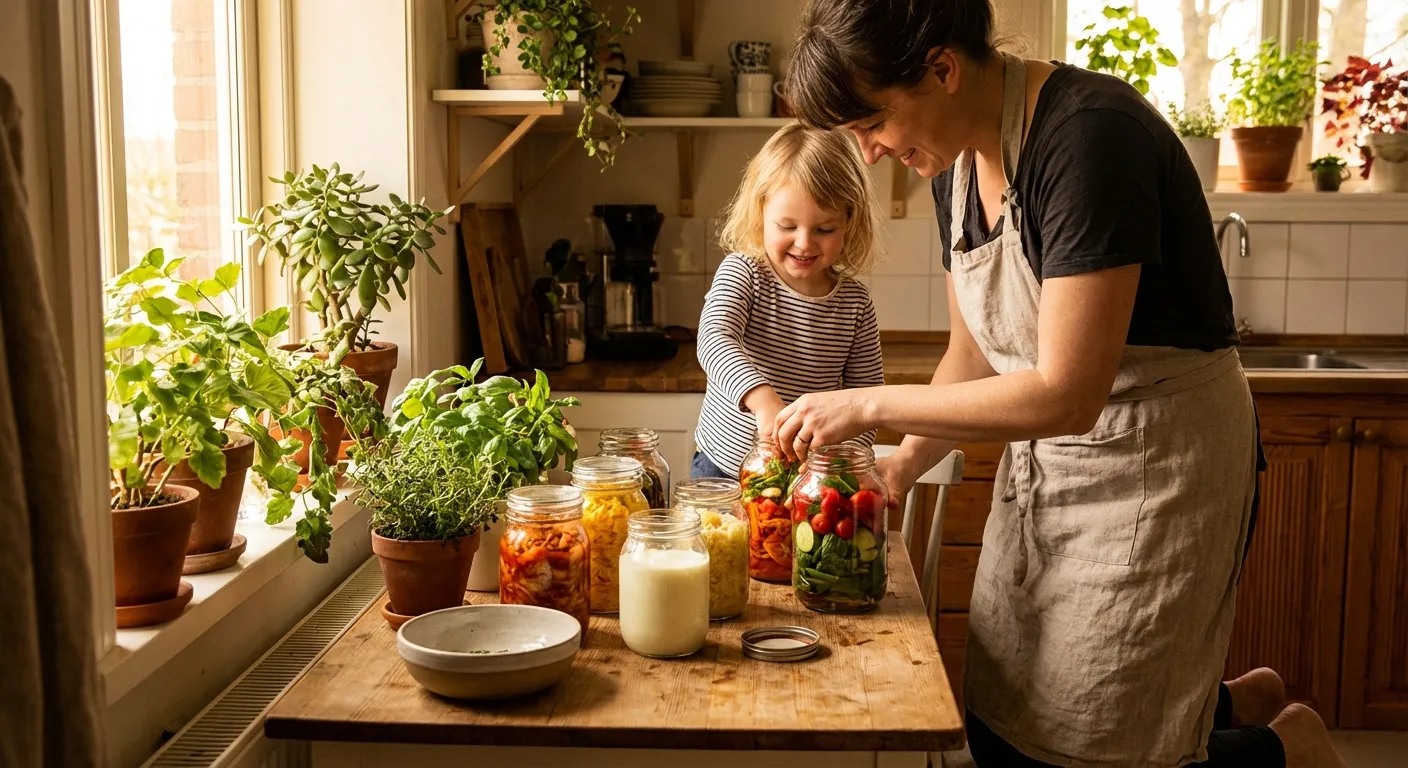
A diverse gut microbiome is one of the strongest predictors of immune health. Naturally fermented foods — yogurt, kefir, sauerkraut, kimchi, miso — deliver live beneficial bacteria straight to the gut. Fiber-rich fruits, vegetables, and whole grains feed them once they're there.
The Hardest Part: Your Own Reflexes
The biggest obstacle isn't information. It's the moment your kid picks something up off the ground and every instinct says "don't touch that!" Before you say it, ask yourself: is there actual danger here, or just ick?
Dirt under fingernails, grass-stained knees, sand in pockets — these aren't signs of negligence. They're signs of an immune system getting exactly the training it needs.
Make outdoor time non-negotiable. Rain boots, mud clothes, whatever it takes. The consistency matters more than the duration. Save the soap for before meals and bedtime. That's it.
The healthiest kids aren't the cleanest ones.
They're the ones whose immune systems got enough practice.