
The Four Words That Make Kids Unstoppable
Most parents accidentally teach kids that love depends on winning.
- Kids who hear effort praised treat setbacks like data. They experiment more, avoid perfectionism, and stay curious years longer than kids chasing trophies.
- The shift: catch yourself comparing, then name one specific effort your kid made today — out loud, to their face.
Her volcano didn't win. She was already planning next year's. Here's what her parents did differently.
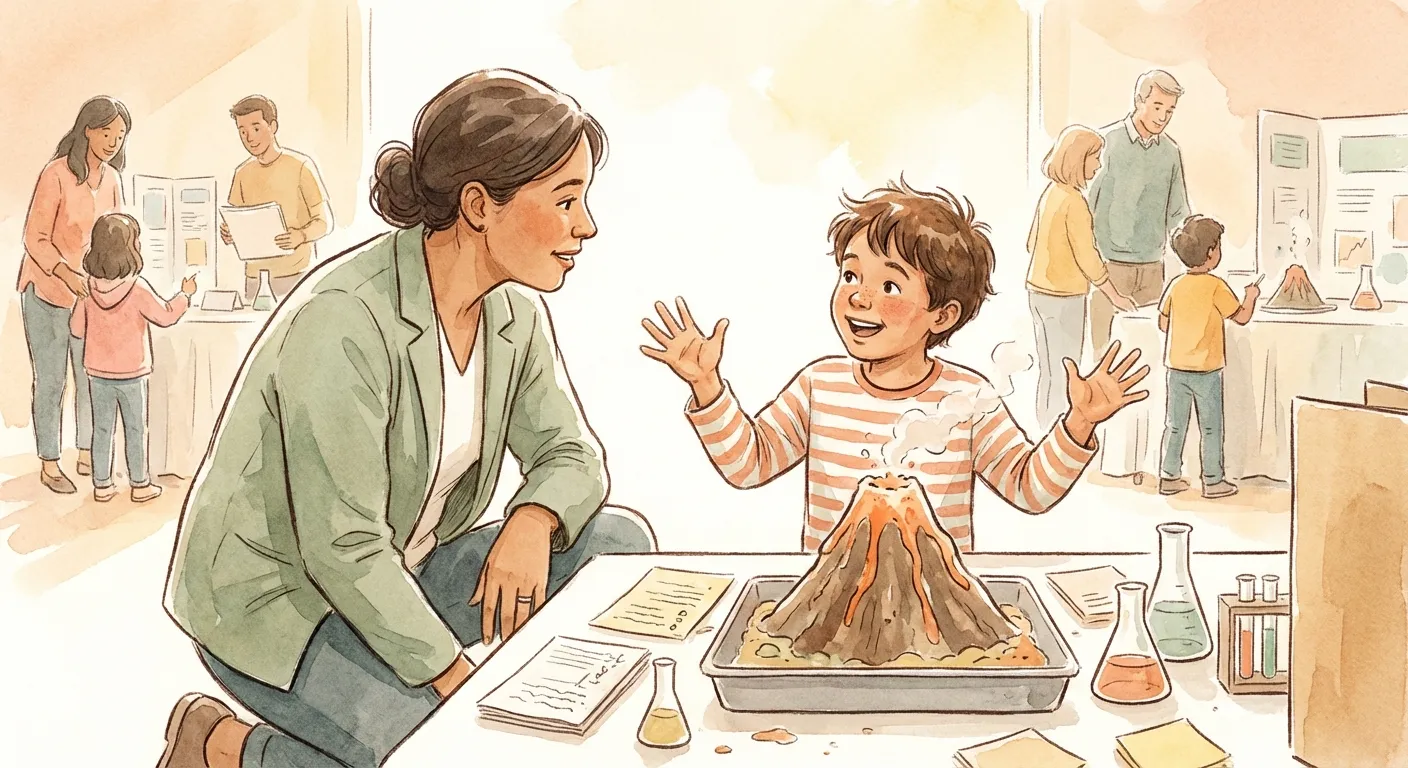
Picture this: science fair night. Your daughter's baking-soda volcano sits between a robotic arm and a hydroponic garden built by a kid who clearly had an engineer for a parent. No ribbon. No honorable mention. In the parking lot, other parents are comparing results.
On the drive home, you skip the consolation speech. Instead, you say:
She grins. She's already talking about next year's project.
That's the Effort Lens. And it's the difference between raising a kid who folds when things get hard and a kid who treats setbacks like fuel.
What Actually Happens in Their Brain
Decades of motivation research boil down to something surprisingly simple: the type of praise you use literally rewires how your child responds to difficulty.
Kids who hear "You're so smart!" learn that ability is fixed -- you either have it or you don't. When they hit a wall, they interpret struggle as evidence that they've reached their limit. So they stop trying.
Kids who hear "You worked so hard on that!" learn that effort is the engine. When they hit a wall, they push. They experiment. They come back tomorrow with a new approach.
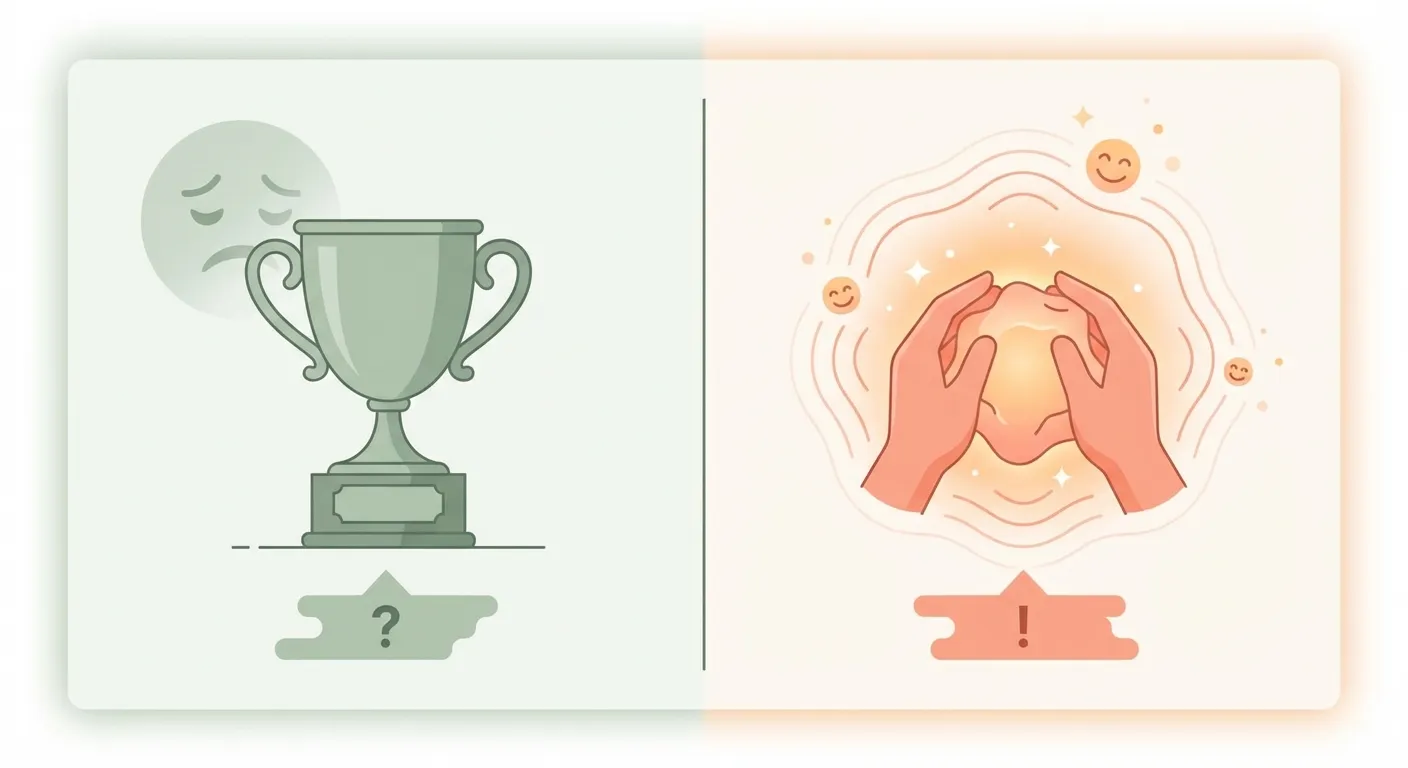
Same kid. Same brain. Totally different trajectory -- based on which four words you choose.
The Three Traps Most Parents Don't See
Before you can use the Effort Lens, you have to spot the patterns that block it. Most parents are running at least one of these without realizing.
The Spotlight
Measuring your kid against some ideal image. The prodigy. The all-rounder. When the spotlight is the goal, just showing up feels pointless.
The Scoreboard
Constantly comparing families. Who placed higher, who got in, who's ahead. Turns every activity into a contest and drains the joy out of learning.
The Treadmill
Stacking activities, raising the bar, rewarding wins with attention while ignoring daily effort. Your kid learns: "I'm only loved when I'm producing."
Noticing your child practiced for twenty minutes matters more than cheering when they bring home a trophy.
The Swap: What to Say Instead
This isn't about never celebrating wins. It's about making sure effort gets at least as much airtime. Here's the cheat sheet:
| Instead of this | Try this |
|---|---|
| "You won! You're the best!" | "I noticed you kept going even when that section was really hard." |
| "You got an A -- I'm so proud!" | "You practiced every single day this week." |
| "You're a natural!" | "Tell me about what you worked on -- I want to hear all of it." |
| "She's not as good as you." | Compliment other kids' efforts genuinely. Show there's room for everyone. |
The Refocus Method (When You Catch Yourself Slipping)
You're scrolling another family's highlights. You're replaying rankings in your head. You feel the knot. Here's what to do with it:
Notice the pull
Don't judge it. Just name it. "I'm comparing again." That's the whole step.
Ask the honest question
What am I avoiding in my own family right now? Fixating on someone else's results is almost always a way to dodge something closer to home.
Name one effort
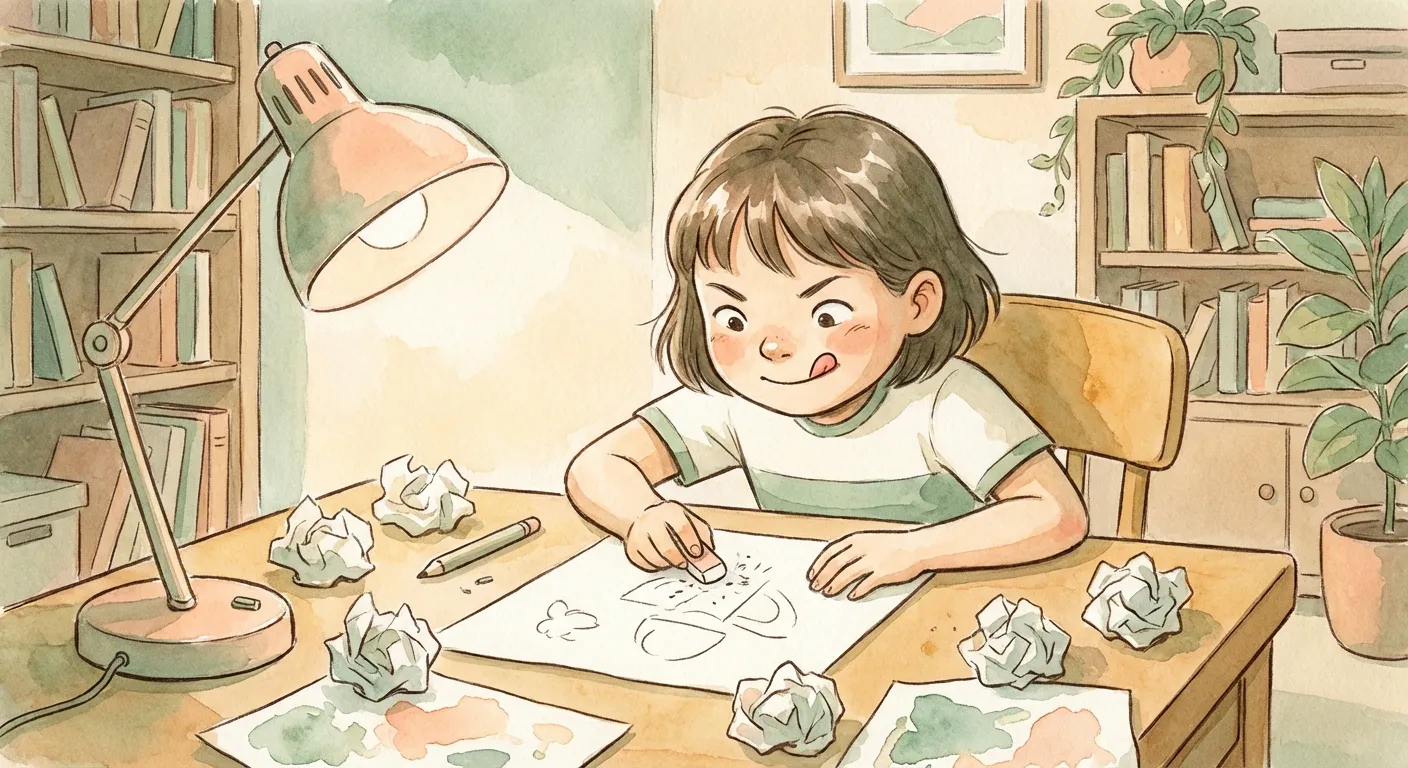
Think of one thing your kid did today that took real work. Not a result. The work itself. Maybe they sat with a math problem for ten minutes before asking for help.
Say it out loud
Go tell them. Be specific. Not "good job" -- exactly what you saw.
This Plays Out Everywhere
The kid who loves building things
A dad who grew up under relentless academic pressure catches himself starting the old script: "But with your grades, you could..." He stops. Asks his son to show him what he's building instead. The kid lights up in a way grades never produced.
The writer who can't write anymore
A young woman celebrated for her writing as a teenager describes the aftermath: she can't enjoy writing anymore because every draft has to live up to that early praise. Being celebrated too soon stole the freedom to be a beginner -- the very thing creative growth requires.
Making This Stick
- Redirect dinner talk. When conversation drifts to rankings, gently steer to "What was hard today?" and "What did you try?"
- Model it yourself. "I rewrote that email four times before it felt right." Kids learn what you value by watching what you celebrate in your own life.
- Let them see you lose gracefully. "That didn't work out, but I learned something." They're always watching.
- Audit your praise for one week. Mental tally: outcomes vs. effort. Most parents are surprised by the ratio.
- Protect their right to be beginners. Resist fast-tracking mastery. Let them be bad at something for a while. That's where the real learning lives.
The kid whose parents praise effort doesn't just bounce back from losing. She plans what she'll build next. That's the difference.