
One Sauce Unlocks Twenty Foods
Picky eaters don't reject foods -- they reject the gap between known and unknown.
- Kids raised with dipping stations eat roasted vegetables within months. They reach for new foods voluntarily because every first bite comes wrapped in something they already trust.
- The move: close the gap with a familiar sauce. One dip turns a scary vegetable into a vehicle for something they already love.
The dip strategy that quietly turns cautious eaters into adventurous ones
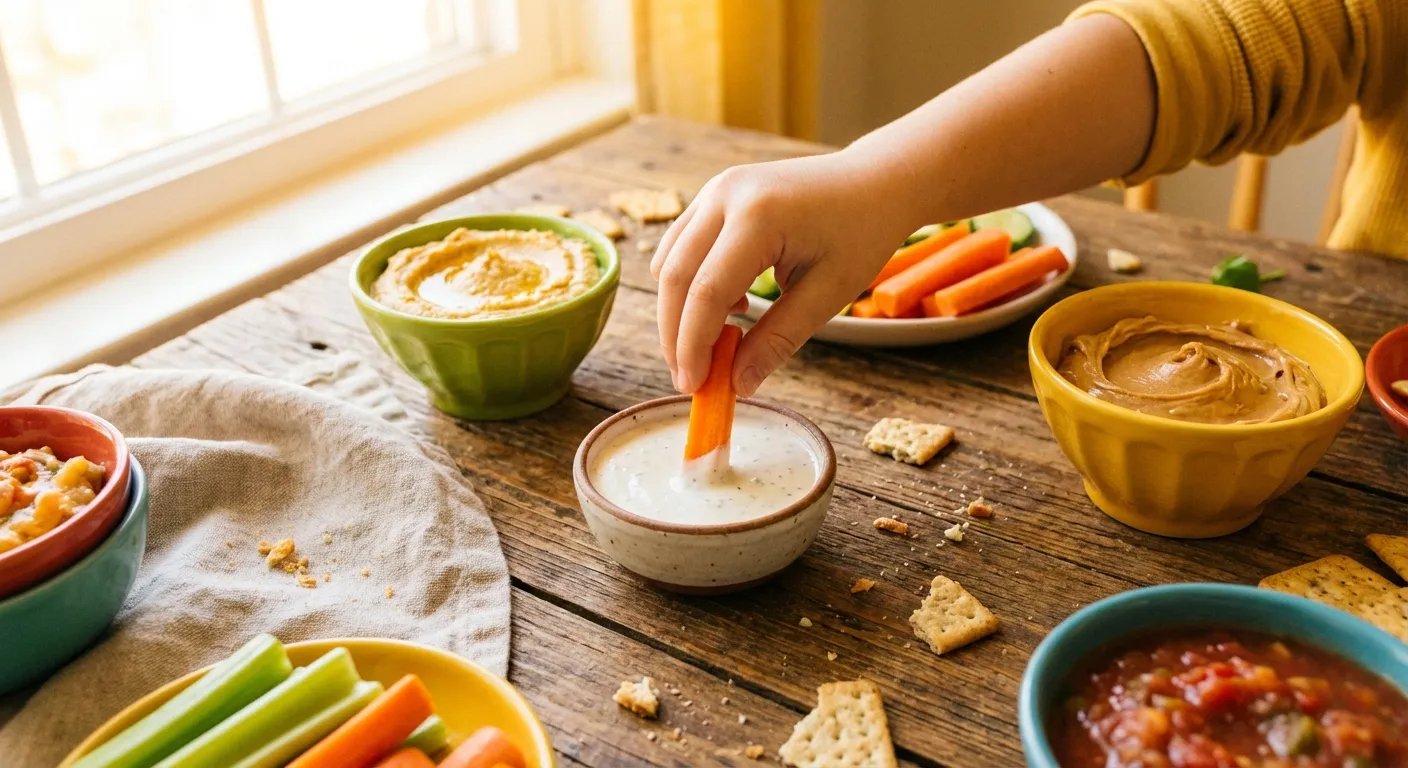
Your child already has a favorite sauce. Ranch. Hummus. Ketchup. Peanut butter. Whatever it is, they'd put it on everything if you let them.
Here's what most parents miss: that sauce isn't just a condiment. It's a skeleton key.
A single familiar dip can introduce your child to dozens of foods they've never touched -- because the sauce does the heavy lifting. It wraps every new bite in something they already trust. The unfamiliar food stops being the main event and becomes the vehicle for something they already love.
Children don't reject foods because they're picky. They reject foods because the gap between "known" and "unknown" feels too wide. A favorite sauce closes that gap instantly.
Why Dipping Works When Everything Else Fails
Think about it from their perspective. A plain steamed carrot on a plate is a solo act -- unfamiliar flavor, unfamiliar texture, nothing to anchor it. But that same carrot next to a bowl of ranch? Now it's a dipping tool. The child controls how much sauce goes on. They control the ratio of new-to-safe. They control the pace.
That sense of control is everything.
Child sees: unknown food, no escape route, pressure.
Child sees: a dipping opportunity, familiar flavor guaranteed.
Sauces also solve a practical problem adults forget about: dry and tough textures are physically harder for small mouths to manage. A dip adds moisture. It smooths out rough edges. It literally makes food easier to eat.
The Dipping Station Playbook
This isn't complicated. At meals, put two or three dips on the table alongside whatever you're serving. That's it. No announcements, no "try dipping your broccoli in this." Just make it available and let curiosity do the work.
Pick sauces they already love
Start with what's proven. If ranch is their thing, ranch goes on the table. If they live for ketchup, ketchup it is. The dip has to be a sure thing.
Serve new foods as dipping vehicles
Put out carrot sticks, cucumber rounds, bell pepper strips, snap peas -- whatever you want them to try. Place it near the dip, not on their plate. Let them reach for it themselves.
Say nothing about it
This is the hardest part. Don't narrate. Don't encourage. Don't point. Just eat your own food. If they dip a carrot in ranch and eat it, act like it's the most normal thing in the world -- because it is.
The Sauce-to-Food Expansion Map
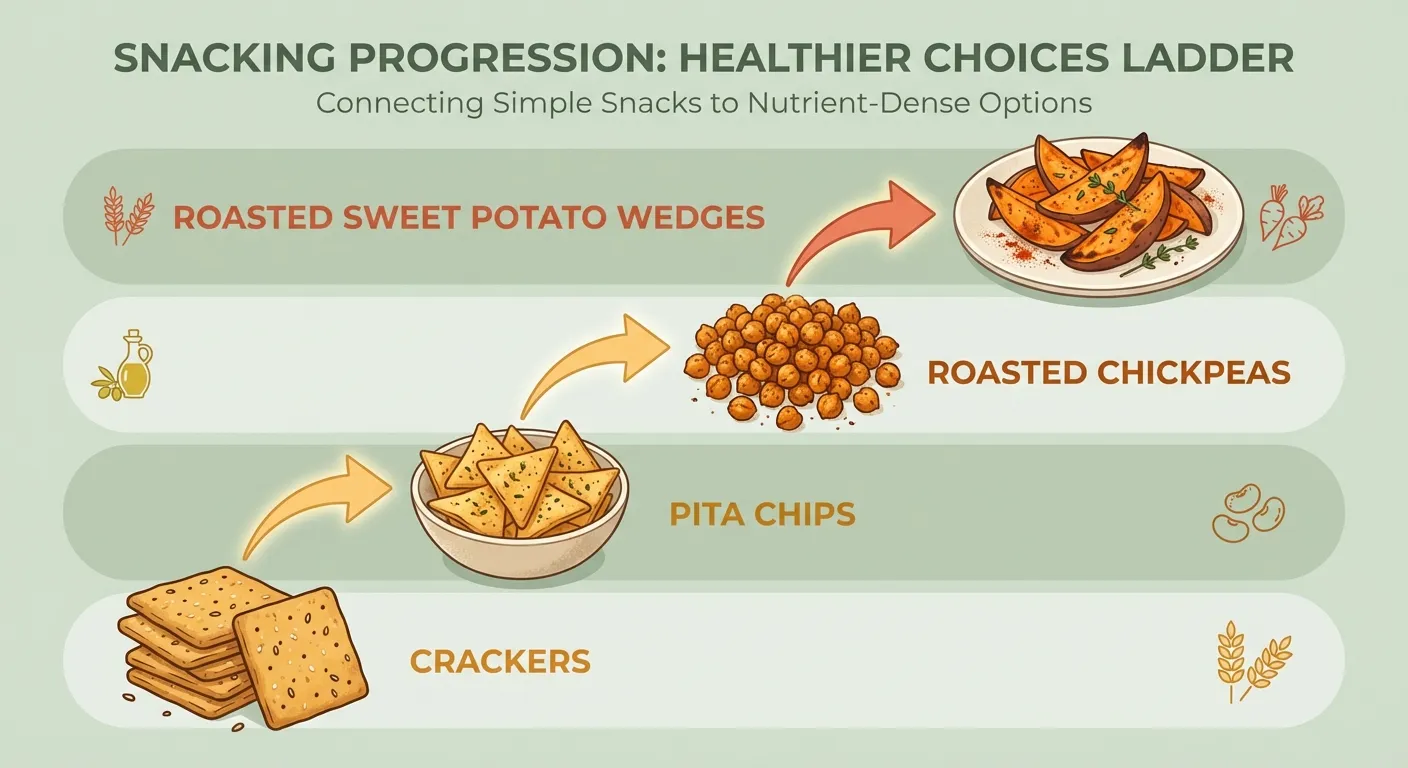
Once your child is dipping happily, you can start branching out. Each sauce opens a different set of doors.
| If they love... | They might try... |
|---|---|
| Ranch | Carrots, cucumbers, bell peppers, cherry tomatoes, roasted broccoli, pizza crust edges |
| Hummus | Pita chips, cucumber, snap peas, roasted sweet potato wedges, warm flatbread |
| Peanut butter | Apple slices, celery, banana, whole grain crackers, rice cakes |
| Ketchup | Roasted potatoes, turkey meatballs, scrambled eggs, fish sticks, veggie burgers |
| Melted cheese | Broccoli, cauliflower, pasta, black beans, tortilla chips, soft pretzels |
| Teriyaki | Rice, edamame, grilled chicken, stir-fried noodles, tofu cubes |
See the pattern? Each sauce is a bridge to a whole category of foods. A child who dips six different vegetables in ranch over the course of a month has just expanded their diet by six foods -- and it felt like a game, not a lesson.
The Seasoning Trick
Dipping is one version of a bigger idea: take a flavor your child trusts and put it on something new.
If your child loves garlic butter on bread, try garlic butter on green beans. Same flavor. Different vehicle. The green beans stop being "a vegetable I've never tried" and become "another thing that tastes like garlic butter."
One flavor. Four foods. Each step feels tiny because the garlic butter is always there, holding the child's hand.
What Not to Do
- Don't hide foods in the sauce. Sneaking pureed spinach into ranch breaks trust. Transparency is the whole point -- they need to see the new food and choose to dip it.
- Don't limit how much sauce they use. Yes, the carrot-to-ranch ratio might be absurd at first. That's fine. They're touching a carrot to their mouth. That's the win.
- Don't turn it into a challenge. "Can you try dipping your broccoli?" is pressure wearing a costume. Put the broccoli near the dip and walk away.
- Don't take away the safety sauce too soon. Some parents worry their child will "only eat things with ranch forever." They won't. As familiarity with the new food grows, the sauce naturally becomes optional.
The Long View
A child who dips everything in ranch today is a child who eats roasted vegetables next year. The sauce is training wheels, not a crutch. Every dipped bite builds familiarity with the flavor and texture of that food. Eventually, the sauce becomes a choice rather than a requirement.
Pediatric feeding research backs this up: flavor preferences are learned, not fixed. Repeated, low-pressure exposure is what builds acceptance. And a favorite dip is the lowest pressure there is -- the child doesn't even realize they're being "exposed" to anything. They're just dipping.
Your child's favorite sauce isn't a problem to manage.
It's the most powerful tool in your kitchen.
Put it on the table tonight and see what happens.