

The Most Powerful Thing You Can Do Is... Nothing (Until They Reach)
The hardest parenting move is doing nothing when every instinct says fix it.
- Kids raised this way know what they need, ask for it directly, and build real trust with the people around them — at school, with friends, everywhere.
- The shift: let them feel the want before you fill it. Their discomfort is where the growth happens.
Why holding back is the move that builds kids who know how to connect, ask, and thrive.
Your four-year-old is halfway up the climbing wall. Arms shaking. Face scrunched. Every cell in your body screams lift them.
You don't.
You sit. You watch. You let those little arms figure it out. And when they look back at you with that grin -- the one that says I did that -- you realize something: the best thing you just did was nothing at all.
Except it wasn't nothing. It was the hardest move in parenting. You held space instead of filling it. And that tiny moment just taught your kid something no amount of giving ever could.
The Trap No One Warns You About
There's a pattern researchers in attachment theory call enmeshment -- when a parent's emotional needs get tangled with their child's. Family therapists have a simpler way to describe it: when parents over-function, kids under-function.
It looks like great parenting. You're attentive. You anticipate. You provide before they even ask. But here's what's actually happening underneath:
You're not responding to their need.
You're managing your own discomfort with their need.
And the cost is enormous. A child who never practices feeling a want, reaching toward someone, and receiving -- that child never learns the most fundamental relationship skill that exists.
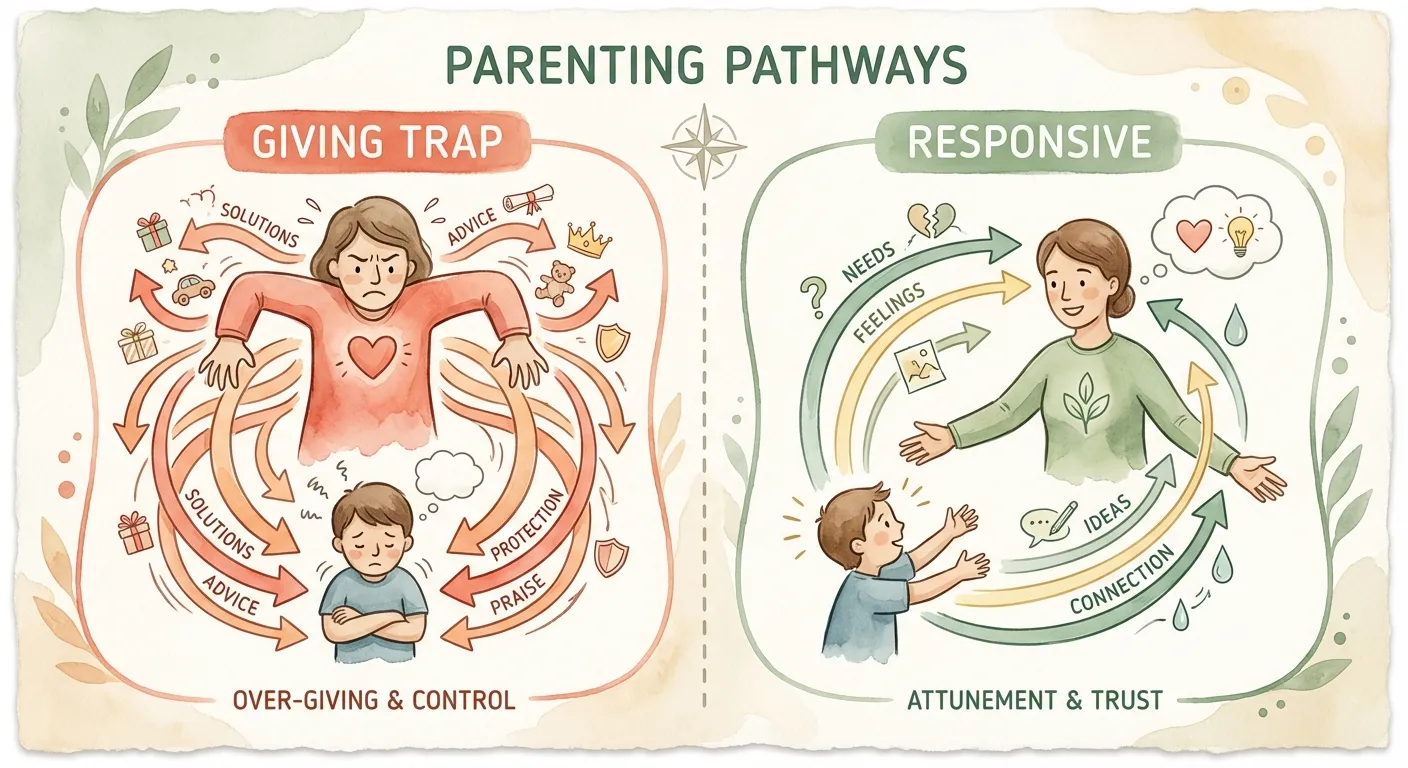
Spot the Difference
Same situations. Two completely different things happening underneath.
The Giving Trap
Responsive Parenting
The difference isn't generosity. Generous parents exist on both sides. The difference is who initiates: the child's need, or the parent's anxiety.
The CHECK Before You Give
Five questions. Takes ten seconds. Run through them before you fix, rescue, or provide.
Whose comfort am I protecting?
If it's yours more than theirs, pause. Their frustration is uncomfortable for you -- but it's often where their growth happens.
Have they asked?
Did your child actually signal a need, or are you anticipating one? Let them feel the want before you fill it.
What energy is driving this?
Does this feel calm and chosen, or urgent and compulsive? A rush to fix is your signal to slow down.
Can they handle it?
Most of the time, your kid can sit with more discomfort than you think. Give them the chance to surprise you.
Know your pattern.
Are you repeating something from your own childhood? Sometimes we give our kids what we wished we'd received -- and that's about us, not them.
Three Moments, Two Ways
The Playground
Your four-year-old is struggling to climb. You feel the pull to lift them up.
Trap move: Pick them up and place them at the top. They smile, but they didn't earn it.
Kung fu move:
Stay close. If they ask for help, give just enough -- a hand to steady, not a full lift.
After School
Your seven-year-old comes home grumpy. Something clearly happened. You want to fix it immediately.
Trap move: "What happened? Who was mean to you? I'll talk to their parent."
Kung fu move:
Then wait. Let them come to you. Let them decide what they need -- a hug, a talk, or just some quiet time. The reaching is the point.
Bedtime Negotiations
One more story. Then water. Then one more hug. Each "yes" temporarily relieves your guilt -- but they're not getting what they need: sleep, boundaries, a parent who holds the line.
Kung fu move:
Warm. Firm. Done.
The Long Game
Catch the urge early
Notice when you feel the pull to fix or rescue. That feeling is information about your state, not your child's need. The urge is the signal to pause, not act.
Practice tolerating their discomfort
Start small. Let them be bored for ten minutes. Let them struggle with the zipper. Let them feel disappointed when the answer is no. Your ability to sit with their hard feelings is one of the most powerful things you can build.
Watch for the reach
When your child comes to you -- asks for help, reaches for a hug, tells you about a problem -- that's the moment. They felt the need, they chose you, and now your response builds real trust.
Know your triggers
Tiredness, guilt, stress, your own childhood. On hard days, you'll over-give. That's okay. Notice it, name it, recalibrate tomorrow.
Model asking for help yourself
Let your child see you say "I need a minute" or "Can you help me with this?" When they see you reach toward others, they learn that needing people is normal, not weak.
The opposite of over-giving isn't withholding.
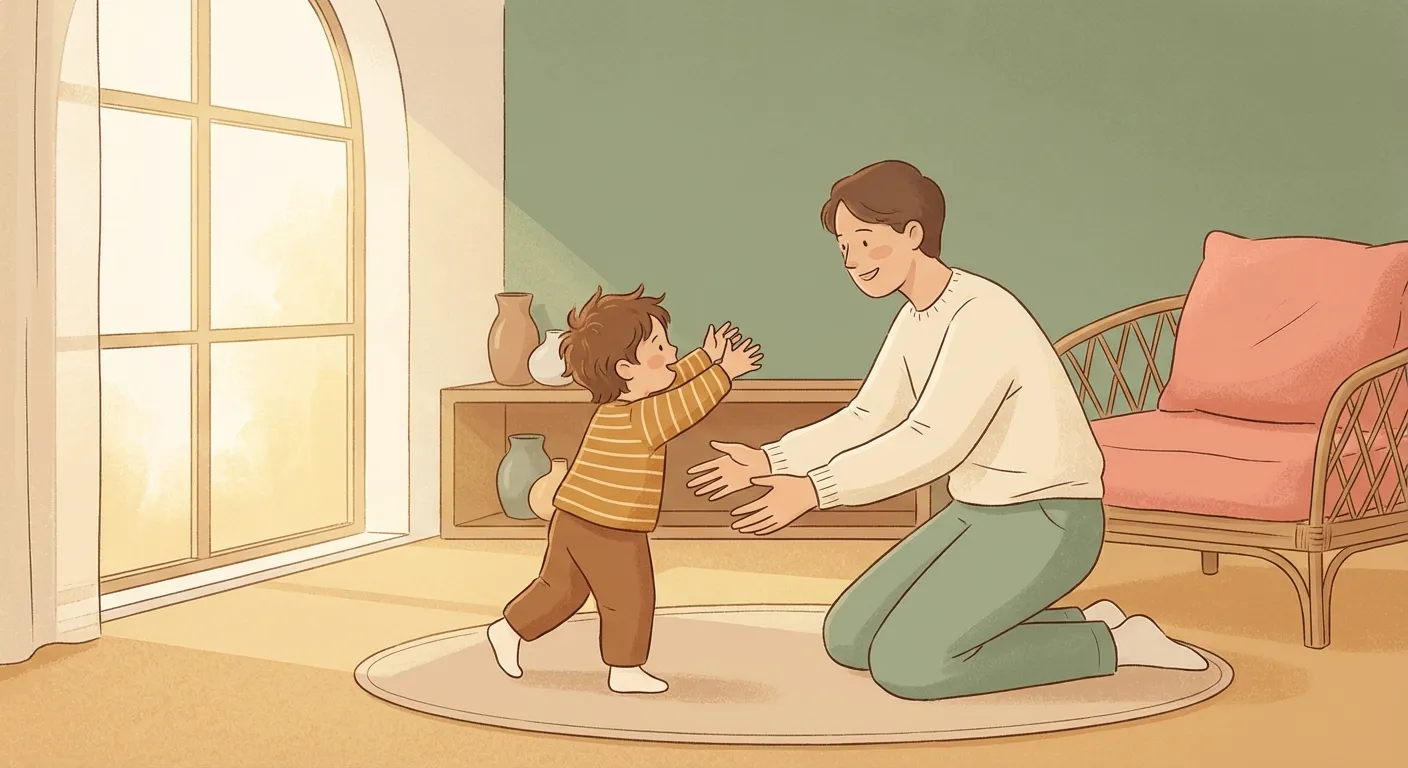
It's waiting for the reach -- and then being completely there.
That's the move. That's the whole thing.