
The Most Important Teacher Isn't the Expert
The first teacher's job isn't teaching skill. It's building love.
- Kids whose first instructor is warm and encouraging fall in love with the activity and survive the hard years later. Kids who start with a strict teacher quit.
- The move: pick the teacher who makes your kid want to come back, not the one with the best credentials.
Your instinct says find the best coach, the strictest teacher, the one with credentials. Decades of talent research says that's exactly backwards.
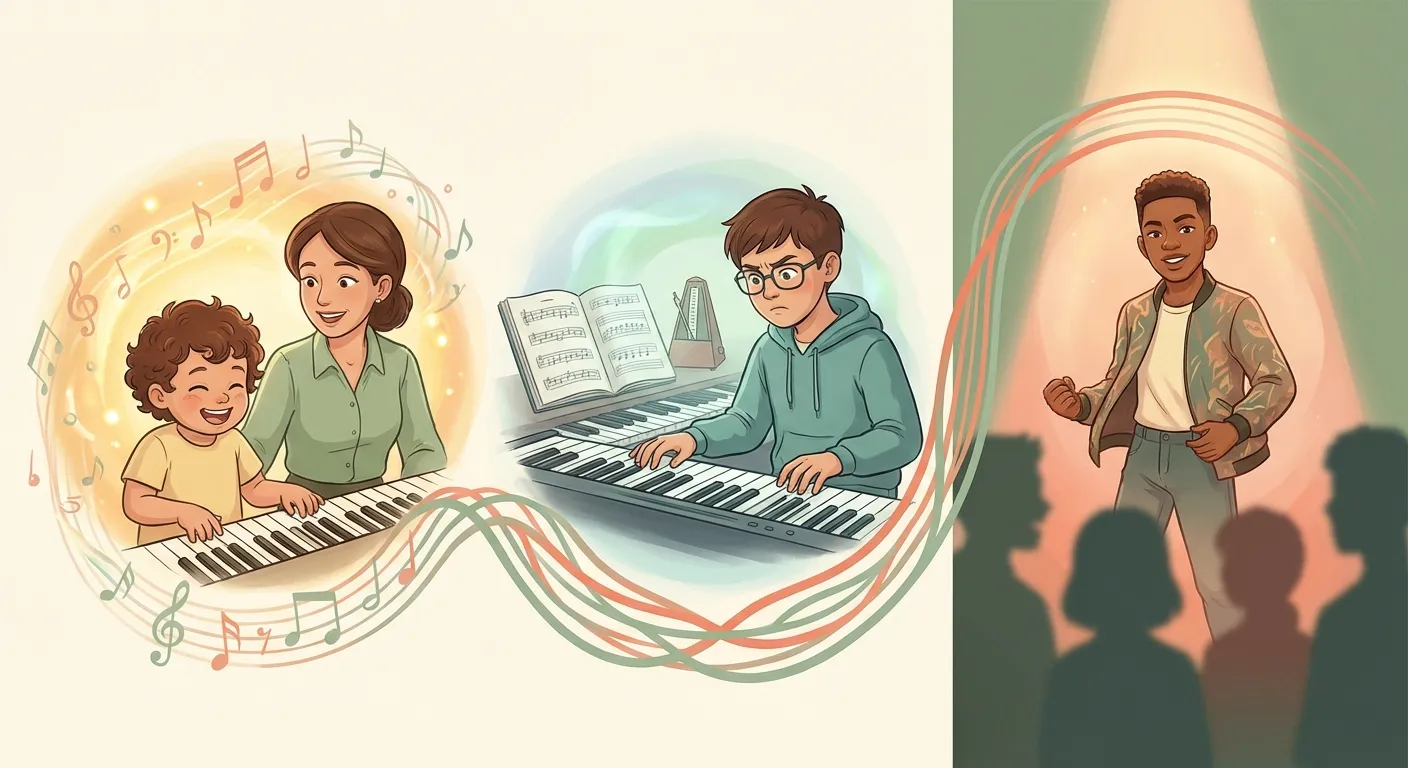
Here's a scenario that plays out in living rooms every week: a parent finds the most accomplished piano teacher in town, signs up their six-year-old, and within three months the kid wants to quit.
The parent blames the child. Not enough grit. Not enough discipline. Maybe piano just isn't their thing.
But the research tells a completely different story. The child didn't fail. The sequence was wrong.
Decades of research on world-class performers reveals the same pattern across music, athletics, science, and the arts. Concert pianists, Olympic swimmers, research mathematicians, sculptors. Different fields, same sequence. Every single time.
Developmental researchers have confirmed this rhythm of learning in dozens of disciplines. And the most important discovery? The transitions between stages matter more than the stages themselves.
The Three Stages
Stage 1: Explore
Play & Falling in LoveTime to Move On When...
- The teacher says: "Your child needs someone who can take them further"
- Your child is clearly the strongest in their group, no longer challenged
- They start noticing quality differences on their own -- comparing themselves to skilled performers
- You sense they're coasting: enjoying the praise but not growing
Stage 2: Sharpen
Technique & DisciplineTime to Move On When...
- Their technique is strong but their work feels mechanical or impersonal
- They study top performers not for technique but for feeling and interpretation
- The current teacher suggests mentorship at a higher level
- They've achieved regional or national recognition and need artistic development
Stage 3: Own
Voice & Artistry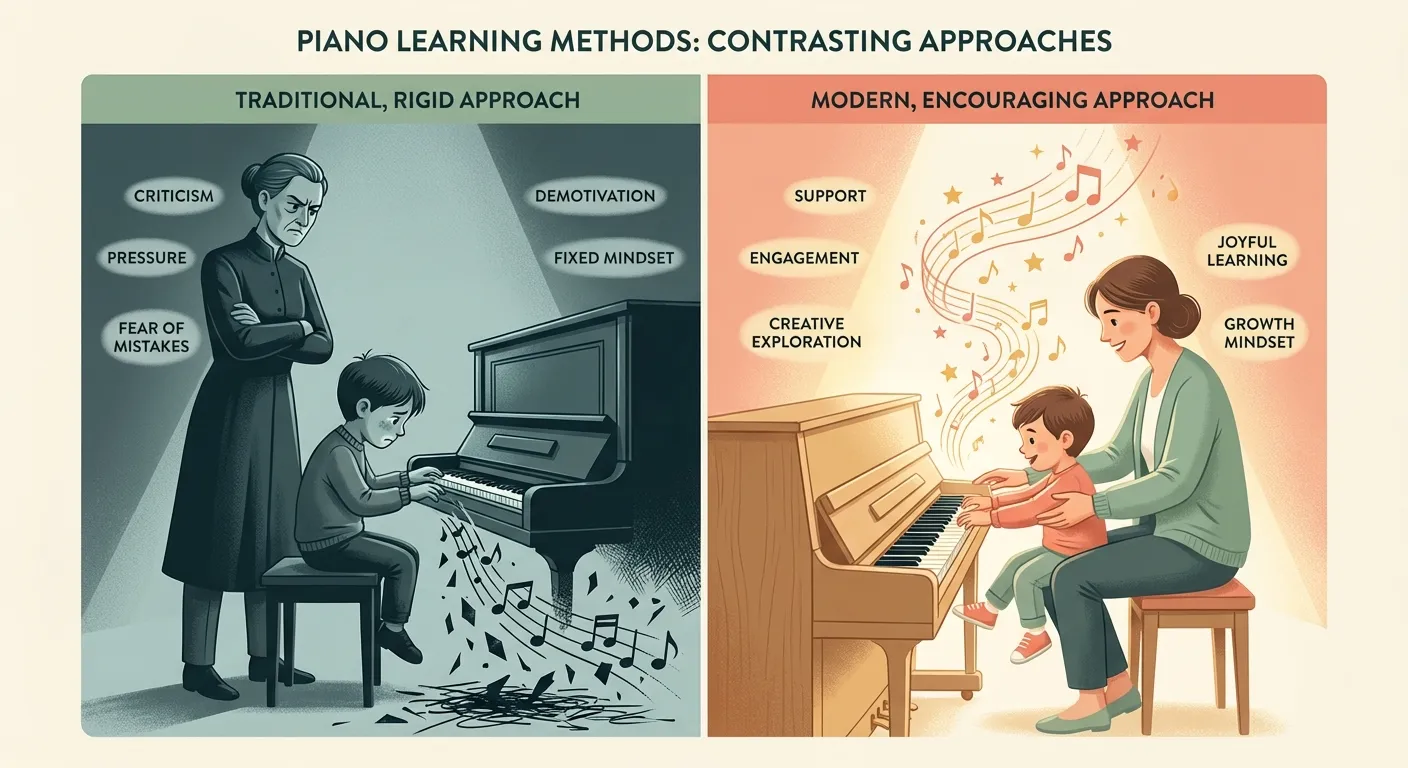
Why the Order Is Non-Negotiable
This is the part most parents get wrong. The sequence isn't a suggestion -- it's a requirement.
Three Ways to Break the Sequence
Start with a Stage 2 teacher (strict, exacting, perfection-focused) and most children quit before they ever fall in love with the activity.
Stay with a Stage 1 teacher (warm but limited in expertise) and your child never builds the deep skill required for excellence.
Jump to Stage 3 (creative expression) without Stage 2's technical foundation, and you get learners who seem impressive on the surface but plateau and stall.
Think of it this way: if a demanding, exacting teacher had been the first instructor, most children would have dropped out. And if children had stayed with a warm, easy-going teacher forever, they never would have built the skill required for excellence.
The love has to come first. Then the discipline. Then the voice. Every time.
The Full Picture at a Glance
| Explore | Sharpen | Own | |
|---|---|---|---|
| Core energy | Curiosity & delight | Discipline & precision | Expression & meaning |
| Typical span | 1 -- 5 years | 4 -- 6 years | 3 -- 5+ years |
| Teacher bond | Warmth & trust | Respect & accountability | Reverence & partnership |
| How they learn | Play & experiment | Repetition & correction | Interpret & create |
| Parent mode | Cheerleader & enforcer | Logistics & sacrifice | Sustainer & witness |
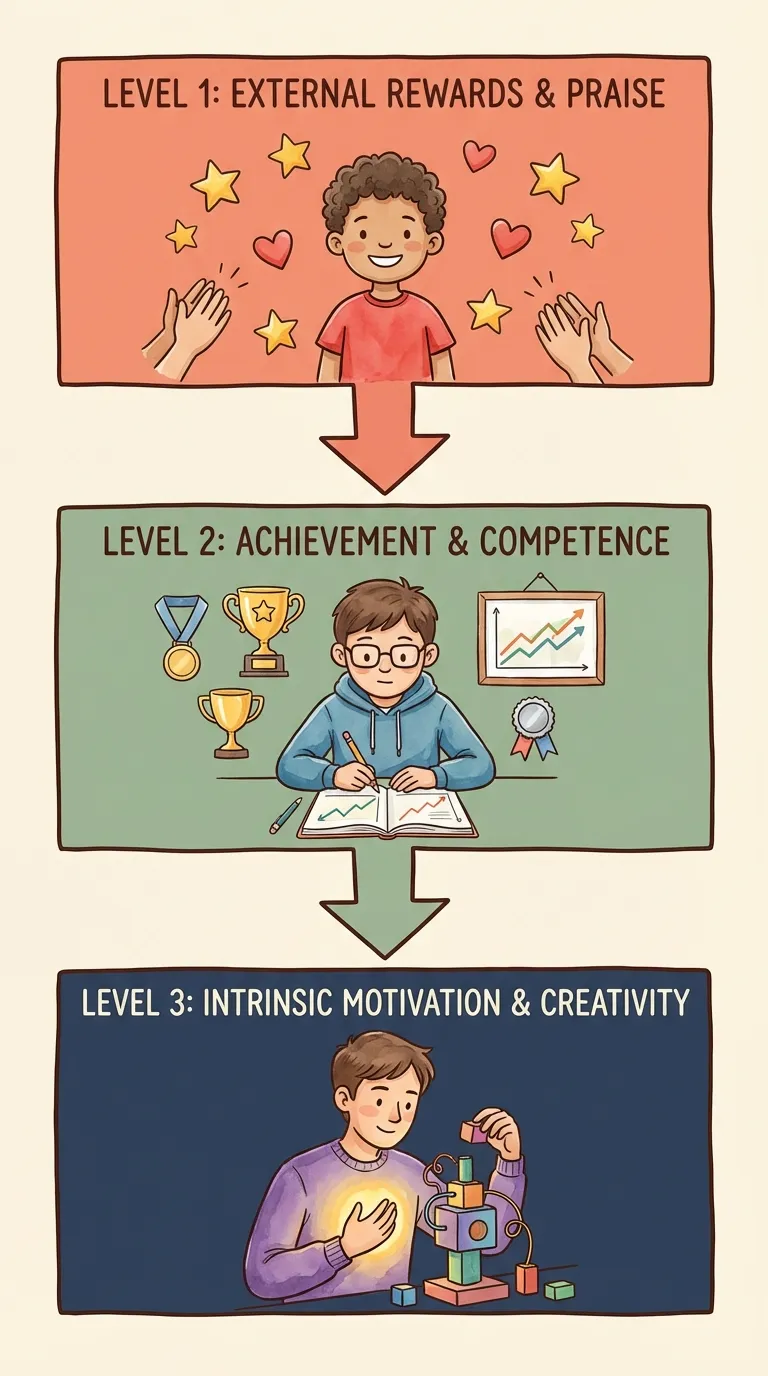
| What fuels them | Praise & attention | Mastery & identity | Purpose & self-expression |
How to Use This Tonight
- Read the stage, not the age. A 14-year-old starting guitar is in Stage 1 just as much as a 5-year-old starting violin. Match expectations to where your child actually is in their development, not how old they are.
- Let the teacher lead the transition. The best signal that your child is ready for a new stage is when their current teacher says so. Resist the urge to upgrade prematurely -- a child pushed into demanding instruction before they're ready will lose the love that sustains them.
- Watch for the motivation shift. In Stage 1, your child practices because you make them. In Stage 2, they practice because they want to be good. In Stage 3, they practice because they have something to say. Each shift means the sequence is working.
- Protect the habit during transitions. The move between stages is fragile. New teachers, new expectations, a jump in workload. Your child may doubt themselves. Stay steady -- the discomfort is temporary, and the payoff is a deeper level of engagement.
- Know your role shrinks by design. In Stage 1, you're heavily involved. By Stage 3, your child is self-directing. This isn't a loss -- it's the whole point. You built someone who doesn't need you to tell them what to do.
The parents who get this right don't produce kids who are merely talented. They produce kids who own their talent -- who practice because they want to, who push themselves because they care, who create because they have something only they can say.
That's the growth sequence. Love first. Skill second. Voice last. And it works every time.