
You Already Know the Right Call.
Guilt Is Just Loud.
The 3-step filter that separates real parenting signals from junk guilt — so you stop second-guessing and start trusting yourself.
Guilt about what you did is useful. Guilt about who you are is a trap.
- Kids who see you hold a line without caving learn that rules are real, emotional pressure isn't a negotiation tool, and hard feelings pass.
- The shift: separate behavior guilt from identity guilt — act on the first, name and release the second.

Your daughter is standing in the kitchen doorway with tears streaming down her face. "You NEVER let me do anything!" she says, and it lands exactly where she aimed it.
You said no to the sleepover. You had a reason. A good one, actually. But now your stomach is doing that thing — that sinking, twisting feeling that whispers: maybe you're being too strict. Maybe this is the moment she'll remember forever. Maybe you should just say yes.
Here's the thing: you already know the right call. You made it five minutes ago, before the tears started. Guilt didn't change the facts. It just got louder.
Guilt about something you did is a compass.
Guilt about who you are is quicksand.
That distinction changes everything. Because most parenting guilt isn't pointing you toward better decisions. It's just noise dressed up as a signal — and if you follow it, you end up parenting from your stomach instead of your head.
The Moment That Tests You
Clinical psychologists call it "guilt-driven decision reversal." Parents call it Tuesday night.
You set a clear boundary. Your kid pushes back — tears, accusations, the full theatrical production. You feel that sinking feeling, and you flip. You reverse the call.
In that moment, two things just happened that your kid noticed even if you didn't:
Lesson 1: The rules aren't real. They're suggestions that change under enough pressure.
Lesson 2: Emotional intensity is a negotiation tool. If I push hard enough, the answer changes.
Neither of those is what you wanted to teach. But guilt grabbed the steering wheel, and it doesn't drive well.
The fix isn't suppressing the guilt. It's learning to hear it without obeying it. And there's a script for that exact moment:
Read that again. The last part matters most: "because that wouldn't be fair to you." That reframe isn't manipulation. It's true. A child whose boundaries shift based on a parent's guilt doesn't feel loved — they feel uncertain. The ground is always moving.
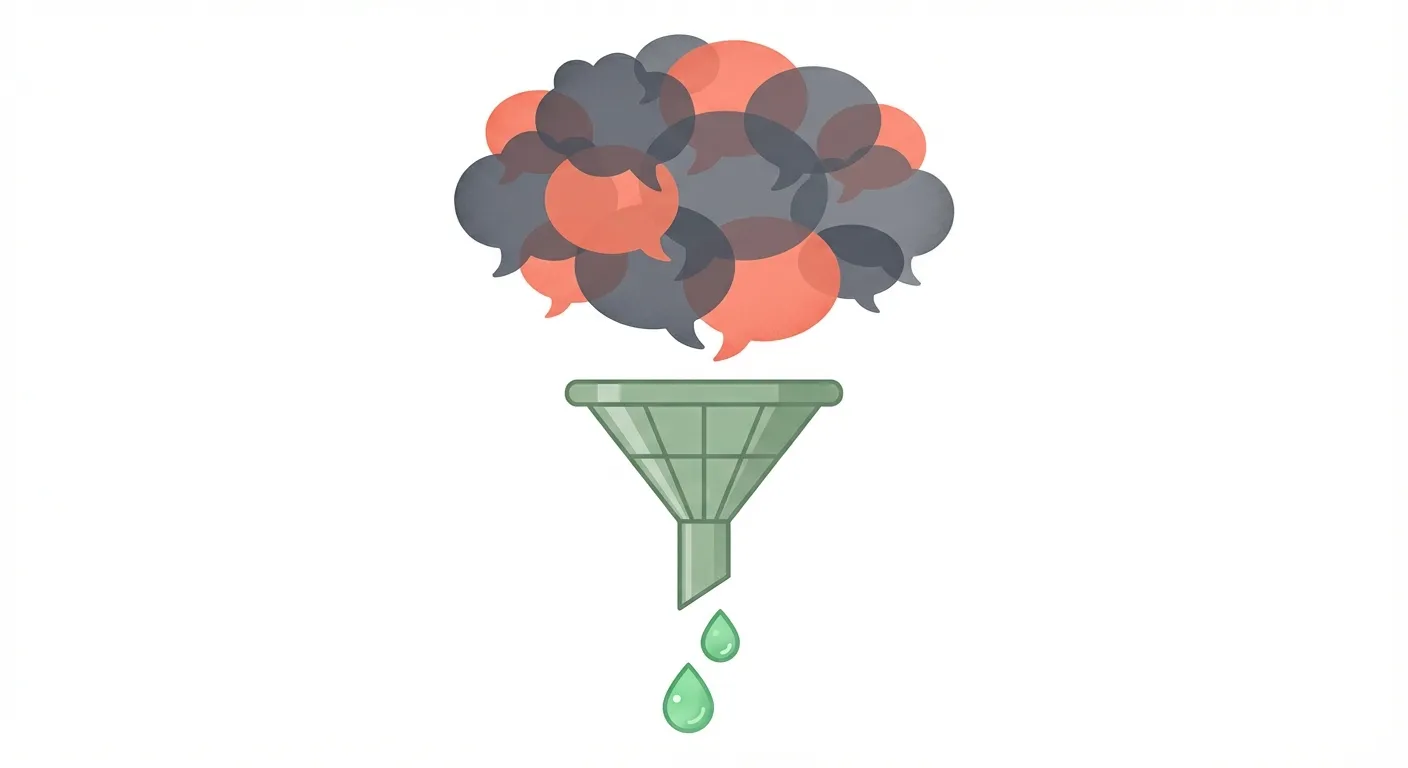
The 3-Step Guilt Filter
Next time guilt hits — and it will, because caring parents feel guilt — run it through three questions before you act on it. Most parenting guilt fails the filter. That's the point.
Name the Specific Thing
Useful guilt points to a concrete action. "I was on my phone the entire time she told me about her day" is specific. "I feel like I'm never enough" is fog.
If you can't point to one real thing you did or didn't do, the guilt is free-floating — and free-floating guilt leads to overcompensating, not better parenting.
Can You Actually Move?
Useful guilt comes attached to something you can change — now or next time. Can't undo a divorce. Can't rewind infancy. Can't be in two places at once.
Energy spent on unchangeable things is energy stolen from things you can improve.
Act Small or Let Go
Passed steps 1 and 2? Take one small action. Apologize. Adjust the routine. Set the boundary you've been dodging. Not a dramatic overhaul — one move.
Failed either step? Name it out loud: "This is junk guilt. It sounds real, but it's not pointing anywhere useful." Naming it takes away its steering wheel.
The Friend Lens
Stuck in the middle? Can't tell if the guilt is real? Try this: imagine your closest friend described this exact situation to you.
If she said "I feel terrible for putting my kid in after-school care while I work," would you say "Yes, you should feel terrible"?
Of course not. You'd say: "Your kid is fine. You're providing for your family. That's not something to feel guilty about."
We're almost always more rational about other people's guilt than our own. The friend lens borrows that rationality. If you wouldn't tell a friend to carry it, put it down.
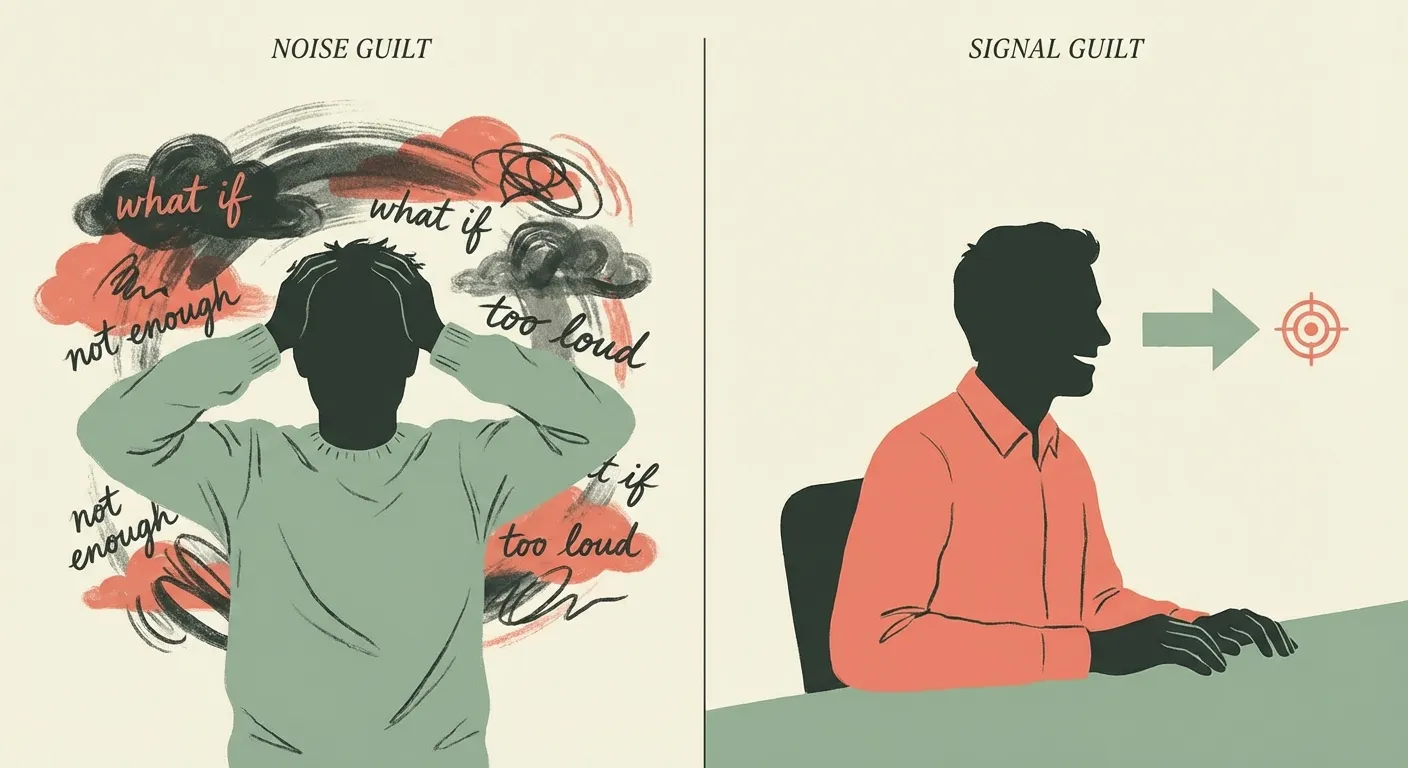
Signal vs. Noise: Know the Difference
These two types of guilt feel similar but work in opposite directions. One moves you forward. The other keeps you stuck.
Signal (Behavior-Focused)
- "I handled that moment badly"
- Points to a specific situation
- Makes you want to repair or adjust
- Leads to one concrete change
- Fades once you take action
Noise (Identity-Focused)
- "I'm just not cut out for this"
- Feels vague and all-encompassing
- Makes you want to withdraw or overcompensate
- Leads to buying stuff or dropping boundaries
- Never goes away no matter what you do
The tell? Signal guilt fades after you act. Noise guilt is still there at 2 AM no matter what you did.
Three Guilt Traps (and Their Antidotes)
When guilt runs unfiltered, parents fall into the same three patterns. Spot them early and they lose their grip.
The Buyoff
Feeling guilty after a long work week, so you say yes to everything on the weekend — extra toys, later bedtime, zero chores. Short-term relief is real. But your kid learns that your guilt is a lever, and they'll pull it again.
Antidote: Do something WITH them instead of buying something FOR them.
The Meltdown Flip
You set a boundary. Your child pushes back with everything they've got. You feel terrible and reverse the call. Now the rules aren't real, and emotional pressure works. This is the trap that trains kids to negotiate with intensity.
Antidote: Acknowledge the feeling without changing the call. "I can see you're upset. The answer is still no."
The Scoreboard
Scrolling through other parents' photos and measuring yourself against their highlight reel. Their vacation looks better, their kid's party looks better, their patience looks infinite. None of it is real. You're comparing your behind-the-scenes to their best take.
Antidote: Ask yourself — "Is this about something I'm actually doing wrong, or am I just keeping score?"
The Quick Reference
| What Actually Helps | What Feels Right But Backfires |
|---|---|
| Running guilt through the filter before acting | Treating every guilty feeling as proof you failed |
| Deciding based on your child's actual needs | Buying gifts or bending rules to ease discomfort |
| Holding a boundary even when they're upset | Reversing decisions after emotional pushback |
| Telling your kid when you messed up — and what's next | Measuring yourself against other families' public image |
| Accepting that "pretty good" parenting produces great kids | Believing your child needs perfection instead of steadiness |
The Long Game
Guilt-free parenting isn't the goal. A parent who feels zero guilt has stopped caring. The goal is to stop letting guilt drive.
Catch the identity slide early. Notice when guilt shifts from "I did a thing" to "I am a thing." That slide is where guilt stops being useful. Pull it back to specifics: "What exactly happened? That's what I'll work on."
Teach your kid that guilt is information, not a weapon. If they see you cave whenever they say "that's not fair!" they learn guilt is a tool for getting what they want. If they see you acknowledge their frustration while holding your ground, they learn that guilt is something you feel, process, and move through.
Repair beats perfection. You will yell. You will be unfair sometimes. What your child remembers isn't the mistake — it's whether you circled back. "I was too harsh earlier, and I'm sorry. Here's what I'll do differently." That's not failure. That's modeling exactly the emotional skill you want them to have.
Feel it. Filter it. Act on it if it's useful. Set it down if it's not.
That's the whole skill.