
Stop Telling Kids to Punch a Pillow
Venting anger doesn't drain it. It trains it.
- Kids who have a personal feelings toolkit handle meltdowns on their own, name what they're feeling instead of exploding, and reach for a specific tool instead of waiting for you to fix it.
- The move: build a physical reset box together during a calm moment, then point to it instead of saying 'calm down.'
That "get the anger out" advice? It makes aggression worse. Here's what a feelings toolkit actually looks like.
Your kid is seething. Fists clenched. Maybe screaming. And somewhere in the back of your mind is advice you've heard a hundred times: give them a pillow to hit. Let them get it out of their system.
Except research on anger expression has shown repeatedly that "getting it out" doesn't drain the anger. It rehearses it. Children who are encouraged to hit, kick, or scream when angry don't calm down faster. They get better at being aggressive. The physical action reinforces the emotional state rather than releasing it.
The same goes for "just calm down" (tells them nothing), "stop worrying about it" (makes the worry louder), and "don't think about it" (cognitive researchers showed decades ago that trying to suppress a thought makes it stickier — the famous polar bear experiment).
So if venting doesn't work and suppression doesn't work, what does?
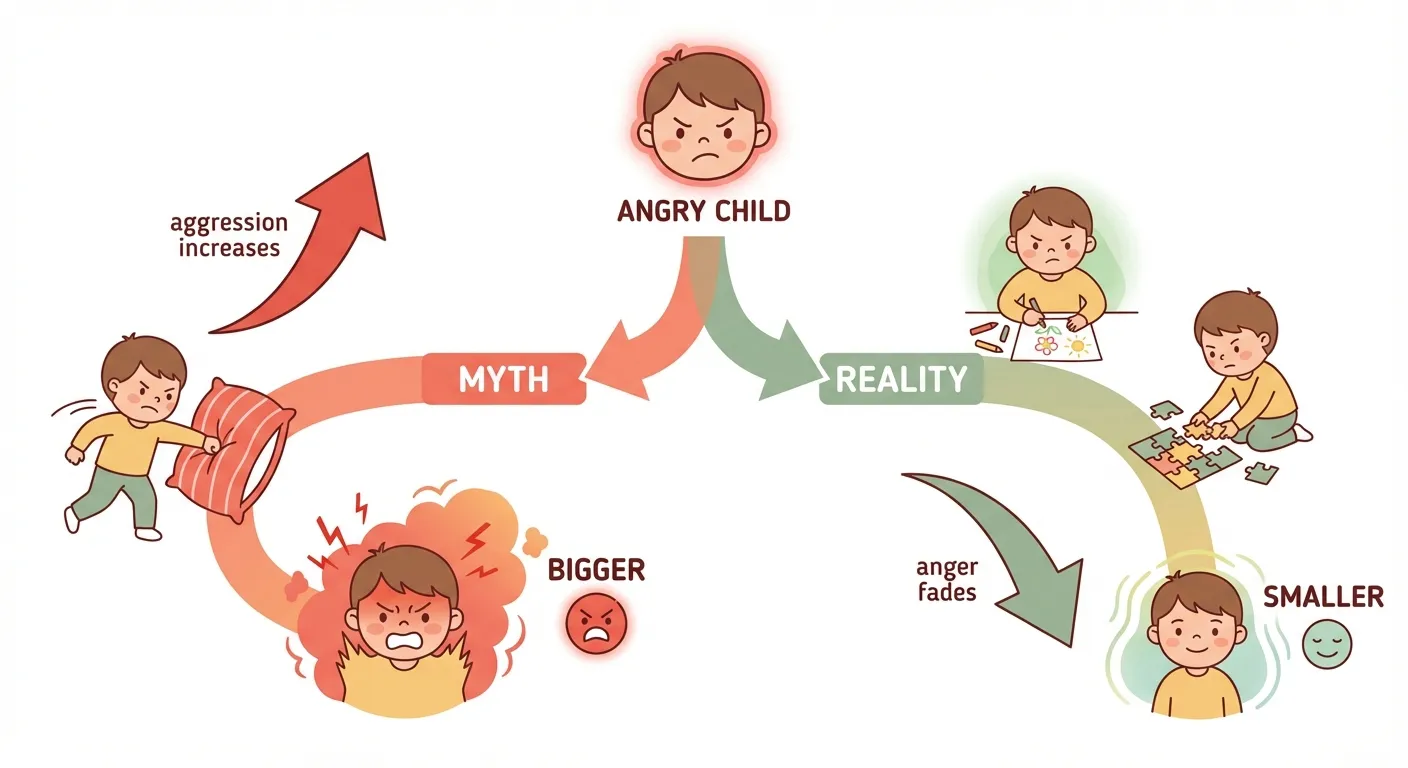
Physical venting trains aggression. Redirection lets the emotion pass on its own.
The Two Things That Actually Work
Decades of developmental and cognitive research point to two mechanisms that reliably help kids manage overwhelming emotions:
| What Backfires | What Works |
|---|---|
| "Calm down" (no tools given) | Hand them a specific tool: "Grab your reset box" |
| "Don't think about it" (suppression) | Swap the thought: "Pick something that needs your full attention" |
| "Hit this pillow" (venting) | Redirect the body: drawing, a puzzle, sorting LEGO by color |
| Fixing every bad mood for them | Let them choose their own strategy from a prepared toolkit |
| Punishing the emotion | Welcome the feeling, hold limits on the behavior |
The first mechanism is redirection — replacing the stuck emotion with an activity that demands full attention. The brain can only process one demanding task at a time. A puzzle, building something, counting backwards from 100 by sevens — these crowd out the unwanted thought naturally.
The second is specific tooling — giving kids a concrete thing to do instead of an abstract instruction. "Calm down" is abstract. "Go grab your reset box and pick something" is concrete. The physical act of choosing a tool gives them agency and breaks the emotional spiral.
Build a Reset Box
The single most useful thing you can do: create a physical box of tools, built together with your child during a calm moment, stored where they can reach it. When emotions flood, say "go grab your box" instead of "calm down."
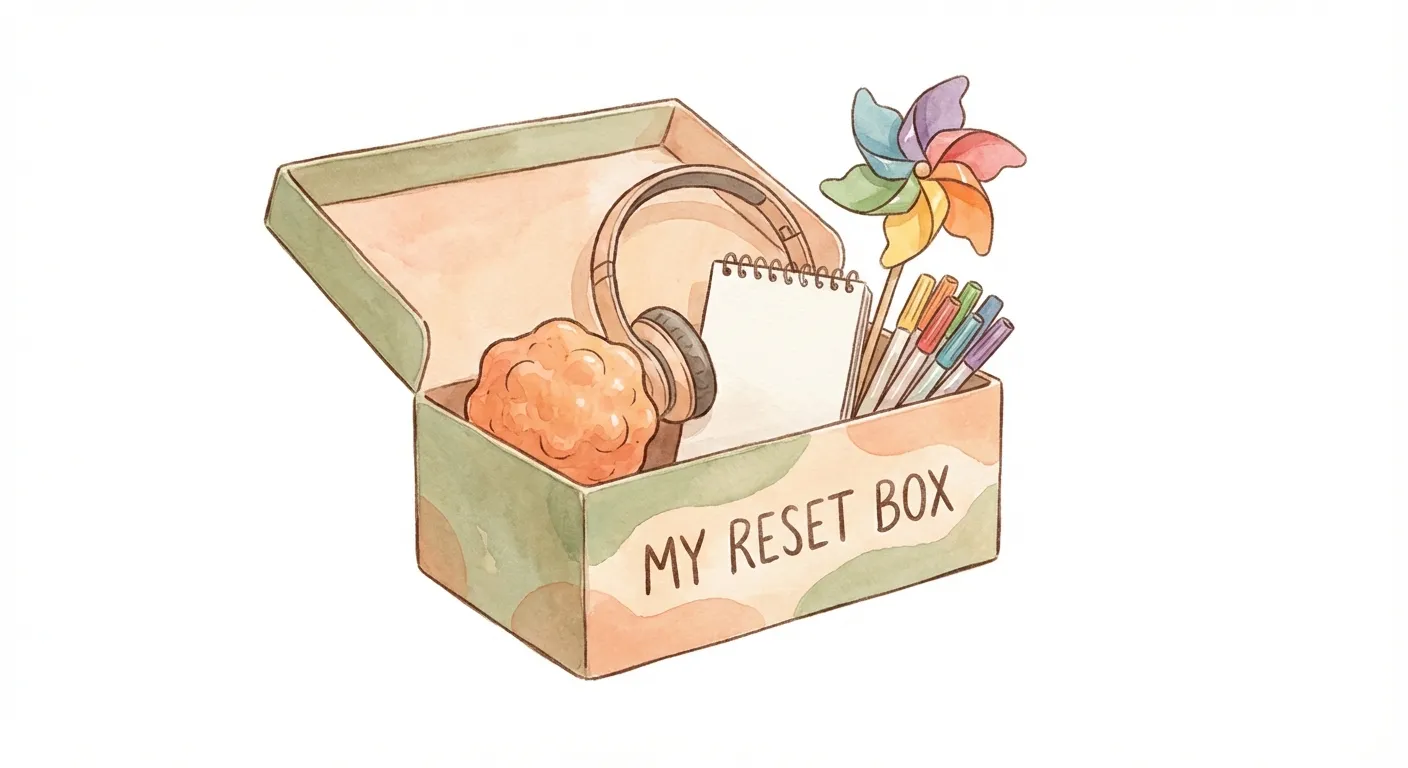
Built during a calm moment. Grabbed during a hard one.
Cool-Down Side
For anger, frustration, anxiety — body running too hot
- Stress ball or putty
- Sketch pad and markers
- Headphones + calm playlist
- Breathing exercise cards
- A pinwheel to blow on
- A snow globe to shake and watch settle
Warm-Up Side
For sadness, boredom, the heavy "blah" — body stuck too low
- A small card game
- Upbeat playlist
- Photo album of favorite memories
- A ball to take outside
- A jar of "things I'm good at" notes
- A recipe card for something to bake
Build it together
Ask your child: "What helps your body feel calmer?" Let them pick what goes in. The ownership matters.
Build it during calm
Not mid-meltdown. A relaxed Saturday afternoon. If the first time they see it is during a crisis, it won't land.
Point, don't instruct
When a storm hits: "Your reset box is right there." Let them pick the tool. Don't prescribe which one.
Refresh every few months
What soothes a five-year-old won't work at seven. Check in: "Anything you'd swap out?" Let them curate it.
The Swap: Replacing Stuck Thoughts
Try not to think of a polar bear for thirty seconds. You'll think about nothing else. The harder you push a thought away, the more it returns. This is why "stop worrying" never works on kids (or adults, for that matter).
The solution is swapping. Instead of trying to delete the thought, you replace it with an activity that demands full attention. The brain can't run two demanding tasks simultaneously, so the unwanted thought gets crowded out.
When not to swap
Swapping is for rumination and worry spirals — replaying something or dreading something that hasn't happened. It's not for grief, genuine sadness, or processing a real event. If your child needs to talk about something painful, let them. The swap is a tool, not an avoidance strategy.
Different Ages, Different Techniques
The core skill is the same at every age — recognizing what you feel and choosing a response. But the version of that skill changes dramatically.
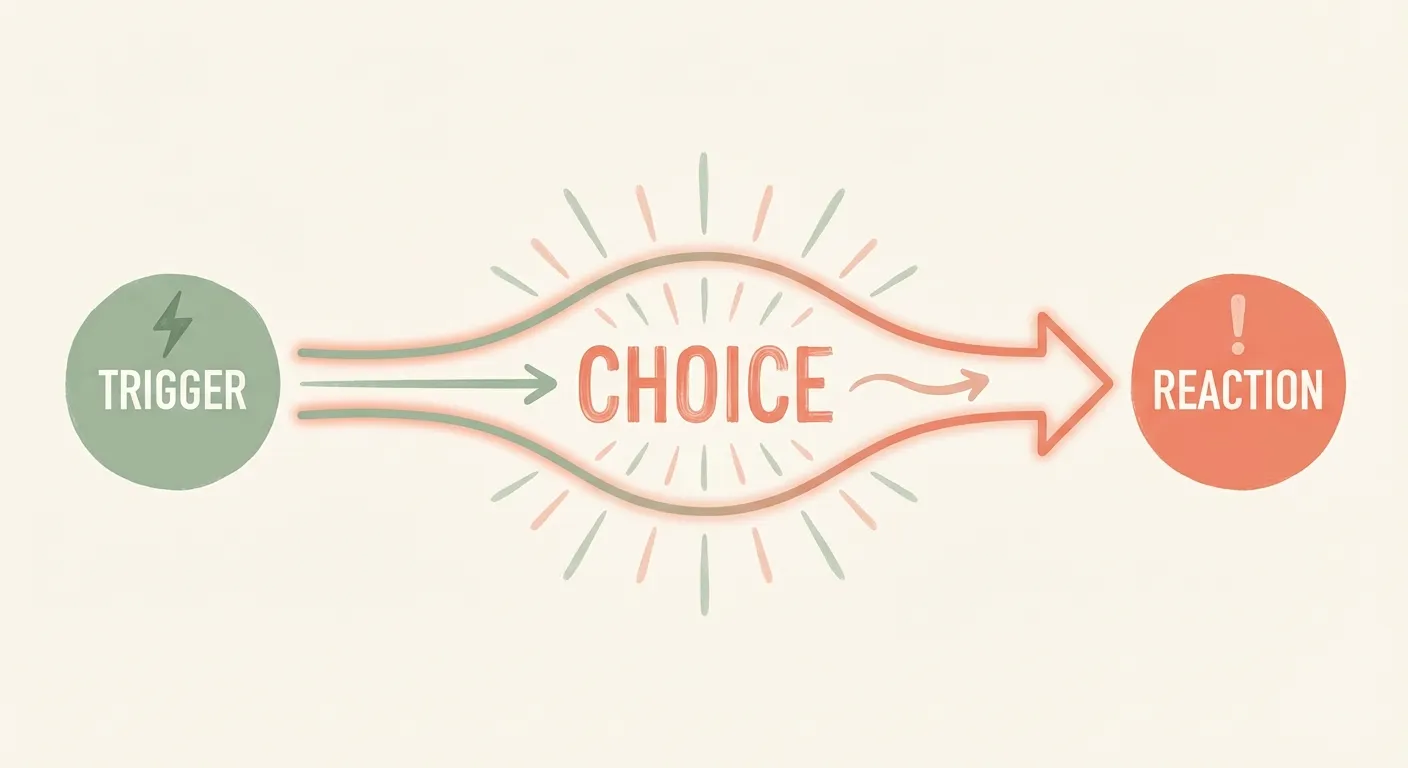
The skill at every age: make the space between feeling and acting a little bigger.
Balloon Breathing
Hands on belly. "Pretend your belly is a balloon. Breathe in through your nose — feel the balloon grow. Breathe out through your mouth — feel it shrink." The hands-on-belly part matters: it gives them something physical to anchor on and deepens the breath automatically. Practice at bedtime so it's automatic before the next meltdown.
Name It to Tame It
Neuroscience shows that naming an emotion precisely reduces its intensity. But most kids use vague labels — "bad," "upset." Push for specifics: not "I feel bad" but "I feel embarrassed" or "I feel left out." The more precise the label, the more the brain's alarm system settles. Then connect the name to an action: "I feel frustrated — I'm going to take a five-minute break."
Widen the Gap
Every teen knows the moment: something happens and within two seconds they've said something they regret. The skill isn't eliminating the feeling — it's widening the gap between trigger and reaction. That gap is where choice lives. Help them spot the signals that their buffer is thin: irritability, snapping at small things, clenching their jaw. When they notice, they can act: take a walk, put on headphones, or say "I need ten minutes."
Every feeling is allowed. Not every reaction is.
Give your child specific tools — not just rules about behavior.
Making This Stick
- Practice when calm, deploy when not. Breathing exercises at bedtime. Emotion naming at dinner. If the first time you introduce a technique is mid-meltdown, it won't land.
- Model it out loud. "I'm frustrated about this traffic. I'm going to put on a song and change my focus." Kids learn more from watching you manage your emotions than from any technique you teach.
- Don't aim for happy — aim for handled. If your child says "I'm angry and I'm going to go draw for a while," that's a win. Even if they're still angry afterward. You're building the habit of responding with action, not the expectation that the action erases the feeling.