
Your Street Is a Goldmine (You Just Have to Dig)
Community starts by asking for help, not offering it.
- Kids who see themselves as contributors on the block — delivering soup, raking leaves, carrying groceries — develop belonging that outlasts any single friendship.
- The move: borrow a stepladder, return it with jam, and let the favor loop build itself.
The easiest parenting upgrade isn't a book, an app, or a class. It's the people who already live within 200 feet of your front door.
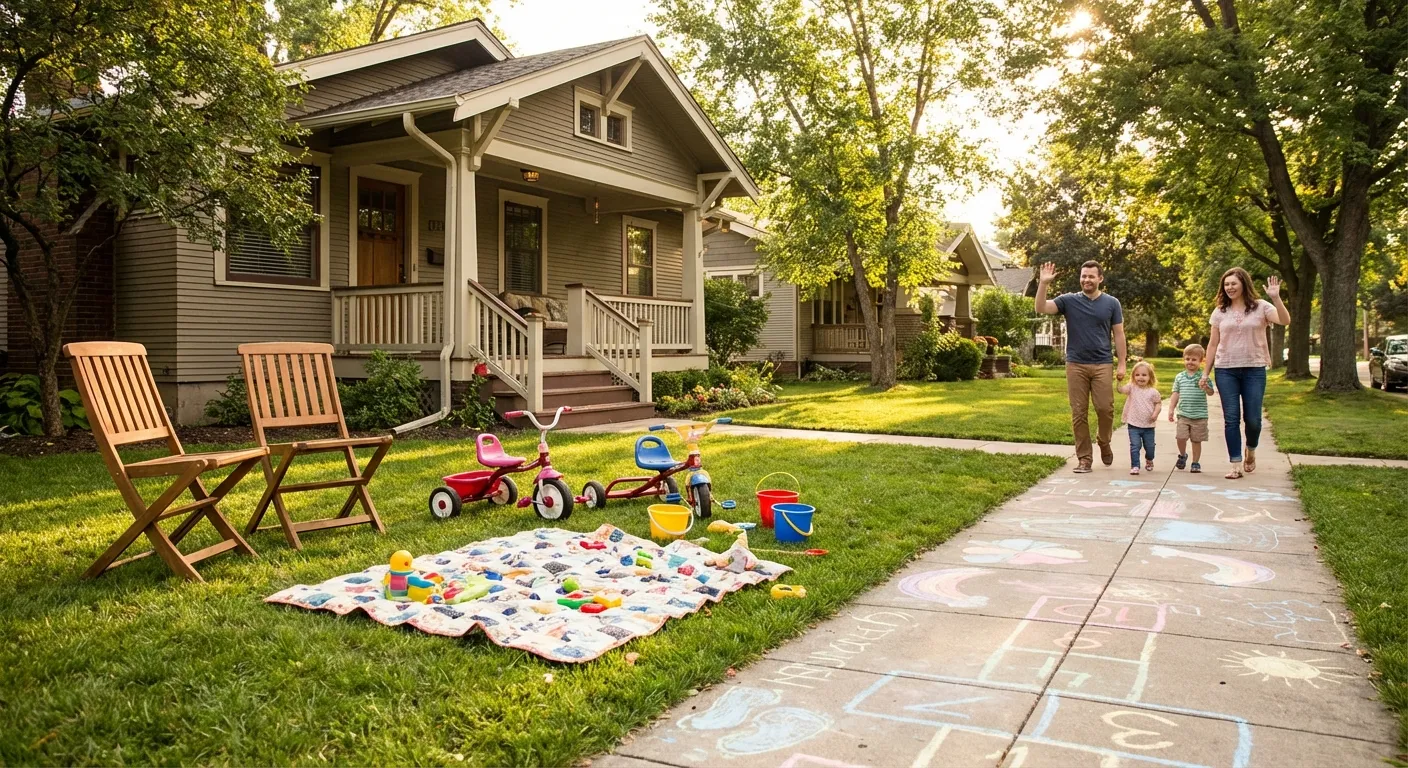
Picture this. Your four-year-old is having a total meltdown in the driveway. You've got groceries melting in the trunk. Your phone is buzzing. And then your neighbor Linda walks over, scoops up the kid, and says, "Go handle your stuff. We're going to draw dinosaurs."
That's not a fantasy. That's what happens when you know your neighbors.
Not in a "wave from the car" way. In a "your kid can knock on their door and they'll actually open it" way.
The families who look like they have it all figured out? They usually just have a really good block.
Why Loose Ties Beat Close Friends
Here's the counterintuitive part. You don't need a best friend on your street. You need a lot of people you kind of know. Social scientists call these "loose ties" -- and they're the ones that make daily life actually work.
| One Best Friend on the Block | Ten People You Sort-Of Know |
|---|---|
| One person to call in an emergency | Ten people who might notice something's off |
| Playdates need scheduling | Kids just... appear |
| If they move, you're back to zero | The network survives any single departure |
| Your kid has one extra adult in their life | Your kid has ten adults who know their name |
Kids who grow up knowing their neighbors have more adults invested in them, more playmates within walking distance, and a head start on navigating relationships outside the family. They learn to give help -- not just receive it.
The First Move Playbook
Nobody wants to go first. That's the whole problem. Everyone on your street is waiting for someone else to break the ice. So you do it. And it's way easier than you think.
The Welcome Drop
New neighbor? New baby? Don't wait. A handwritten note with your number and a bag of clementines. Act within the first week -- the window closes fast.
The Seasonal Reset
Been silent neighbors for years? Create an event. Popsicle stand on the sidewalk. Leaf-raking party. "Bring your own chair" Friday. One event resets everything.
The Front-Yard Flip
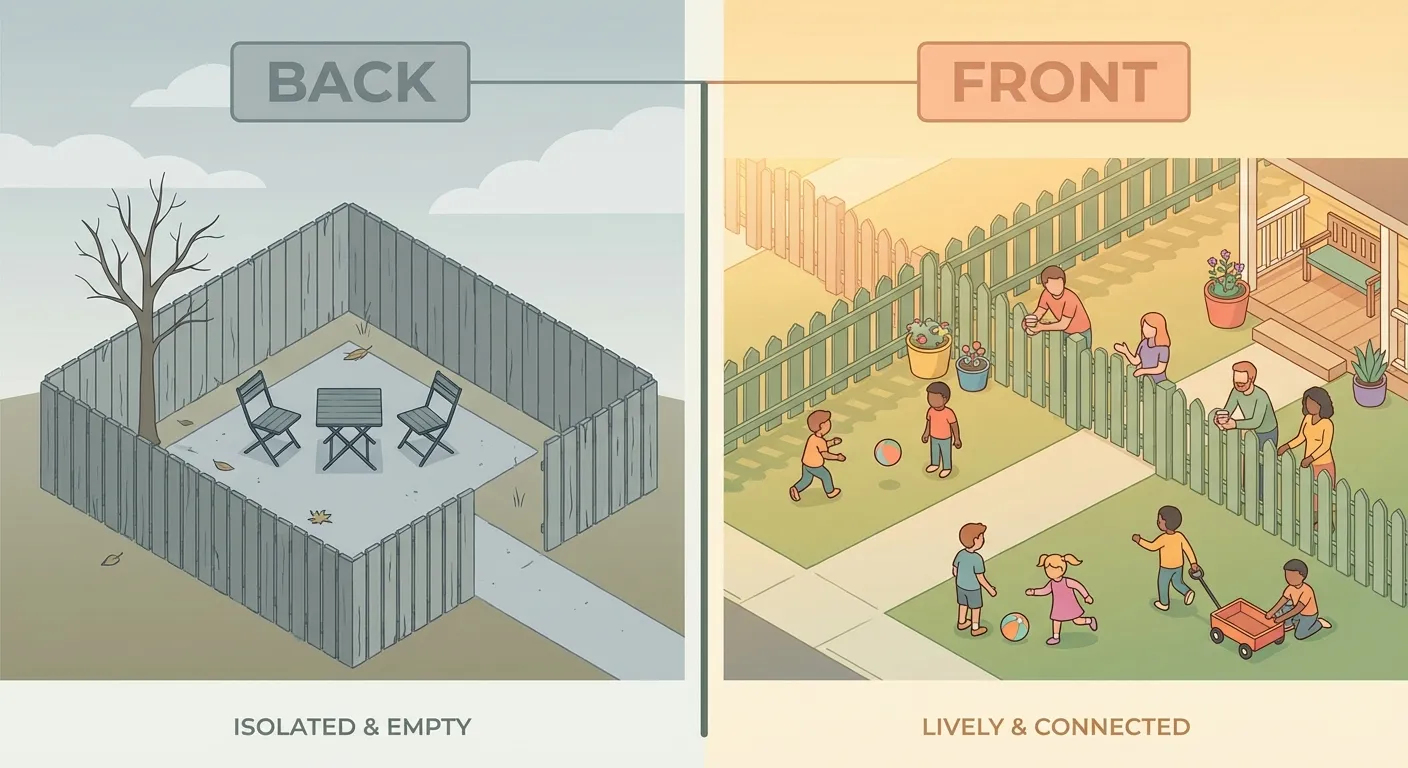
Move toys, chalk, and the sprinkler to the front yard. That's it. You'll be stunned how many conversations start when you're just... visible.
The Connector Spot
Every block has someone who knows everyone. Find them. Show up to what they host. Let them do what they do best: link people together.
"Hey, we live three doors down. Just wanted to say hi -- and if you ever need to borrow anything or want a good pizza recommendation, we're right here."
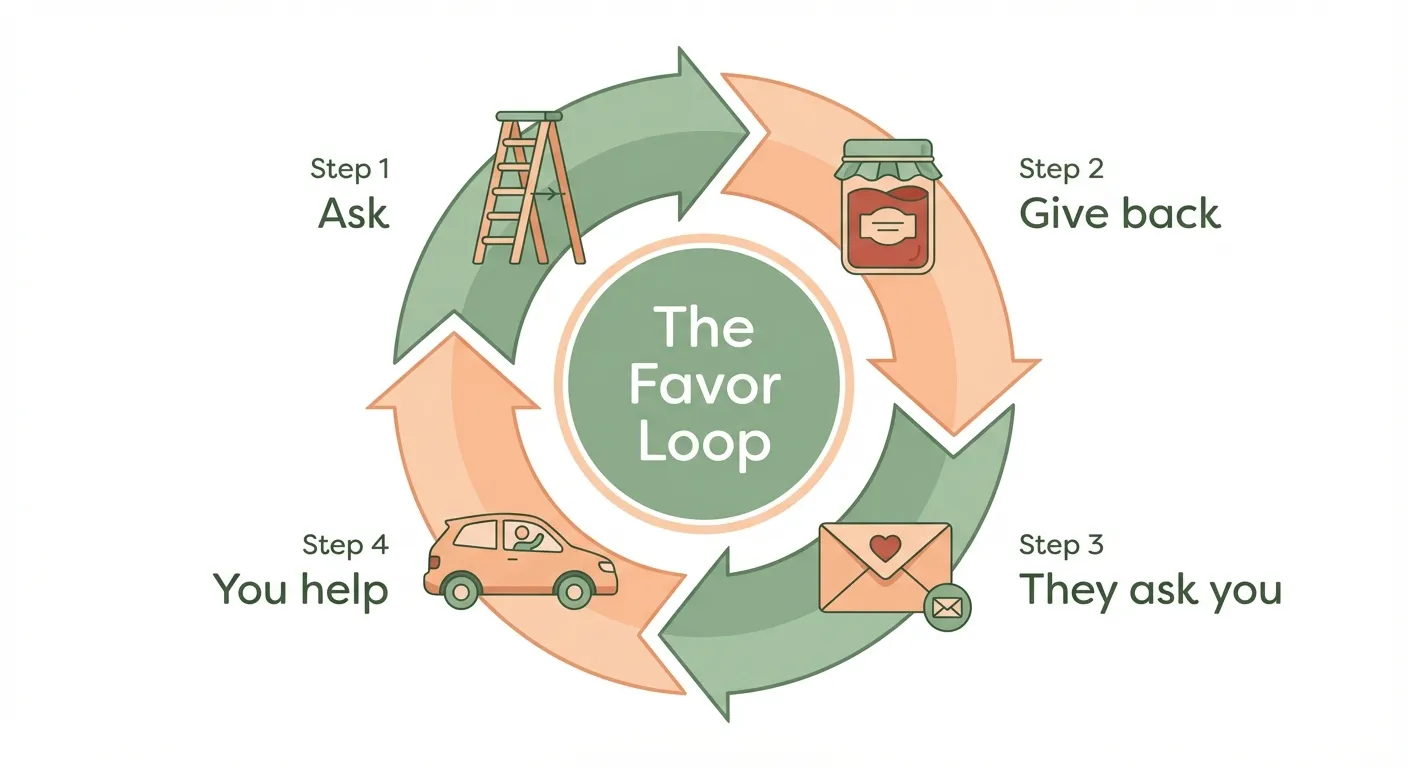
The Favor Loop
Most people think community starts by offering help. It actually starts by asking for it.
Borrow a stepladder. Ask someone to grab your mail for the weekend. These aren't impositions -- they're invitations. They signal trust and give the other person a reason to feel useful.
-
1
Ask for something small
A stepladder. An egg. A recommendation for a plumber. Small asks build trust faster than big offers.
-
2
Pay it forward fast
Return the ladder with a jar of homemade jam. Text a thank-you and say you'd love to return the favor.
-
3
Bring your kid along
Delivering soup, raking leaves, carrying groceries -- let them see themselves as contributors on the block, not just residents.
-
4
Become the multiplier
"You should meet the Garcias -- their daughter is the same age as yours." Start connecting neighbors to each other.
The secret
The goal isn't keeping score. It's creating a rhythm of mutual help that nobody wants to stop. Each favor given and returned adds a thread. Over time, those threads become a net that catches everyone.
The Hidden Goldmine: Unexpected Teachers
Your neighbor plays guitar. The retired teacher two streets over loves science experiments. The teenager across the road is great at coding. Ask them to share something with your kid -- even just once.
People love being asked for their expertise. Your child gets a new skill and a new relationship. The neighbor feels valued. Everyone wins.
Making It Stick
| Do This | Why It Works |
|---|---|
| Anchor a recurring thing (monthly hangout, weekly walk) | Two families showing up consistently beats twenty showing up once |
| Repair after drift -- text "Let's catch up this weekend" | Gaps are normal. Don't let embarrassment freeze you out |
| Go deeper when it clicks -- share something real | Vulnerability turns acquaintances into friends |
| Include the unexpected (elderly couple, college renter) | The widest circles are the strongest ones |
| Host imperfectly -- pot of coffee, open door | Anchors aren't the best entertainers. They're the ones who open the door |
The support your family needs might already live on your street.
Someone just has to go first.
Let it be you.