
The One Question That Separates Teaching from Punishing
Discipline either builds a compass or an alarm system. The difference is structural.
- Compass kids think 'next time I'll use my words.' Alarm kids think 'next time I won't get caught.' Same situation, opposite wiring.
- The move: pair clear rules with linked consequences — and always name the path back to normal.
Kung Fu Family
Here's a test you can run on yourself in about three seconds. The next time your kid misbehaves and you respond — take a breath, then ask yourself one thing:
Does my child now know what to do differently next time?
If yes, you just taught. If not, you just punished.
That's the entire difference. Not tone of voice. Not whether you stayed calm. Not whether the consequence was "fair." The question is simpler: did your kid walk away with a compass or an alarm system?
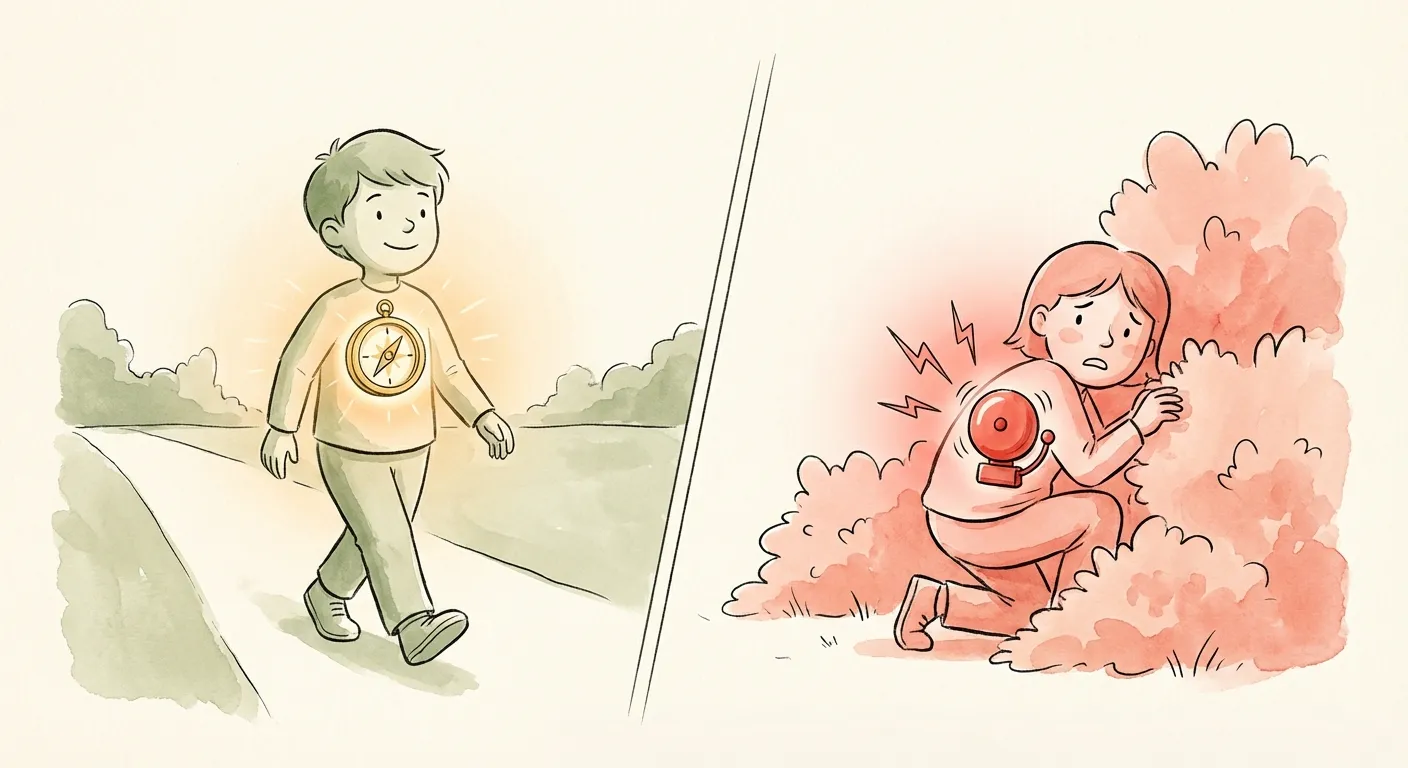
Teaching builds a compass. Punishment builds an alarm.
A child with a compass thinks: "Next time I'm angry, I can use my words." A child with an alarm thinks: "Next time I'm angry, I need to not get caught." Both kids learned something. Only one learned something useful.
What Teaching Actually Looks Like (vs. Punishing)
Most parents think they're teaching when they're actually just reacting. The gap is specific and measurable:
| Situation | Punishing Response | Teaching Response |
|---|---|---|
| Kid is rude to a friend | "No TV for a week." | "The playdate is over. Before the next one, you'll write them an apology." |
| Homework not done | "You're grounded until further notice." | "Tablet back after you finish the makeup homework tonight." |
| Won't share a toy | "Fine, nobody gets to play with it!" | "We're putting it away for 10 minutes. When it comes back, you two take turns." |
| Broke a rule | "You'll get your privileges back when I can trust you." | "No bike for 24 hours. Tomorrow afternoon you can ride again." |
Notice the pattern. Teaching responses do three things punishment doesn't:
- The consequence connects directly to what they did
- The child knows exactly how to get back to normal
- The timeline is specific, not open-ended
Open-ended consequences ("until I can trust you," "until further notice") breed resentment, not learning. Kids can't aim at a target they can't see.
But First: Set Up Rules They Can Actually Follow
Most behavior problems aren't defiance. They're confusion. You can't hold a kid accountable to rules that only exist in your head.
Three things make house rules actually stick:
Write them down. Post them where everyone sees them. Keep it to 5-8 rules max — if you need more, you're micromanaging.
And here's the kicker: if "no screens at dinner" is a rule, your phone goes away too. Kids follow systems they see respected, not ones imposed on them.
The Motivation Flip: Catch the Good Stuff
Most parents stay silent when things go well and only speak up when something goes wrong. That's backwards. Catching good behavior is more powerful than catching bad behavior.
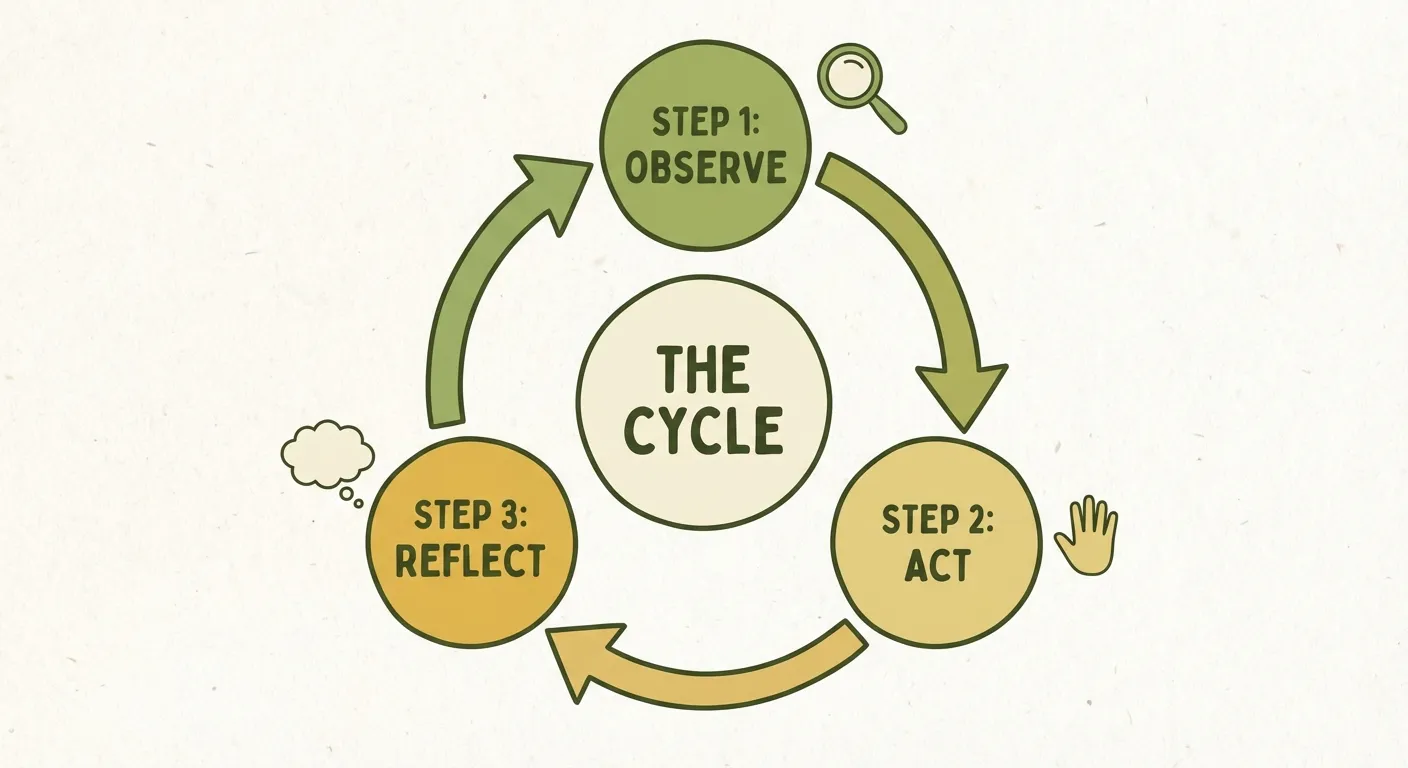
Here's the loop. Three steps, takes about 10 seconds:
1 Notice
Actively scan for the behavior you want more of. Your child shared a toy without being asked. Your teen put their dish in the sink. Your six-year-old used words instead of hitting. These moments are easy to miss because they don't demand your attention.
2 Name
Tell them exactly what you saw. Not "good job" — the precise behavior.
3 Reinforce
Match the reward to age. Young kids: high-five, sticker, extra story. Older kids: screen time, choosing dinner, or genuine acknowledgment. Always frame it positively:
When They Mess Up: Match the Response to the Age
Clear rules and positive reinforcement handle most of the day. But when misbehavior still happens, your correction needs to teach — not just sting. What that looks like changes as their brain develops.
The Cool-Down Reset
Young kids misbehave because their emotions move faster than their self-control. The goal isn't punishment — it's giving their nervous system a chance to come back online so they can hear you.
Move them to a quiet spot. Keep it brief — a few minutes is plenty. The learning happens in the conversation after, not during the cool-down.
If they refuse, don't escalate. Remove something specific: "Since you won't take a break, we're putting the blocks away for the rest of the morning."
The Direct Link
School-age kids respond best when the consequence connects visibly to what they did. A random punishment teaches nothing. A linked response teaches cause and effect.
| Behavior | Linked Consequence | Path Back |
|---|---|---|
| Rude to a friend | Playdate ends early | Write apology before next one |
| Skipped homework | Tablet taken away | Returned after makeup work tonight |
| Rode bike unsafely | No bike for 24 hours | Ride again tomorrow afternoon |
Always tell them exactly how to get back to normal. Vague timelines breed resentment.
The Partnership Fix
Teens who feel controlled rebel. Teens who feel consulted cooperate. When a problem repeats, bring your teen into the solution instead of handing down a verdict.
Let them propose solutions first. You add guardrails. Their buy-in matters more than your perfect plan. This isn't being soft — it's building the problem-solving habit they'll need when you're not around.
The Long Game
This system isn't set-and-forget. Four habits keep it running:
| Habit | What It Looks Like |
|---|---|
| Audit your rules quarterly | "No crossing the street alone" makes sense at 5, not at 10. Review and update together every few months. It teaches kids that rules serve a purpose, not that rules are permanent power. |
| Catch yourself before you escalate | If you hear "you're grounded for a month" leave your mouth — pause. That's reacting, not teaching. Step away for 60 seconds. Come back with something proportionate. |
| Repair when you blow it | "I yelled and that wasn't fair. I was frustrated, but that's not how I want to handle it. I'm sorry." Modeling repair teaches that mistakes don't define you — what you do after does. |
| Invest in the relationship outside correction | Your correction only works if your child cares about your approval. That currency is built during the good times — playing, laughing, being curious about their world. |
The bottom line
Every time you respond to misbehavior, you're either building a compass or an alarm. A compass helps a child navigate toward better choices on their own. An alarm just teaches them to hide. The question isn't whether your kid will mess up — they will. The question is what they'll carry away from the moment: a plan, or a fear.