
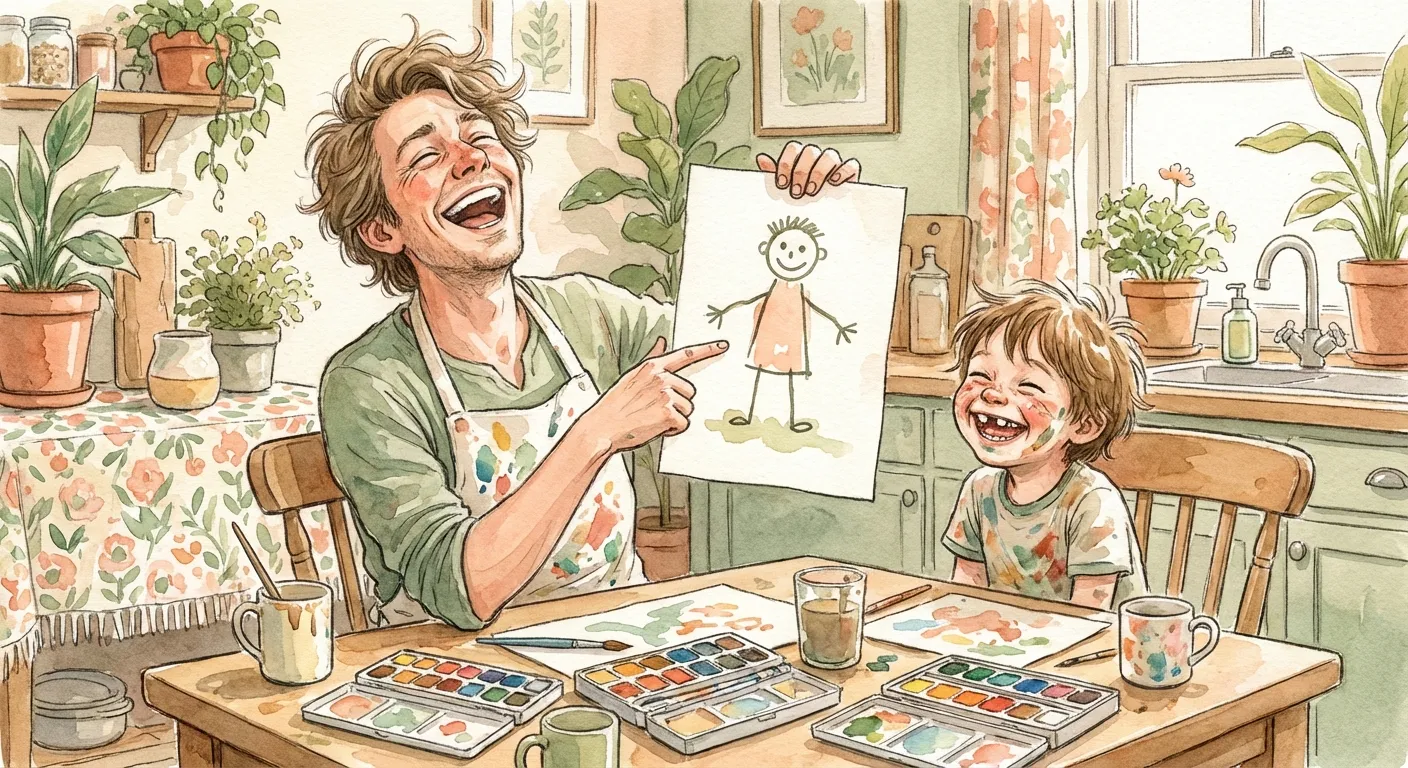
Be Terrible at Something
(Your Kids Are Watching)
The most powerful parenting move nobody talks about
Kids who fear imperfection stop trying new things entirely.
- Kids raised with effort-first language take on hard things, recover from losses, and actually enjoy what they accomplish instead of scanning for flaws.
- The move: lead with experience questions, not outcome questions -- and let them watch you enjoy being bad at something.
Last week a dad told me he started playing guitar. He's awful at it. Genuinely, impressively bad. His eight-year-old daughter heard him from the other room, came in, watched for a minute, and said: "Dad, that sounds terrible." He grinned and kept strumming.
The next day, she asked if she could try the piano. She'd been refusing for months.
That little sequence tells you everything you need to know about the perfection trap and how to break it. His daughter wasn't avoiding piano because she didn't want to play. She was avoiding it because she wasn't sure she'd be good at it. The moment she watched her dad enjoy being bad at something, the equation changed. Doing things no longer required excelling at them.
Expecting your child to be perfect sets them up for failure.
Expecting them to give their best effort sets them up for fearlessness.
The Five Tells
Kids under too much pressure don't send a memo about it. They show you through behavior. Here's what to watch for -- the pattern matters more than any single bad day.
They only do sure things
New activity? Hard pass. If there's a chance they'll be average, they'd rather not start at all.
Small mistakes, big meltdowns
One wrong answer, one missed note -- and the response is tears, rage, or total shutdown. Way out of proportion.
They stall before finishing
Looks like laziness. It's actually fear. If the result can't be perfect, not trying feels safer.
Wins don't land
Great performance, good grade -- but their attention goes straight to the one flaw. The win never registers.
Their body is keeping score
Stomachaches before tests. Headaches before performances. Trouble sleeping the night before a big game. When stress shows up in the body, the pressure has crossed a line.
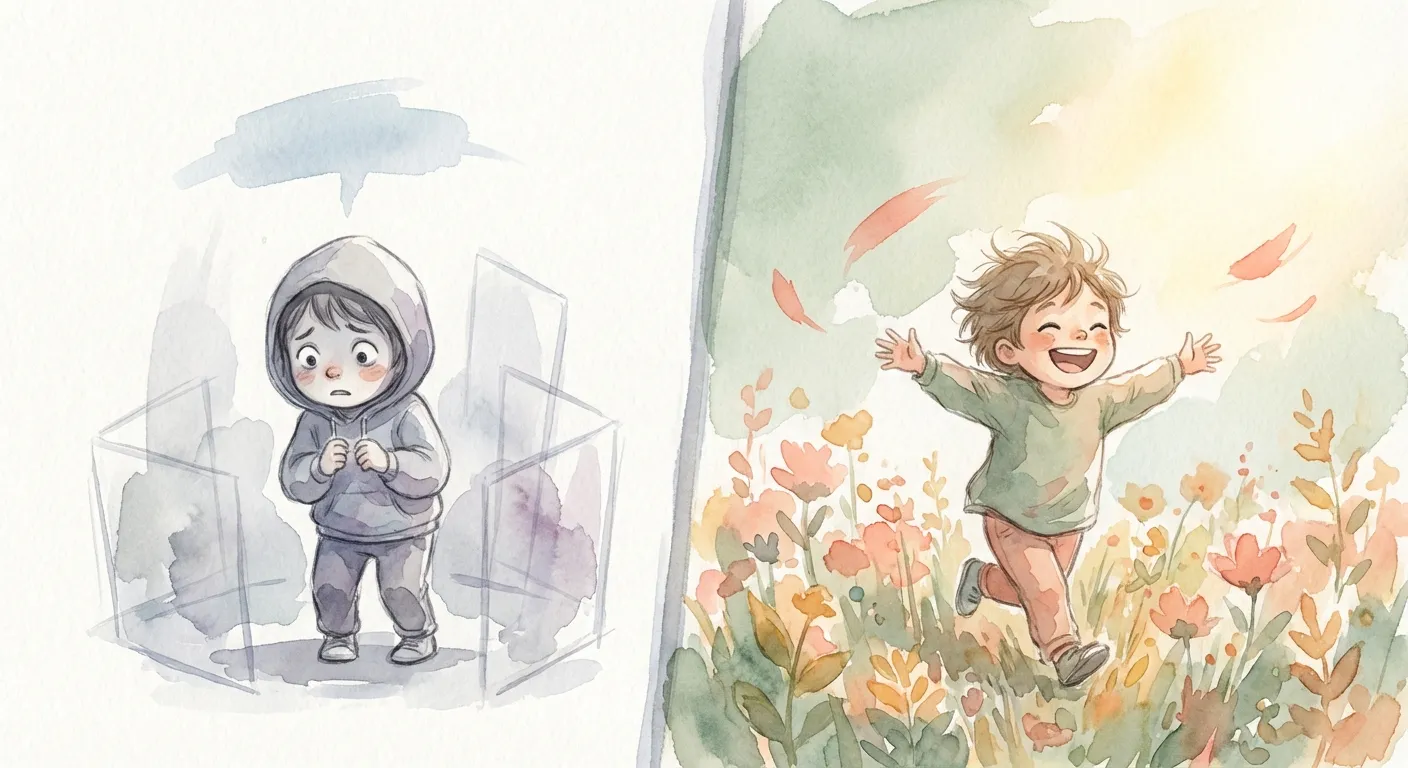
Same kid, different message received at home
The One-Word Diagnostic
After a game, a test, a recital -- what's your first question? That first question tells your child exactly what you value. It's a tiny moment with enormous weight.
| Outcome First | Experience First |
|---|---|
| "How'd you do?" | "How was it?" |
| "Did you win?" | "What was the best part?" |
| "What'd you get on the test?" | "What are you proudest of?" |
| "Why didn't you score more?" | "I loved watching you hustle out there." |
| Result = your child's value | Effort = your child's value |
The score comes up anyway. It always does. But which question comes first is the message your child absorbs about what actually matters to you.
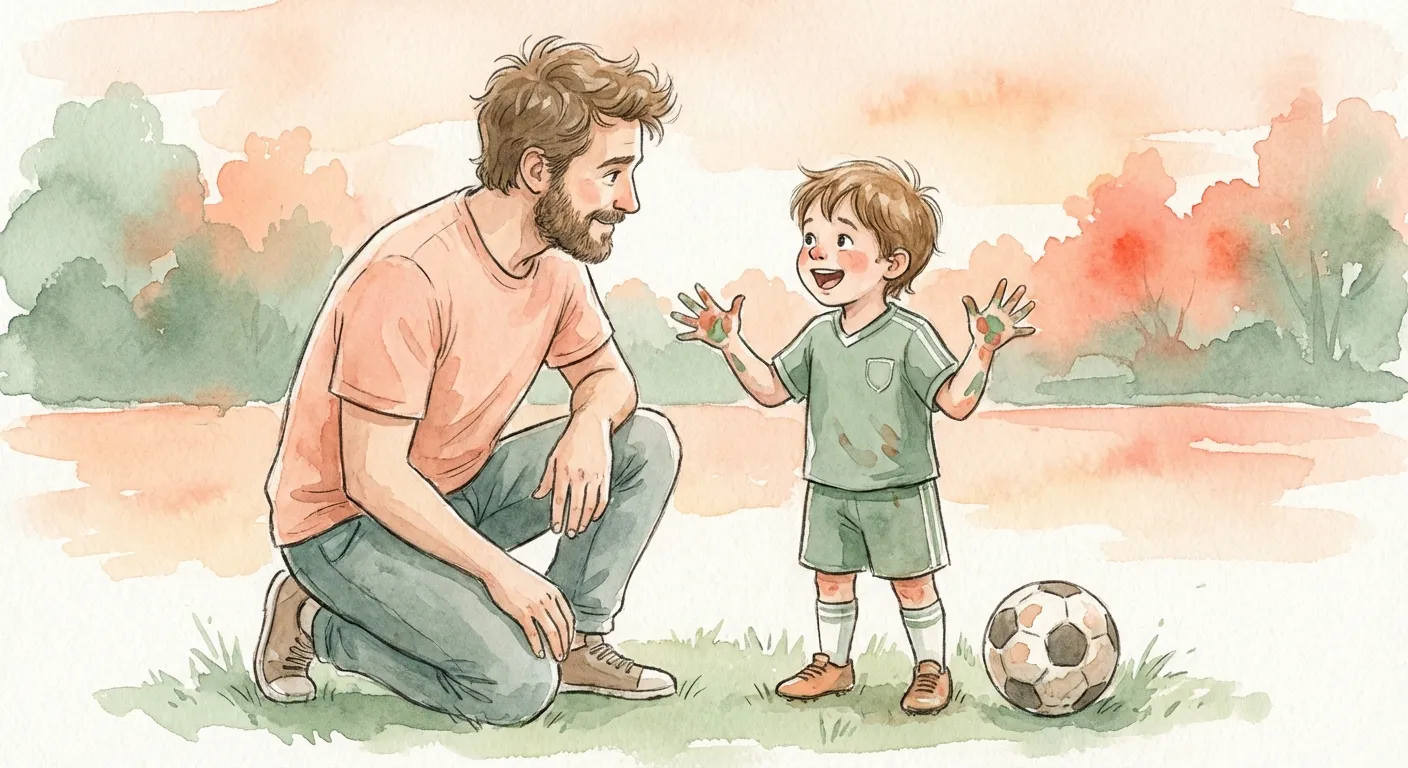
Lead with curiosity about their experience, not the score
Scripts That Actually Work
Knowing the shift is one thing. Having the words ready in the moment is another. Steal these.
Four Moves to Build Into Your Week
Be bad at something (on purpose)
Play a sport you stink at. Sing off-key. Draw stick figures. When your kid sees you enjoy something without being good at it, the permission is instant.
Audit your all-or-nothing language
"That meeting was a total disaster" because one thing went wrong? Your child is absorbing that framing. Talk about mixed results with nuance, not absolutes.
Leave blank space in the schedule
One block per week with nothing to achieve, no performance to deliver, no skill to build. Just... time. Overscheduling is a perfection trap in disguise.
Watch for the creep
Expectations naturally rise as your child grows. Check: is the bar rising because they're growing, or because you moved the goalposts? The bar should follow their ability, not lead it.
The kid who's free to be bad at things is the kid who'll try everything.
And the kid who tries everything? That's the kid who finds the thing they're extraordinary at.
That dad with the guitar? His daughter is three weeks into piano now. She's not great. She doesn't care. She's having a blast. That's the whole game.