
The Compliment That Backfires
Why "you're the best" builds the wrong thing -- and what to say instead that actually sticks.
Gratitude and perspective-taking are daily habits, not one-time conversations.
- Kids with these routines complain less, notice other people without prompting, and carry a baseline contentment that entitled kids never reach.
- The move: build three small practices into your week — a dinner round, a monthly helping project, and one reframe question when complaints hit.
Your kid nails the piano recital. Scores a goal. Finishes their homework without being asked. And the words come out before you even think about them:
"You're so talented!"
"Nobody does it like you!"
"You're the smartest kid in your class."
Feels great. Sounds loving. And according to large-scale research on child development, it's the single strongest predictor of narcissistic traits in kids. Not neglect. Not harsh parenting. Overvaluation -- consistently telling your child they are more exceptional than other children.
That doesn't mean you stop praising. It means you shift what you praise.
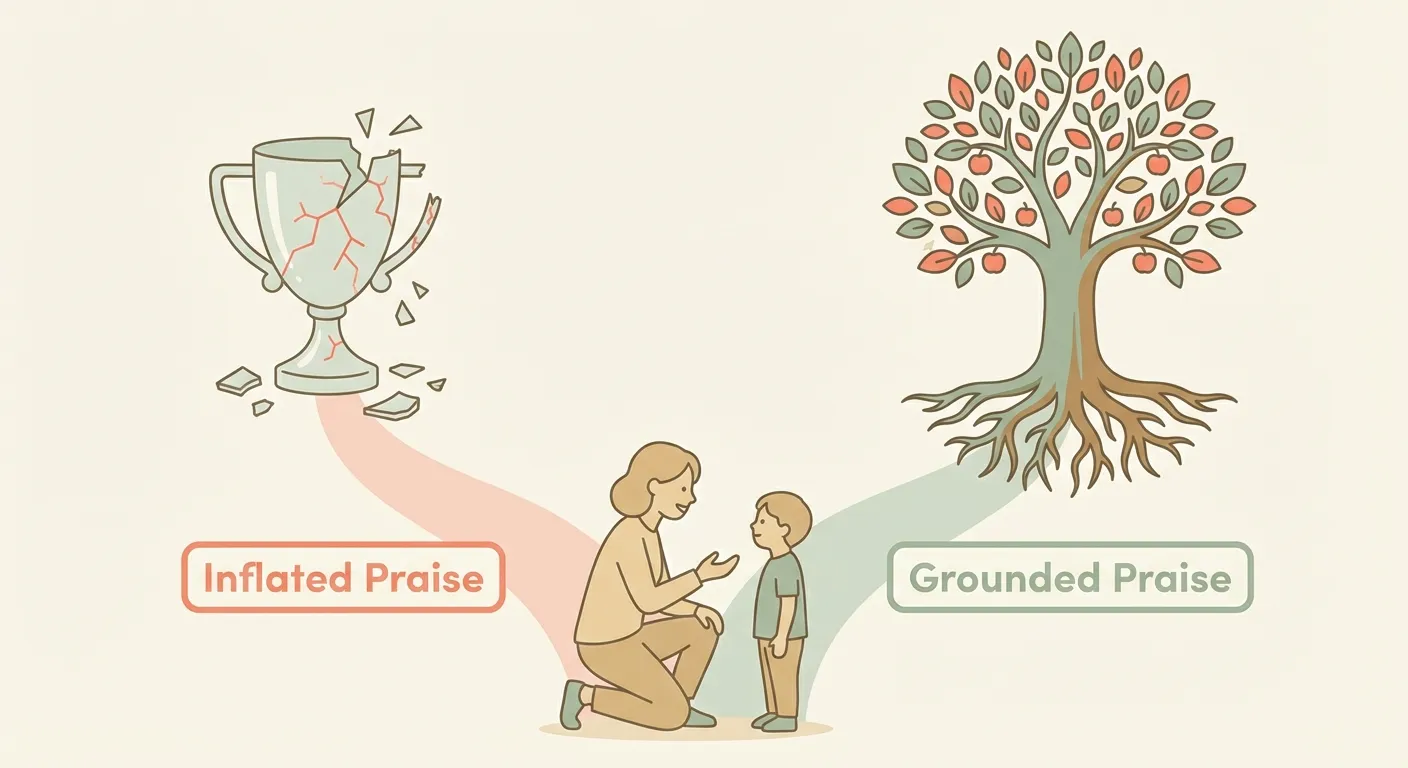
The Praise Shift: Same Kid, Different Words
There's a line between building your child up and inflating them. Inflated praise focuses on who they are relative to others. Grounded praise focuses on what they did. The first creates a need to feel superior. The second builds motivation that doesn't collapse the moment someone outperforms them.
| Inflated (Fragile Ego) | Grounded (Real Confidence) |
|---|---|
| "You're way smarter than those other kids." | "You stuck with that problem even when it was confusing. That takes grit." |
| "Nobody can do it as well as you." | "You tried a completely different approach when the first one didn't work." |
| "You should have won. The judges were wrong." | "You put months into preparing. That dedication is something to be proud of." |
| "You're the star of the whole team." | "You passed to Mia when she was open. That's what a good teammate does." |
Now the Deeper Move: The Perspective Flip
Shifting your praise is step one. Step two is teaching your child to actually see beyond themselves. Not through lectures -- through four questions you can run in sixty seconds, any time your kid is stuck in me-mode.
Your child is upset things didn't go their way. Oblivious to how they affected someone. Acting like the world exists to serve them. That's your cue.
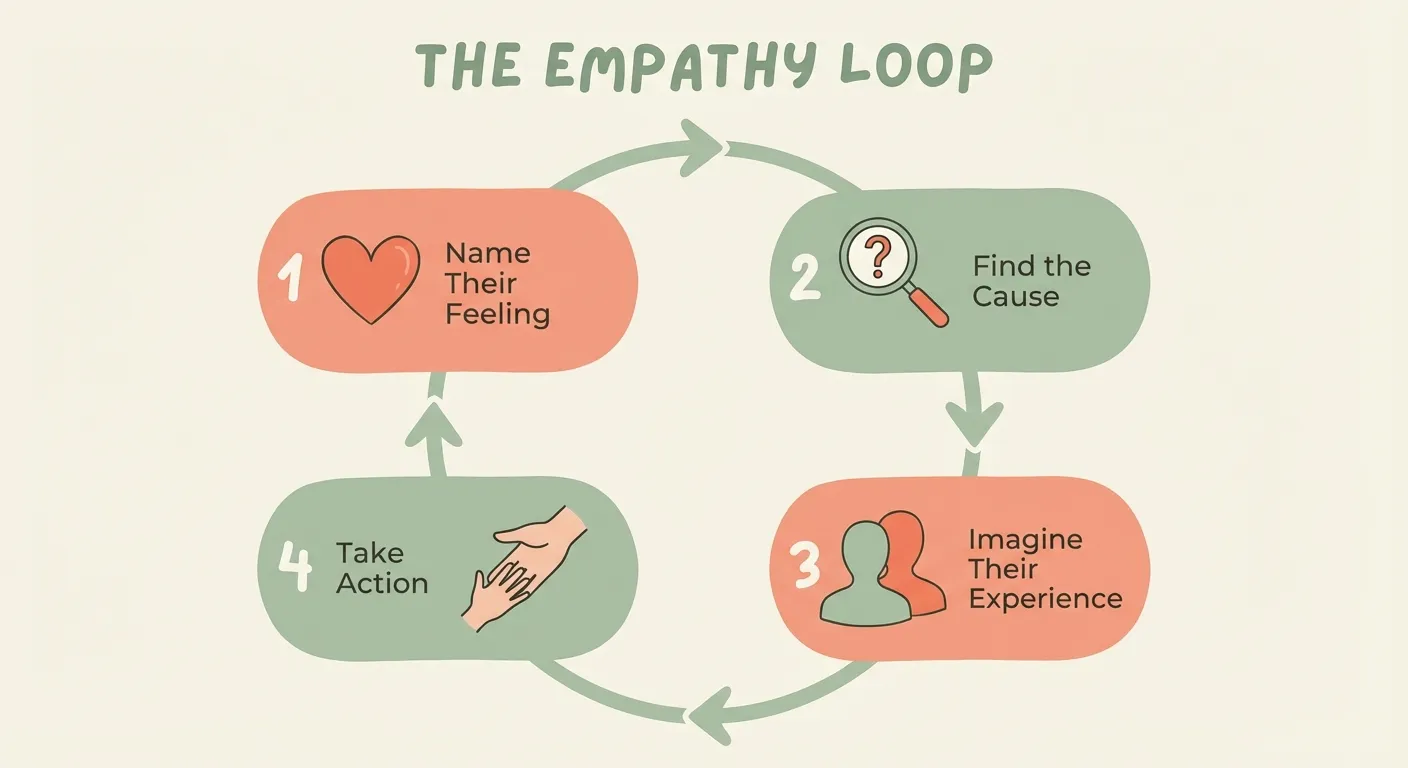
"What do you think they're feeling?"
Get your child to name the other person's emotion. If they're stuck, offer choices: "Embarrassed, left out, or hurt?"
"What happened that made them feel that way?"
Connect the dots between actions and someone else's experience. Cause and effect, beyond their own world.
"If you were in their spot, how would that feel?"
This is where the flip happens. From "my perspective" to "their experience felt from the inside."
"What's one thing you could do?"
Turn understanding into action. An apology, an invitation, a kind word. Empathy isn't just a feeling -- it's something you do.
Use this after conflicts, during story time ("what do you think that character feels?"), or any time your child seems locked into their own perspective. The more they practice, the more automatic it becomes. You're not building an exercise -- you're building a reflex.
Three Gratitude Habits That Actually Stick
Grateful kids aren't entitled kids. But gratitude doesn't come from a one-time talk. It comes from small practices that become part of how your family operates -- repeated enough that they're automatic.
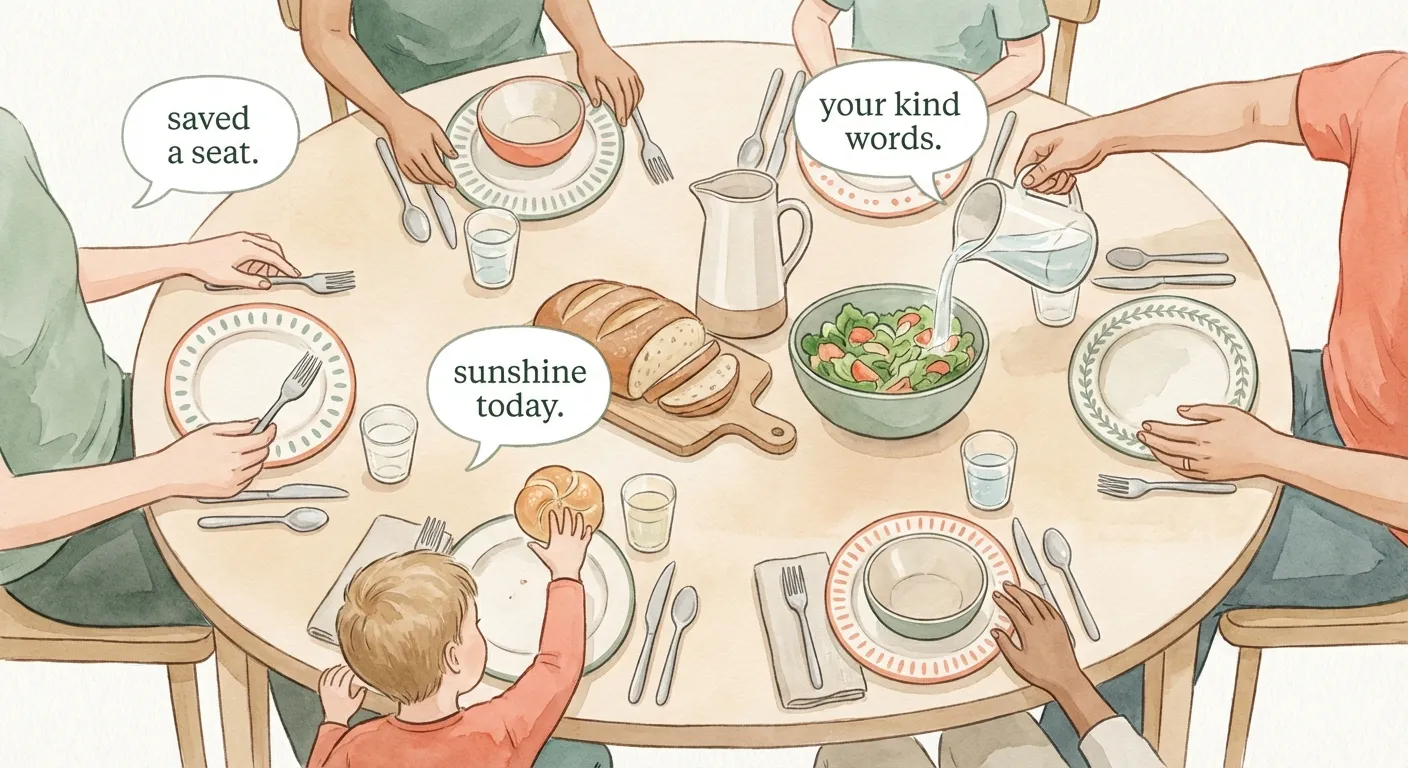
The Dinner Round
All agesEach person at the table names one specific thing from their day they're grateful for. Not "my family" -- that's autopilot. Instead: "My friend saved me a seat at lunch." Specific gratitude forces your brain to actually scan for good things.
Helping Hands Project
Ages 5+Once a month, do something together that helps someone outside your household. Cook a meal for a sick neighbor. Sort clothes to donate. Kids who regularly see different circumstances -- and contribute to making things better -- don't develop an "I deserve more" mindset. Consistency matters more than scale.
The Flip-Side Question
Ages 7+When your child complains ("This is boring," "That's not fair"), try: "What's one thing about this that's actually going okay?" You're not dismissing their frustration. You're training them to hold two truths at once: this is annoying and something here is still good. Over time, it becomes a thinking habit.
The Quick-Reference Card
What helps
- Praise what they did, not who they are relative to others
- Run the four questions after conflicts
- Build gratitude into daily routines
- Let them feel disappointment without rescuing them
- Say no without guilt
- Get them involved in helping others regularly
What backfires
- Telling them they're better or more special than other kids
- Centering every family decision around their preferences
- Giving them everything to avoid conflict
- Inflating accomplishments ("Best in the world!")
- Making excuses when they treat someone poorly
- Demanding special exceptions to rules
Making It Last
Catch it in real time. The perspective flip works best as a response to moments already happening, not a formal exercise. Kid sitting alone at the park? "What do you think she's feeling?" Character in a movie gets betrayed? "How would that feel?" You're building a reflex, and reflexes come from repetition.
Audit your praise for one week. Most parents default to inflated praise without realizing it. For seven days, notice what you say when your child does something well. Are you describing what they did ("You worked on that for an hour straight") or what they are ("You're so talented")? The shift is small. The effect compounds over years.
Model it out loud. "The barista looks like she's having a rough day -- I'm going to say something nice." Or: "I was frustrated with your teacher's email, but I tried to think about it from her side." Your child absorbs more from watching you practice the flip than from being told to do it.
Don't panic about occasional selfishness. All kids are self-centered sometimes. That's developmentally normal, not a character flaw. The goal isn't a child who never thinks about themselves. It's a child who can also think about others. That "also" is what you're building. It takes time, and setbacks don't mean it isn't working.