
Your Kid Isn't Ignoring You. They're Buffering.
That spinning wheel on your laptop? That's your kid's brain after you give an instruction.
- Kids given processing room walk themselves through transitions, handle requests without blowing up, and develop faster processing over time as the pattern becomes familiar.
- The move: say it once, physically relax, wait 30-90 seconds -- then nudge, don't repeat.
The one parenting move that turns automatic "no" into effortless "okay"
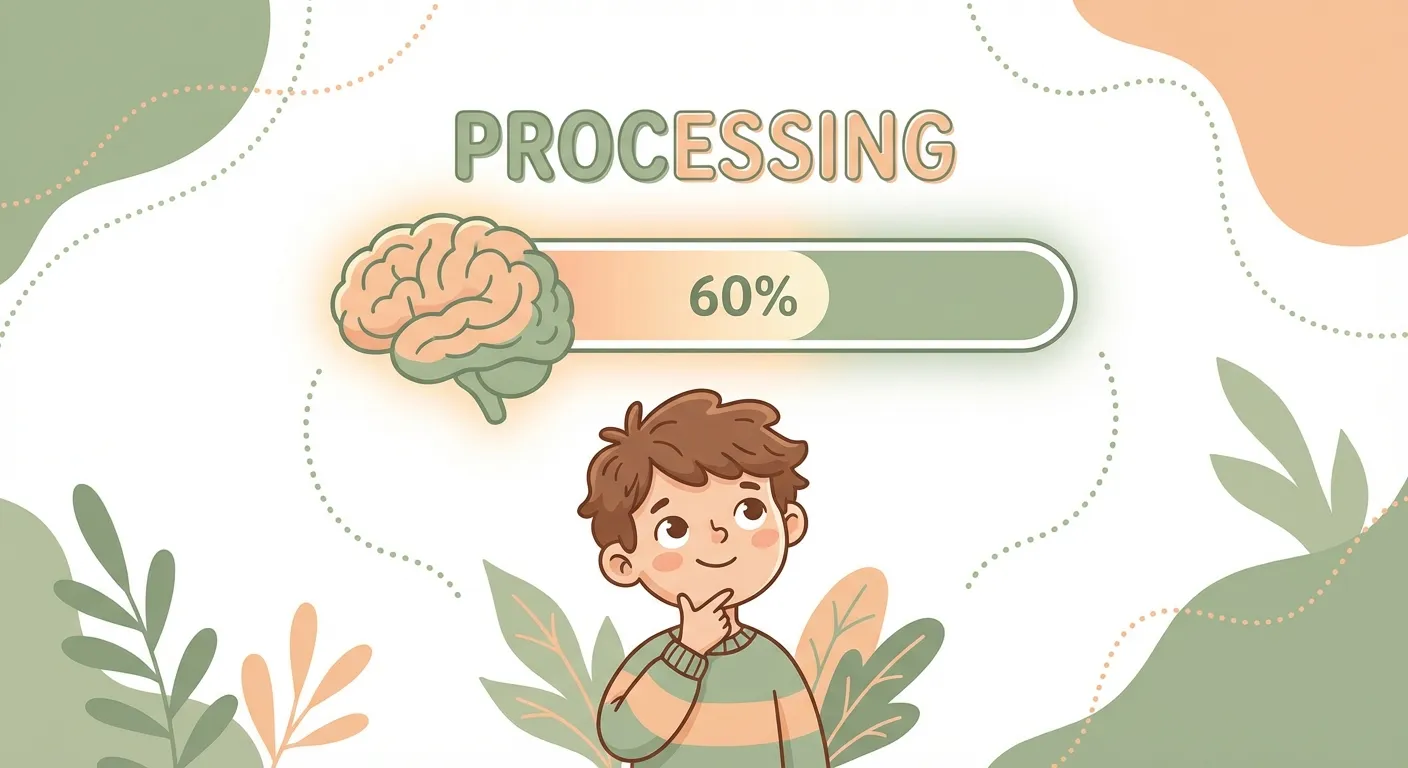
You know that spinning wheel on your laptop? The one that shows up when you click something and the system hasn't caught up yet?
Now picture yourself clicking the same button twelve more times while it's still loading. You know what happens: everything freezes harder.
That's what repeating an instruction does to a child whose brain processes language at its own pace. Every additional "Did you hear me?" is another click on a page that was already loading.
The fix is almost absurdly simple. You stop clicking.
What "No" Actually Means
Here's the thing speech therapists and occupational therapists have known for decades: many children -- especially those with ADHD, autism, or auditory processing differences -- say "no" before the instruction has even finished registering. It's not defiance. It's a placeholder. Their brain is still converting your words into a plan of action, and while it works, the default output is rejection.
If you wait -- genuinely wait, in silence -- a huge percentage of those "no" responses quietly reverse themselves.
Repeat vs. Wait: A Side-by-Side
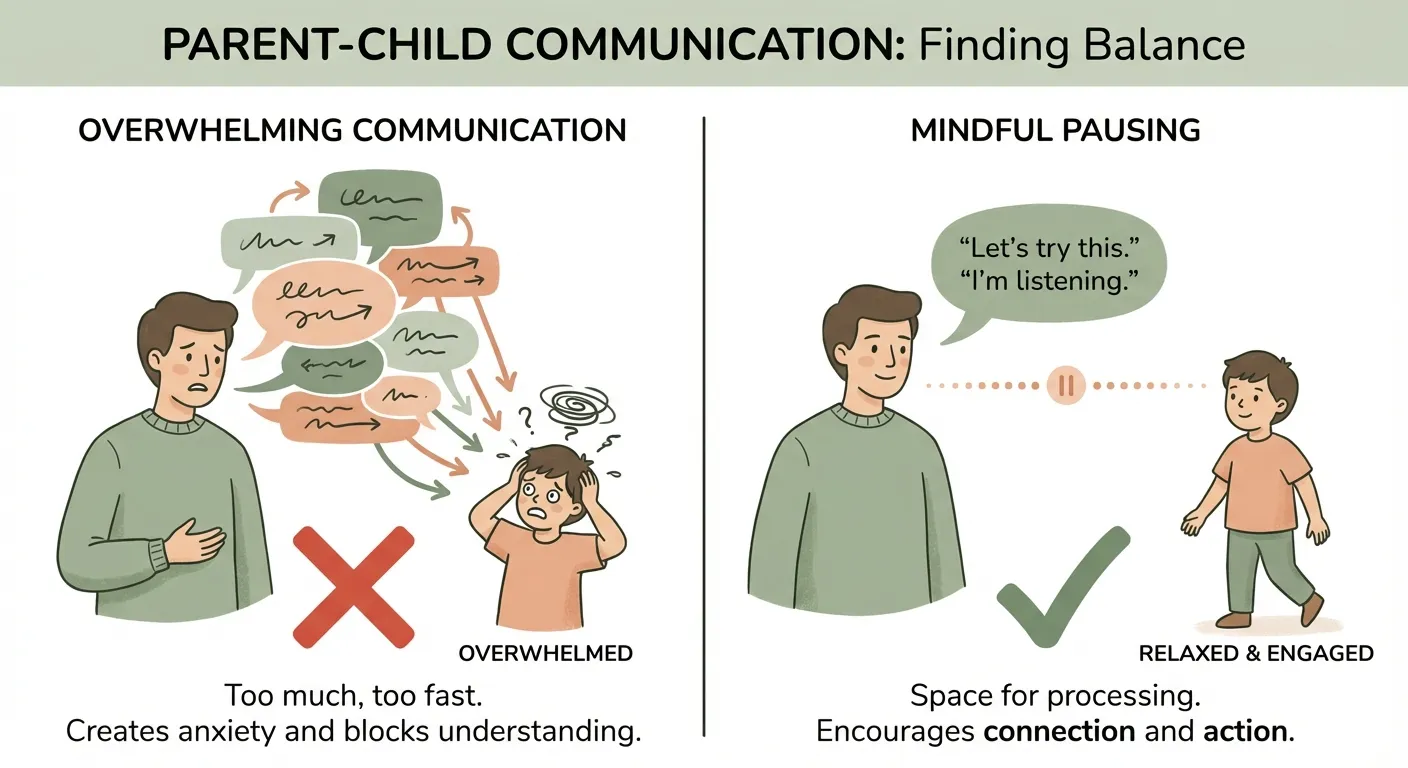
| What Parents Usually Do | What Actually Works |
|---|---|
| "Put your shoes on." | "Put your shoes on." |
| Child says "No." Parent repeats louder. | Child says "No." Parent says nothing. |
| "I said put your shoes on. Now." | Parent relaxes body, steps back, waits. |
| Child digs in. Everyone escalates. | 30-90 seconds later, child reaches for shoes. |
| Result: meltdown, power struggle, late departure | Result: shoes on, no drama, everyone calm |
The difference isn't technique. It's restraint. You delivered the instruction correctly the first time. The only thing left to do is let it land.
The DROP Method
Four steps. The hardest part is the middle two, where you do absolutely nothing.
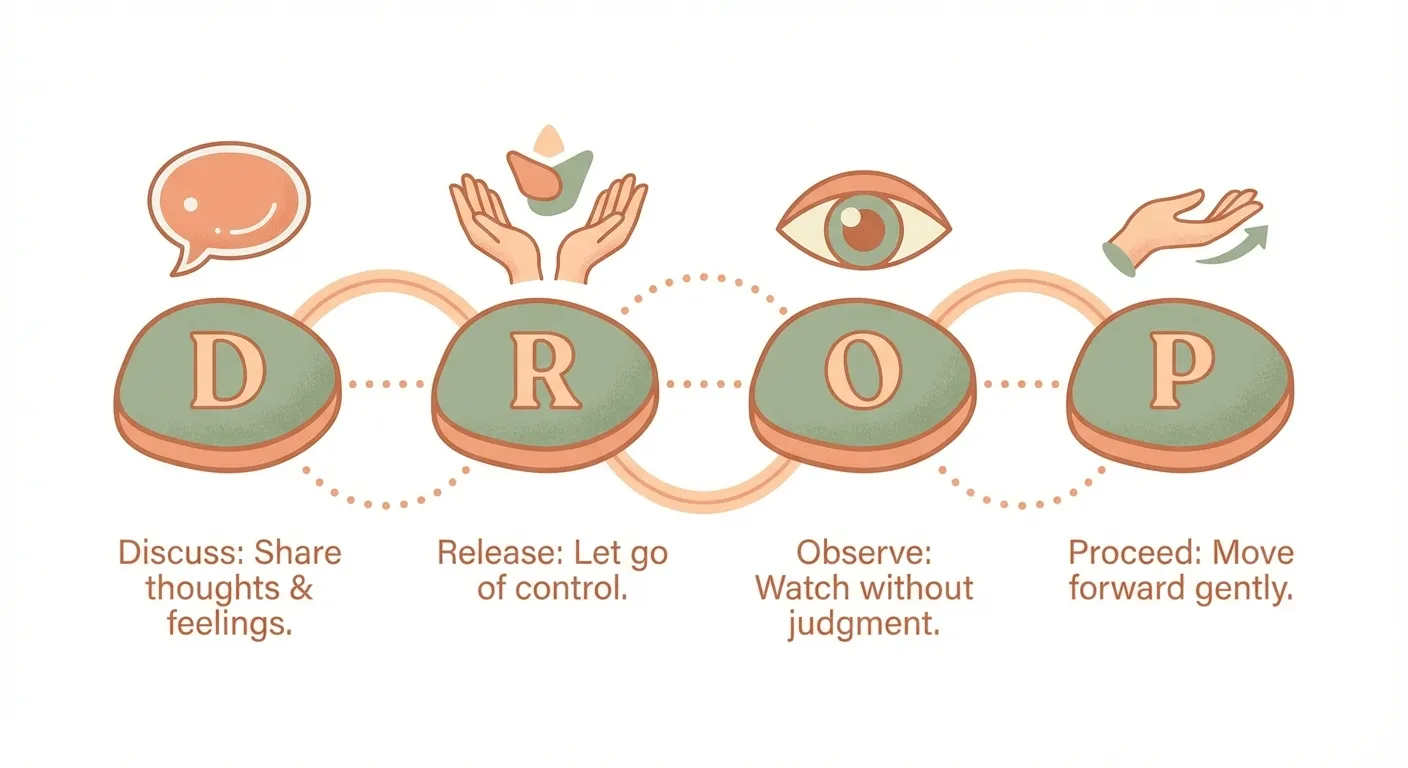
Deliver Once
One sentence. Clear and calm. Then close your mouth.
Release the Pressure
When the "no" comes, do not react. No eye roll, no sigh. Physically relax your own body. Step back. You're clearing the runway so their brain can land the instruction.
Observe the Shift
Watch quietly. You're looking for a change -- a glance, a posture shift, a pause. That's the signal the instruction has registered. Could be 30 seconds. Could be several minutes. Every word you add during this window resets the clock.
Prompt Gently
Once you see the shift, offer something light. Not a repeat -- a nudge.
Watch It Work
Dinner Transition
Parent: "Dinner's almost ready -- want to go wash up?"
Child: "Okay." (gets up, goes to sink)
Homework Kickoff
Parent: "Which book are we on?"
Child: (reaches for the book)
Notice what the parent does during the gap: something calm. They don't hover. They don't stare. They just exist nearby, doing their own thing. That's the move.
Making It Stick
They're not ignoring you. Their brain is working on it.
The less you say, the faster they hear you.