
Your Social Life Is the Best Parenting You're Doing
Every time your kids see you keep a friendship alive, they're learning a skill no class can teach.
Your kids learn friendship by watching yours — not from anything you tell them.
- Kids who grow up seeing real adult friendships build stronger ones themselves — they greet people warmly, keep commitments, reconnect after distance, and handle social complexity without coaching.
- The move: run a three-layer system — daily micro-moments, weekly anchored rituals, seasonal big resets — so your relationships stay alive without willpower.
Picture this. You're standing at the front door, and a friend you haven't seen in a while shows up. You light up. You hug them. You laugh about something before they're even inside.
Your six-year-old is watching from the hallway. And they're learning more about friendship in that ten-second exchange than they will in a month of "use your words" coaching.
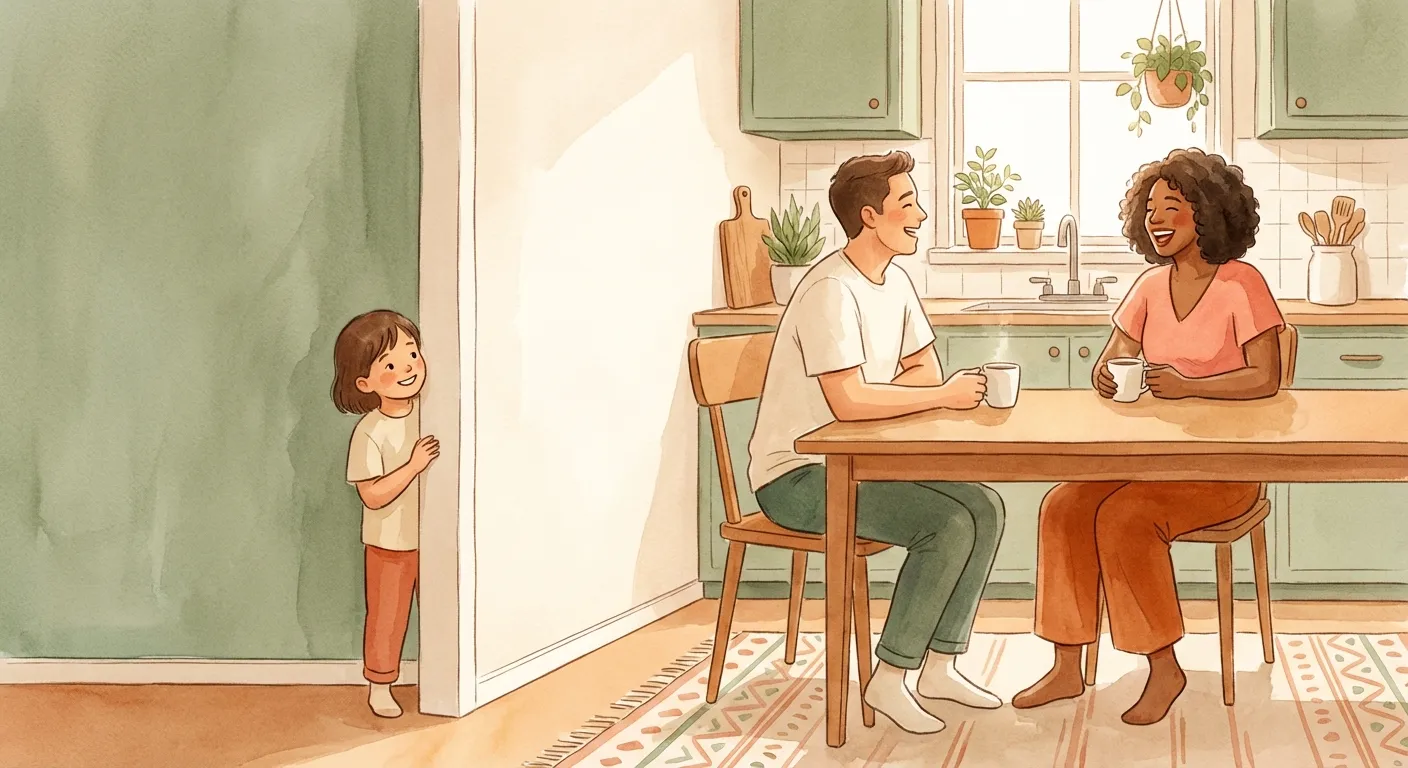
They notice everything. Especially the things you don't think you're teaching.
Here's what makes this interesting. The longest-running study on human wellbeing — over seventy years of data — found that the quality of your close relationships is the single strongest predictor of health and happiness. Stronger than income. Stronger than career achievement. Stronger than genetics.
And children who grow up watching their parents maintain strong friendships? They build better ones themselves. Not because someone told them how. Because they saw it done, over and over, in a thousand small moments they barely remember.
Four Scenes Your Kids Are Silently Studying
You think you're just living your life. They think it's a masterclass.
You answer the phone with warmth
They learn: how to greet people
Your tone when a friend calls teaches them what genuine interest sounds like.
You show up on Tuesday even when tired
They learn: commitments matter
When you keep a standing hangout, they see that relationships take priority sometimes.
You come home happy after a night out
They learn: adults can be joyful
Kids notice when you walk in the door energized. It tells them adult life has good parts too.
You call someone you haven't seen in months
They learn: friendships survive distance
Picking up the phone and reconnecting shows them relationships don't have to be perfect to be real.
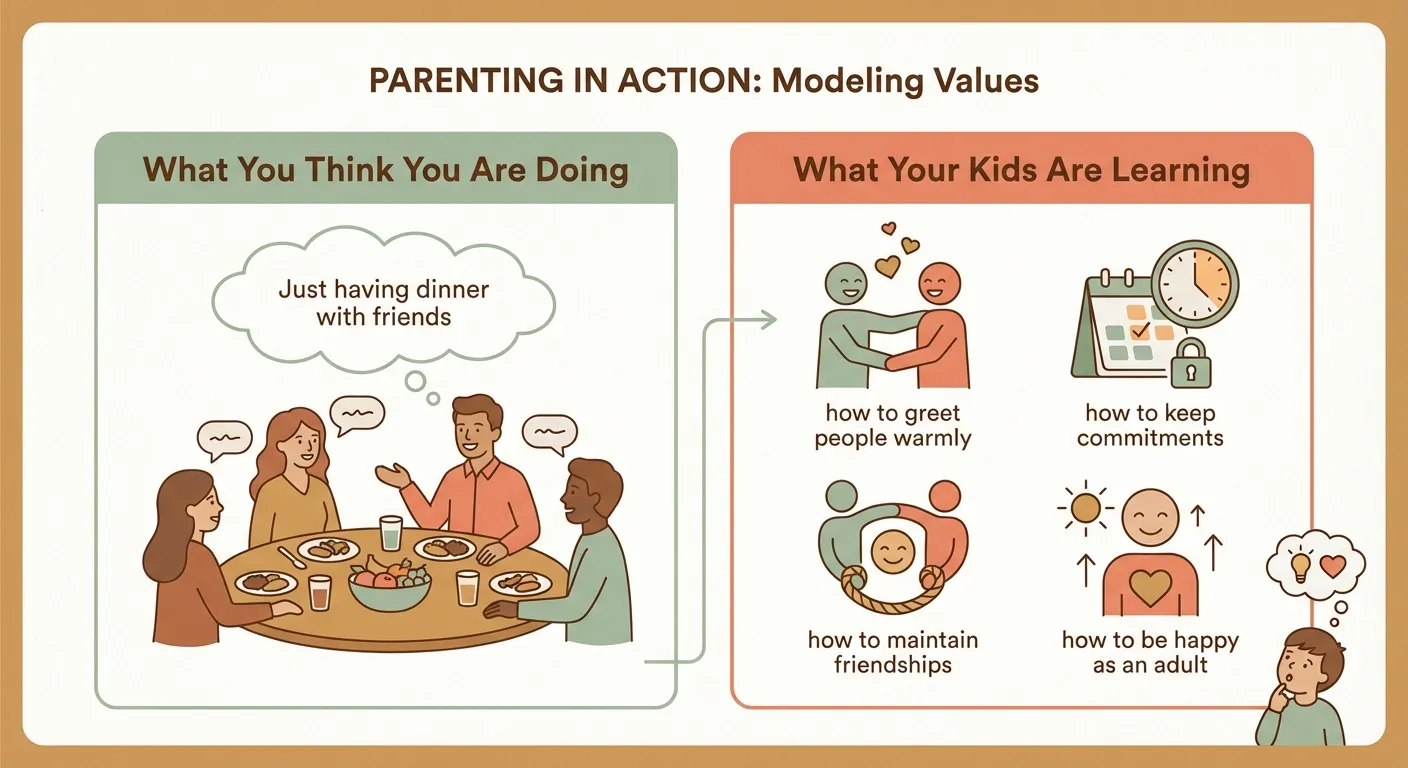
What you think you're doing vs. what they're actually absorbing.
This reframes the whole conversation. Your social life isn't stealing time from your kids. It's one of the most important things they're watching you do.
So the question isn't whether to maintain your adult relationships. It's how to make it actually work with the schedule you have.
The Three-Layer System
Most parents try to maintain friendships through sporadic big plans that keep getting cancelled. The fix is a system that operates at three frequencies — each one low-effort, each one filling a different need.
Layer 1 — Daily
Micro-Moments
Two to five minutes each. They cost almost nothing and keep you feeling like a person who has a life beyond bedtime routines.
- Walk with a neighbor while the kids ride bikes ahead
- Voice-memo a friend during your commute instead of scrolling
- Five minutes of real talk with another parent at drop-off
- A group chat that's actually active — one small thing daily
Layer 2 — Weekly
Anchored Rituals
Same person, same day, same time. The power move here is removing the decision. No planning, no texting back and forth. Just show up.
- A standing walk or workout with one friend — every Tuesday, non-negotiable
- Park hangs after school — whoever shows up, shows up
- Recurring potluck dinner — each family brings one dish, no host pressure
- Monthly call with an old friend, scheduled like a doctor's appointment
Layer 3 — Seasonal
Big Resets
These remind you who you are outside of "Mom" or "Dad." Put them on the calendar in January and protect them like you'd protect a pediatrician appointment.
- A night out with friends — no agenda, no guilt, no early exit
- Weekend trip with another family (kids entertain each other, adults actually talk)
- An annual tradition that's yours — a concert, a hike, a reunion dinner
- Visiting relatives you rarely see, even if it's just overnight
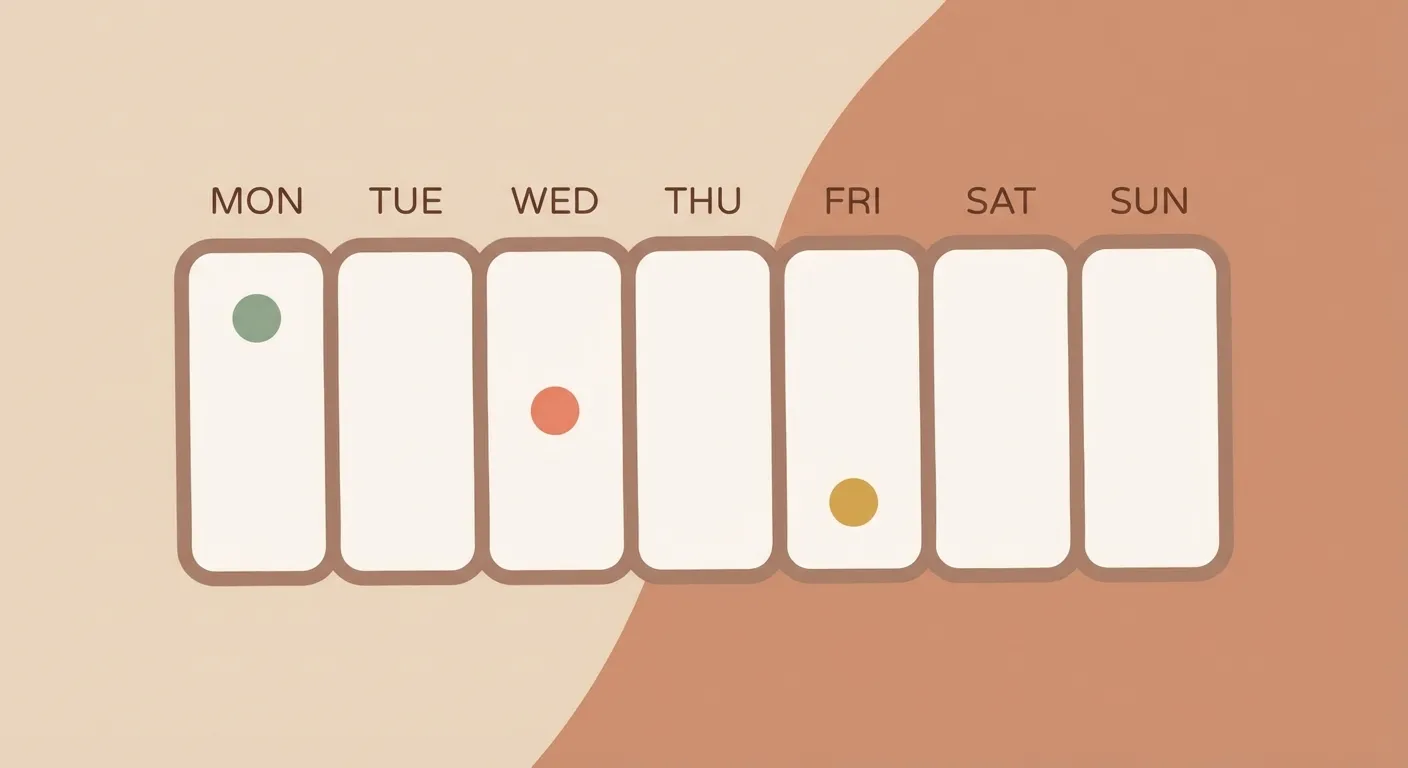
A week with all three layers active. Small, scattered dots that add up to a life that feels full.
Your Partner: The Relationship Your Kids Study Most
No relationship gets more scrutiny from your kids than the one between their parents. They're watching how you greet each other, how you handle disagreements, whether you laugh together. These five moves take almost no extra time but change what they see.
| Move | What It Looks Like | Time |
|---|---|---|
| The fresh-start talk | "We figured out the baby stuff. Now let's figure out us." | 30 min, once |
| 3-5 micro-moments daily | A real hello at the door, a funny text, a two-minute call | ~10 min/day |
| Shared chore as partner time | Clean up the kitchen together after bedtime — side-by-side talk | Already happening |
| Hack existing gaps | Lunch during school hours, same cafe for an hour, extend childcare 90 min | 1-2 hrs/week |
| Childcare swap | Trade evenings with another family — kids think it's a playdate | Free (reciprocal) |
Try This Tonight: The First-Minute Rule
When you first see your partner (or a friend), resist the urge to unload frustrations or launch into logistics. Start with warmth — a real greeting, a question about their day. Those opening seconds set the tone for everything after. Your kids are watching how you say hello.
Making Small Minutes Count
You don't need more time. You need better use of the time you already have.
Let them see you making plans. Let them see you keeping commitments. Let them see you genuinely happy to walk through the door after an evening with friends.
When they're fourteen and navigating the chaos of their own social world, they won't remember what you told them about friendship. They'll remember what they watched you do.