
The Hardest Parenting Move
Is Doing Nothing
Your child is hurting. Your chest tightens. Your hand moves toward the phone. Here's why the brave move is to sit.
Resilience isn't born. It's built — in the gap between pain and recovery.
- Kids raised with this approach handle disappointment without falling apart, trust their own problem-solving, and enter adulthood knowing that hard things pass.
- The move: name what they feel, sit in it without silver-lining, then turn the experience into signal once the wave passes.
Your kid comes home in tears. Didn't get picked. Got left out. Failed the thing they practiced for weeks. And your body reacts before your brain does: chest tightens, jaw clenches, hands itch to grab the phone and call someone. Fix it. Make it stop.
That reflex? It feels like love. It looks like love. But every time you act on it, you send a quiet, devastating message: You can't handle this.
Now flip it. Imagine sitting down next to your crying child, saying nothing heroic, fixing nothing, just... being there. That sends the opposite message: This is hard, and you're capable.
The difference between those two messages, repeated a few thousand times across childhood, is the difference between a young adult who crumbles at the first sign of difficulty and one who knows from experience that hard things pass.
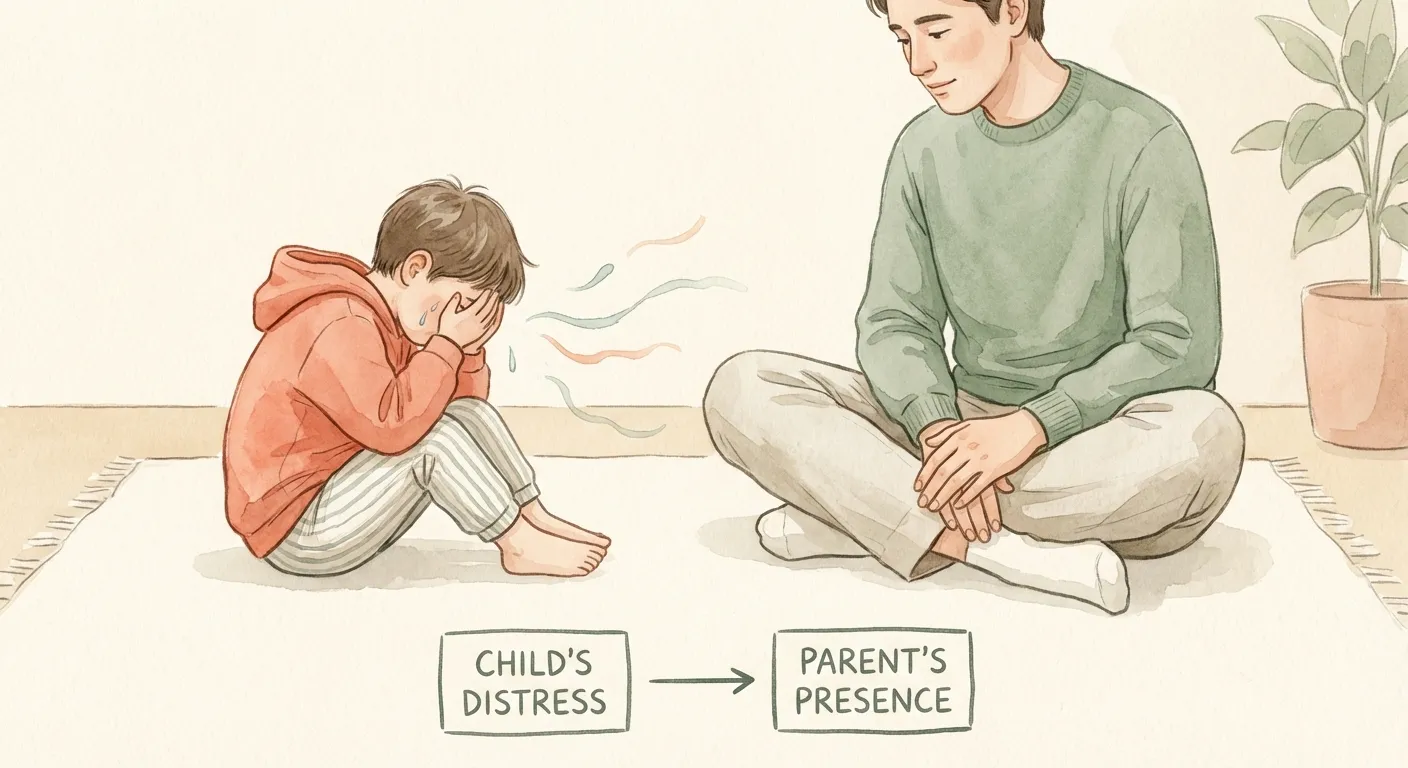
The hardest seat in the house: right next to your child's pain, doing nothing about it.
Your child doesn't need a pain-free life.
They need a parent who teaches them that pain is survivable.
Fixer vs. Coach
Most parents default to fixer mode. It stops the crying faster. It feels productive. But there's a cost.
| Fixer Mode | Coach Mode |
|---|---|
| Emails the teacher about the unfair grade | Asks "What do you think happened?" |
| Calls the other parent when feelings get hurt | Helps your child practice what to say |
| Clears obstacles before they reach them | Lets them bump into it: "What did you notice?" |
| Says "Don't worry, I'll handle it" | Says "This is tough. What's your first move?" |
| Child learns to wait for rescue | Child learns to trust themselves |
Notice the pattern. Fixer mode is faster. Coach mode is harder. But coach mode is the only one that builds anything lasting.
The SIT Method
Three steps. The hardest part is the second one.
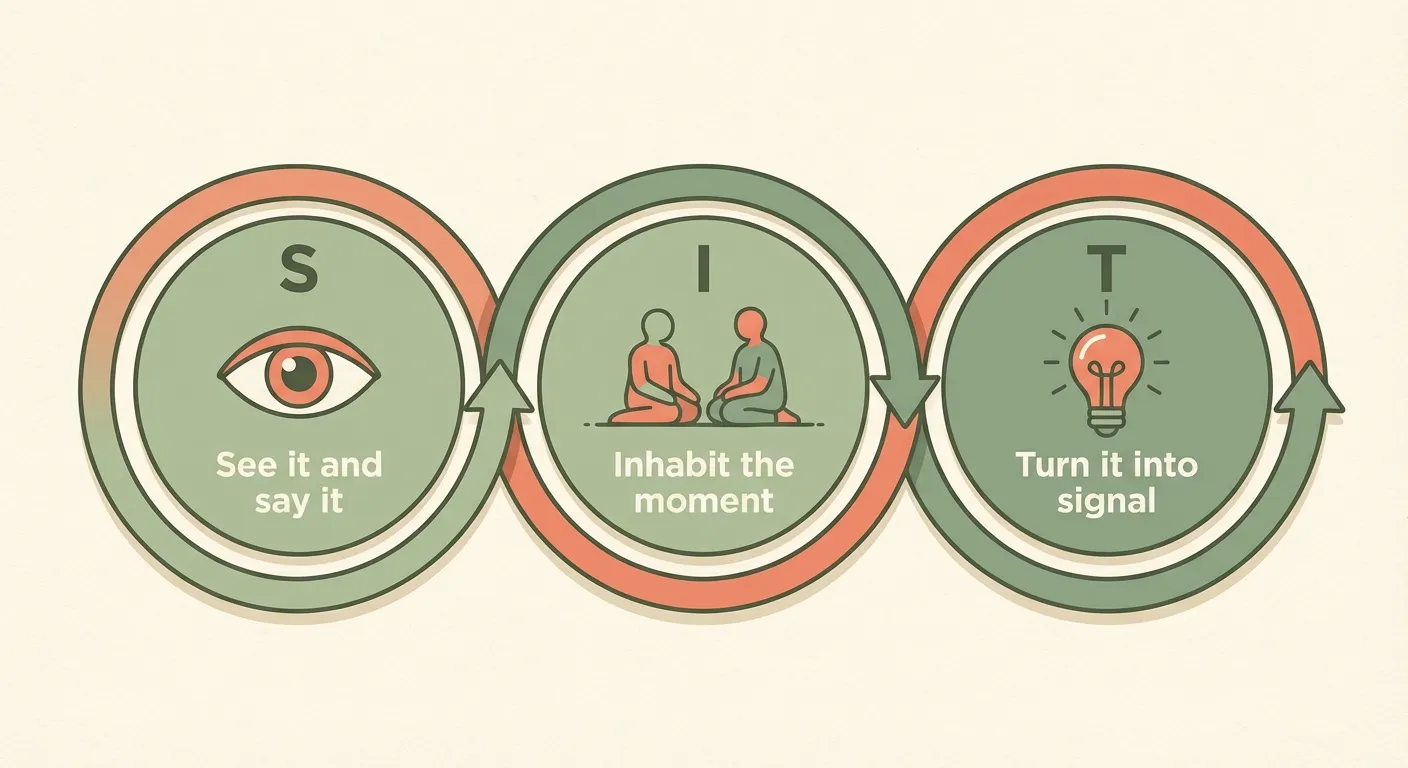
See it and say it
Name the emotion you're seeing. Don't analyze. Don't minimize. Don't try to talk them out of it. Just reflect what's in front of you.
Inhabit the moment
Stay present without solving. No silver linings. No "at least" statements. No pivoting to solutions. This is where resilience is actually built — in the gap between pain and recovery, with someone safe beside them.
Turn it into signal
Once the wave has passed — hours later, maybe the next day — help them read the experience like data. What did the pain tell them? What would they do differently?
What This Looks Like at Every Age
The principle is the same. The words change.
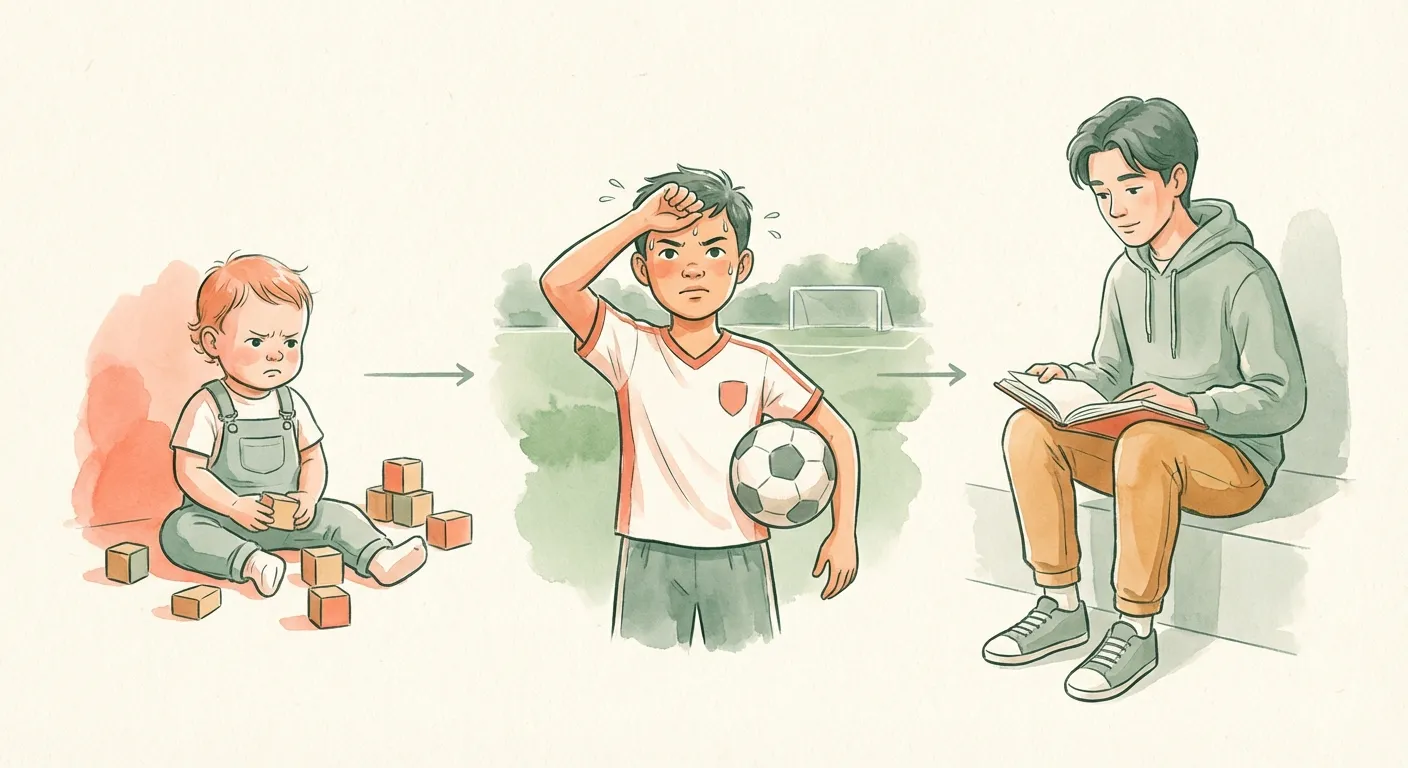
Same muscle, different weights. Resilience scales with them.
Be Their Translator
They feel enormous things but don't have words for them yet. You supply the vocabulary: name the face, name the fists, name the feeling. Do this enough and they start naming their own emotions — the first step of self-regulation.
Connect Thoughts to Feelings
School-age kids can begin to see the link between what they tell themselves and how they feel. Help them spot the internal narrative and test whether a different story changes the feeling.
Help Them Build Their Own Toolkit
Teenagers need to own their coping strategies, not borrow yours. Help them inventory what actually works — running, drawing, calling a specific friend — and what doesn't — doomscrolling, snapping at siblings, shutting everyone out. Your role shifts from coach to consultant: available when asked.
Quick Check: Building or Undermining?
Builds It
- Naming emotions without rushing to fix
- Letting natural consequences play out
- Sharing your own struggles and recoveries
- Asking questions instead of giving answers
- Being calm during their hardest moments
Erodes It
- Solving problems before they've tried
- Dismissing pain: "It's not a big deal"
- Jumping to "Look on the bright side"
- Calling reinforcements at every conflict
- Teaching that discomfort is something to escape
Making This Stick
Catch the fix-it reflex in your body
It usually shows up as chest tightness or an impulse to grab your phone. That's your cue to pause. Ask yourself: "Is my child in danger, or in discomfort?" Danger requires action. Discomfort requires presence.
Narrate your own struggles out loud
"I didn't get the project I wanted at work. I'm disappointed, but I'm going to talk to my manager about what I can do differently next quarter." When kids hear you process difficulty without catastrophizing, they absorb that this is what capable people do.
Celebrate the comeback, not the comfort
"Remember last month when you were devastated about not making the relay team? You stuck with practice anyway, and look where you are now." Kids who hear their own comeback stories retold start to believe: "I've done hard things before. I can do hard things again."
Process struggle when things are calm
The middle of a meltdown is no time for a lesson. But Tuesday night dinner? Perfect: "What was the hardest thing about your week? How did you get through it?" When processing struggle becomes routine, it stops feeling like a crisis every time.
Comfort is presence. Rescue is removal.
One builds strength. The other builds dependence.
Your child needs you beside the struggle, not between them and it.