
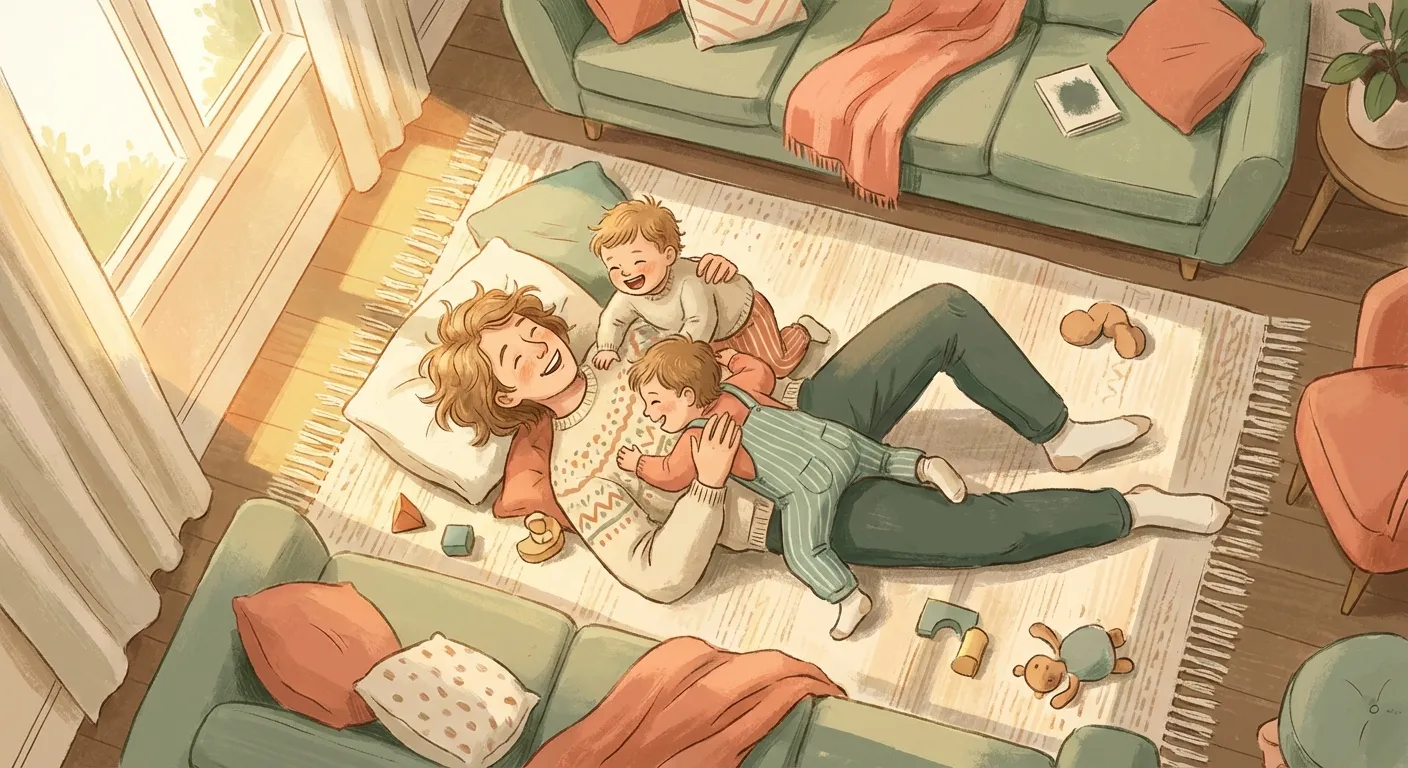
The parent who gets on the floor wins the connection game.
- Kids who roughhouse with a parent show stronger impulse control, deeper trust, and the kind of full-body laughter that no organized activity can match.
- The shift: stop scheduling connection — just clear some floor space and let them attack.
Your kid just got home from school. They're bouncing off the walls. Shoes still half-on, backpack dropped in the hallway, already swinging from the doorframe.
Here's what works: push the coffee table out of the way, throw some cushions down, and get on the floor. Lie there. You are now the mountain.
Watch what happens. Within seconds, they're on you. Climbing, pushing, trying to flip you over. The shrieking starts. The laughter comes in waves. Ten minutes later, they're calm, you're both grinning, and nobody spent a dollar.
The best playground in the world is your living room floor.
You're the main attraction.
The Daily Wrestle: A 4-Step Setup
This isn't complicated. You don't need a plan. But if you want to nail it every time, here's the sequence:
Clear the Zone
Push furniture aside. Scatter cushions as crash pads. Six feet of floor space is all you need.
Be the Mountain
Lie or kneel on the floor. You're the obstacle. They scramble over you, try to push you down, pile on top. Toss them gently onto cushions. Let them win most of the time.
Follow the Laughter
Everyone laughing? Perfect. Someone not laughing? Dial it back. Laughter is your compass -- it means they feel safe, excited, and connected.
Wind It Down
Don't just stop. Collapse in a heap together. Catch your breath in a pile. This cooldown prevents the post-play meltdown.
The Laughter Test
Before you sign up for another after-school class, ask one question: will it produce more laughter than twenty minutes of wrestling on the floor?
Physical play generates the full-body, uncontrollable, tears-running-down kind. Screens rarely do that. Structured activities sometimes do. But nothing matches the raw hilarity of a parent and child in a pile on the carpet.
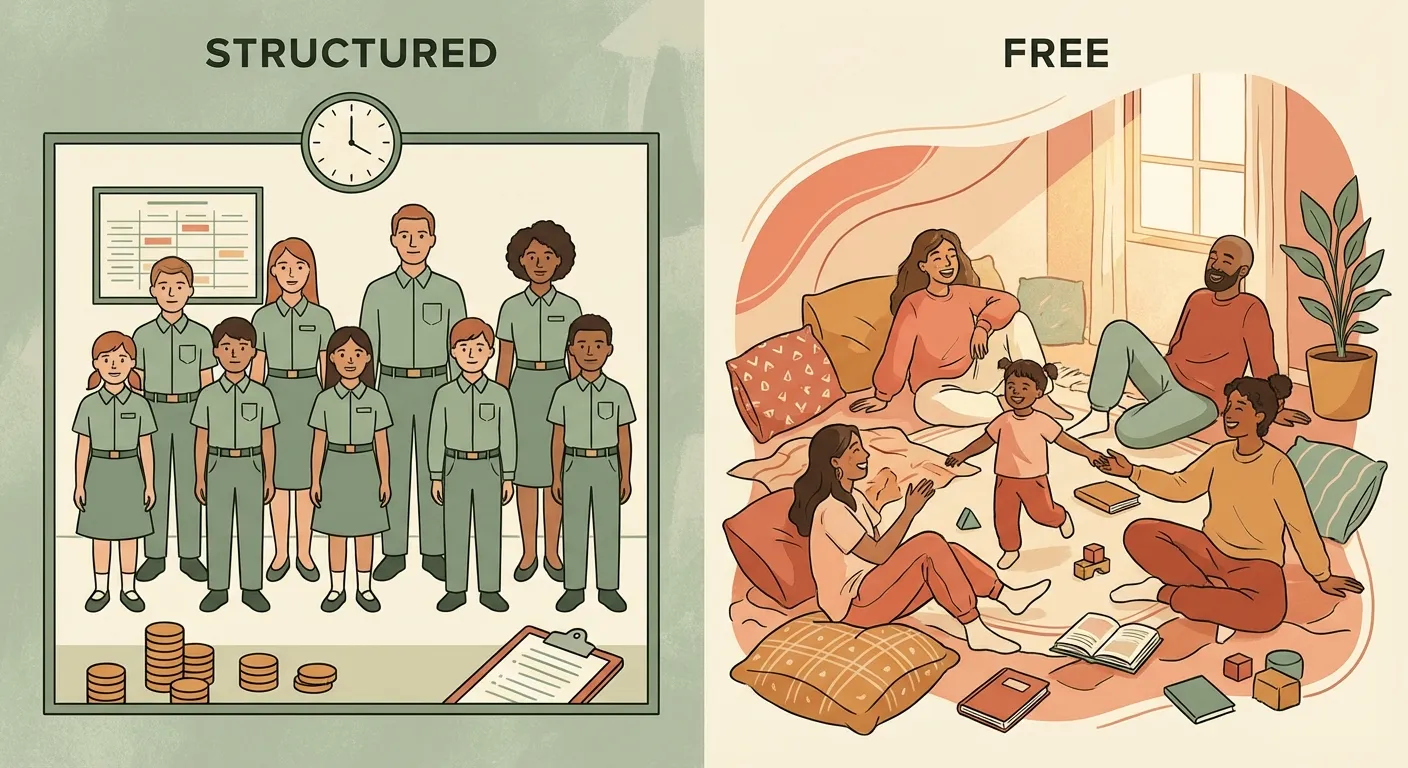
| Organized Activity | Roughhouse Play |
|---|---|
| Costs money (fees, gear, transport) | Free -- your floor and your body |
| Fixed schedule, someone else's rules | Happens when the mood strikes |
| Child learns from an instructor | Child learns from a parent they adore |
| Connection with peers | Deep connection with you |
| Can feel like a chore | Never feels like a chore |
This isn't anti-activity. Some structured pursuits are wonderful. But if the schedule is packed and the evenings are dull, cut one class and add one daily wrestle. You'll know within a week which one they prefer.
Zero Equipment, Maximum Joy
You don't need to buy anything. You already have everything required for the four best activities in childhood:
Cushion Crash Course
Strip the sofa cushions. Scatter them on the floor. Balance, jump, topple, crash. Stand on one while siblings try to knock you off.
Den Building
Blankets, overturned chairs, a few pillows. Kids design it, build it, inhabit it. Architecture, engineering, and imagination in one messy afternoon.
Backyard Campfire
Kids gather fuel, learn to stack kindling, watch the flames. Wrap potatoes in foil and throw them in. Sit around it as evening comes.
Water Ambush
A hose, some old containers, a warm day. The garden becomes a battlefield of shrieking joy. Let them soak you -- getting drenched is what makes it memorable.
The Wind-Down Matters
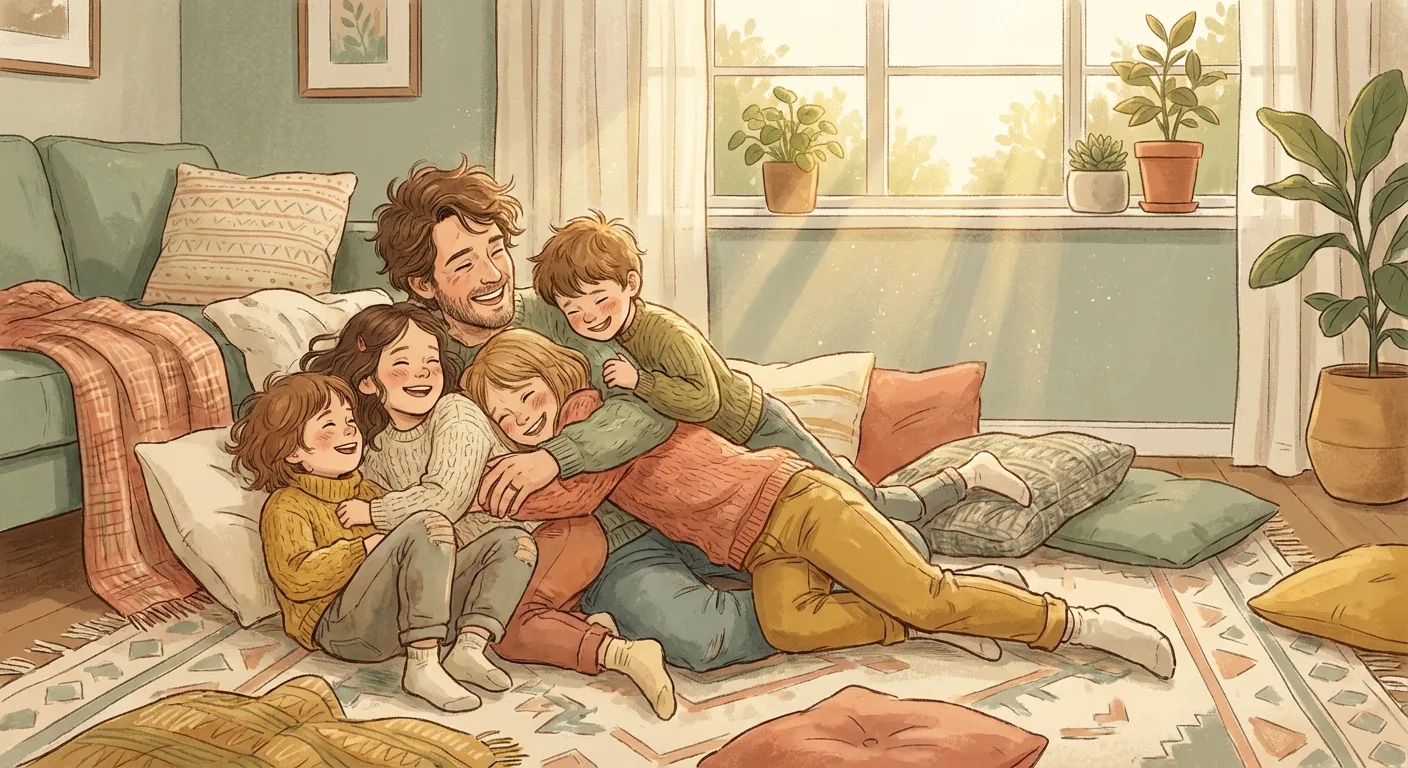
Don't skip the cooldown. After the wild part, collapse together. Lie in a pile. Catch your breath. Count to ten slowly.
This teaches kids that high energy has a natural end point. Five minutes of winding down prevents the meltdown that follows sudden stops. The whole cycle -- burst, play, settle -- is what builds emotional regulation.
Make It a Ritual, Not a One-Off
- Same time each day. After school, before dinner -- when it's predictable, kids self-regulate in anticipation.
- Teach them to play with each other. Once they learn the rules from you, siblings pick it up. You've given them a free, portable activity for life.
- Respect the off-switch. Tears, real anger, someone saying "stop" -- these end it instantly. Wild play with clear rules is part of the gift.
- Watch for the invitation. When your child brings you a pillow, tugs your hand toward the floor, or climbs on your back uninvited -- that's the request. Say yes.
The wildest, most joyful moments of childhood don't happen at organized events.
They happen on your living room floor, with you at the bottom of the pile.