It Wasn't the Talented One
Why the sibling with less natural ability often became the world-class performer
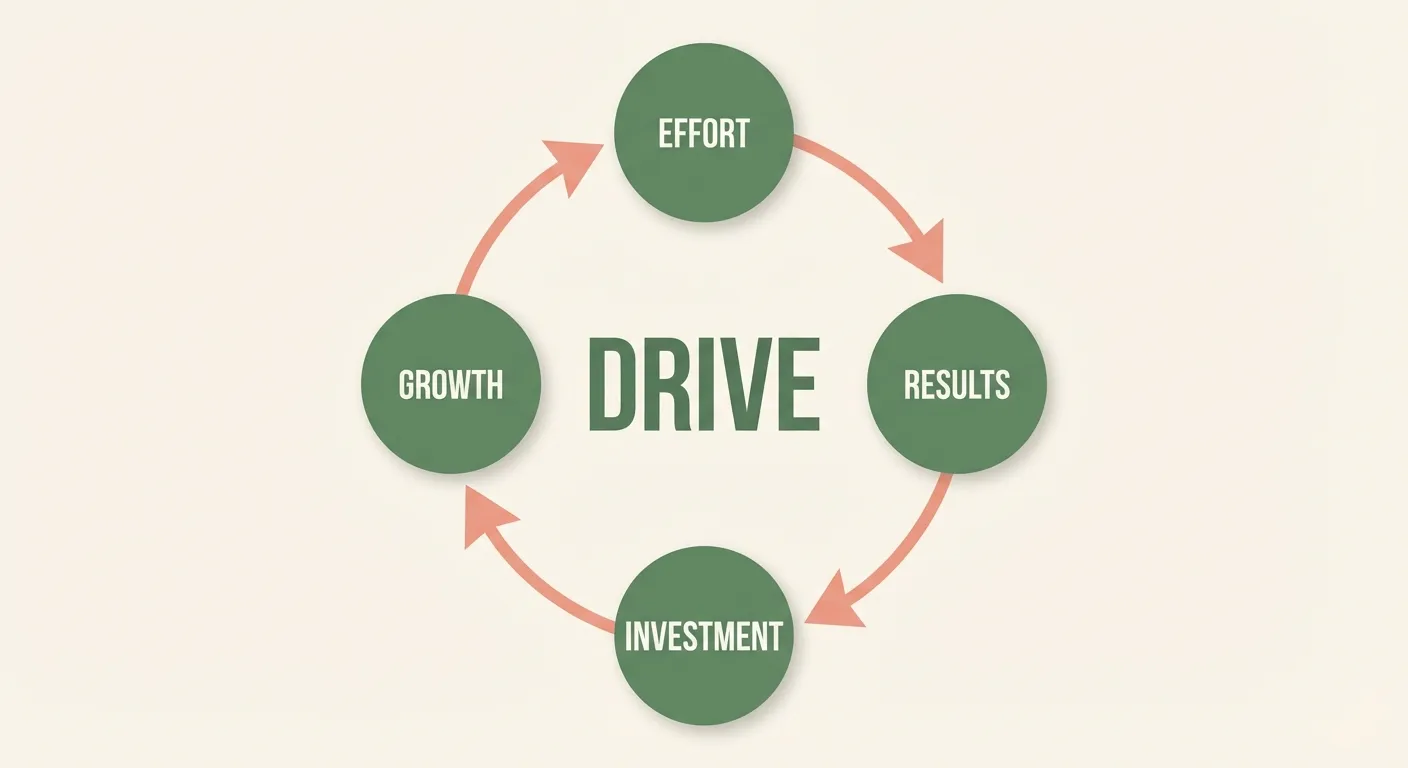
Drive created a feedback loop that talent alone never could.
- Kids with drive get better coaching, more family investment, and faster growth — which deepens the drive even further. The 'talented' sibling who coasted never built that engine.
- The move: pair an effort culture with daily rhythm and rising challenge — then get out of the way when internal motivation replaces your external push.
A family has two kids in piano. The older one picks up melodies by ear, learns pieces faster, impresses the teacher from day one. The younger one plods along, struggles with rhythm, needs three times the repetition. Guess which one ends up performing at a national level?
If you said the younger one, you're right — and you're not guessing. This pattern showed up so consistently in research on world-class performers that the researchers stopped being surprised by it. Across music, athletics, and academics, the child who eventually reached the top was frequently not the one who showed the most early promise.

What the Star Had That the "Talented" Sibling Didn't
The "Talented" Sibling
- Picked things up quickly
- Impressed people early
- Coasted on natural ability
- Resisted correction
- Treated practice as a chore
- Quit when it got hard
The One Who Made It
- Willing to work daily
- Eager to improve
- Followed teacher's guidance
- Persisted through difficulty
- Embraced practice
- Made coaching a pleasure
That last point is worth pausing on. The child who was a pleasure to work with got more from every teacher, every parent session, every opportunity. Drive created a positive feedback loop: effort led to results, results led to more investment from adults, more investment led to faster growth, and faster growth reinforced the drive. The naturally talented sibling, meanwhile, was fighting against friction they'd never learned to handle.
Five Conditions That Let Drive Emerge
These families weren't running talent factories. They were just living in a particular way — and that way turned out to be exactly what a child's internal motivation needs to grow.
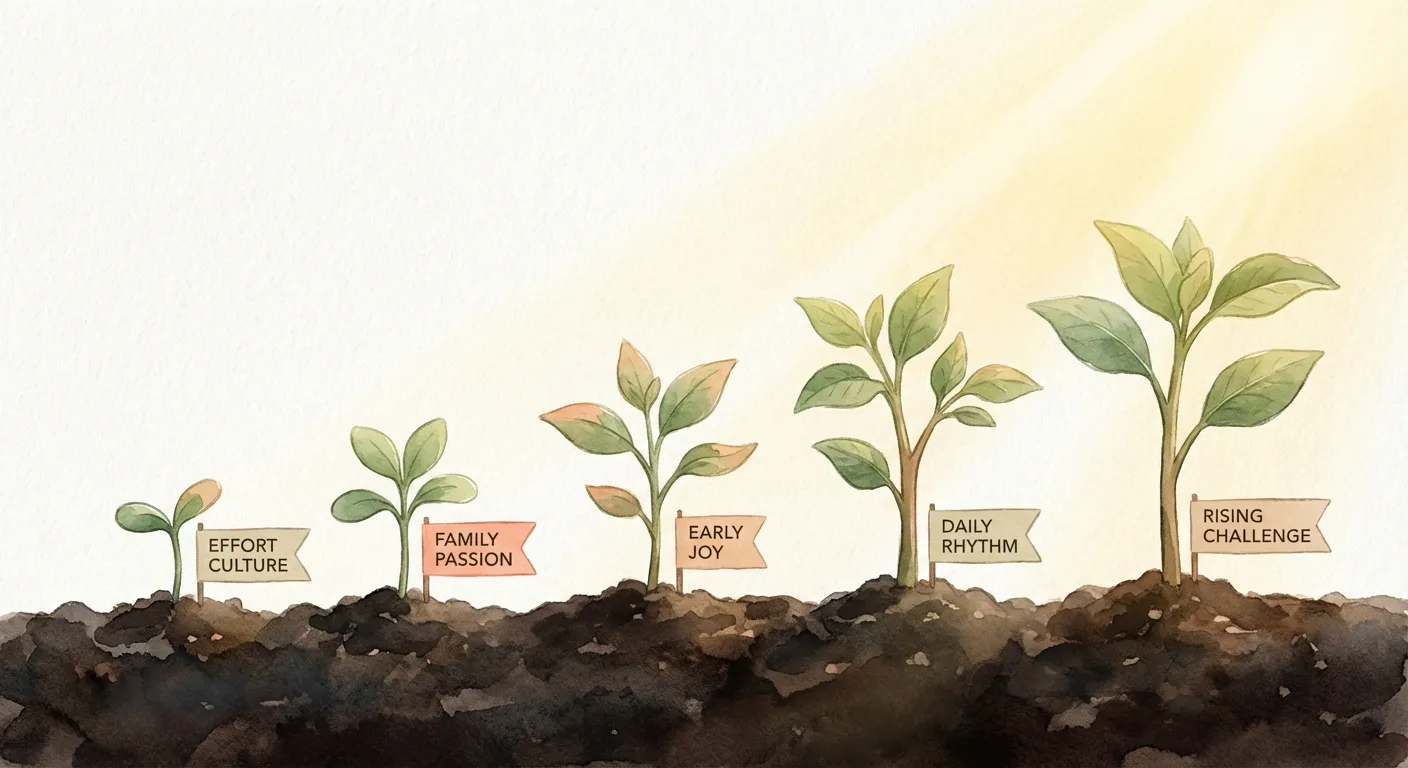
1. Effort Culture
High standards applied to everything, not just the talent area. Chores done thoroughly, homework completed before play, projects finished once started. The parents modeled this themselves — the kids watched and absorbed it.
2. Family Passion
The activity was already part of family life before lessons started. Music at dinner, weekend games, books about the field on the shelf. When lessons began, the child was stepping deeper into something familiar — not being pushed into something foreign.
3. Early Joy
The first teacher was chosen for warmth and chemistry, not credentials. The goal was to make the child feel excited and welcome. If the fit wasn't right, these parents switched quickly. No one got good at something they hated from the start.
4. Daily Rhythm
Practice wasn't negotiated daily. It had a time slot, same as dinner. Parents sat with young kids during practice — not teaching, just present. The routine came first; the love of routine came after competence grew.
5. Rising Challenge
When the child outgrew their teacher, parents found a better one. When the local program wasn't enough, they drove farther. The bar kept moving up — not because parents pushed, but because they responded to what the child was ready for. Each new level brought fresh energy.
How Your Role Shifts as Drive Deepens
Here's what made these parents unusual: they didn't do one thing well for 15 years. They did four different jobs, one after another, and the whole trick was knowing when to drop the old one and pick up the next.
The Cheerleader
Immerse your child in the activity before lessons start. Sit in on early lessons. Celebrate every recital, every game, every small win. Make their growing ability a source of family pride.
The Practice Partner
Set the daily routine and protect it. Learn enough to follow along. Navigate the "I want to quit" moments — acknowledge the frustration without caving, and never have the quit conversation during a low point.
The Logistics Chief
The family schedule reorganizes around training. Costs escalate. You're driving farther, spending more, managing school conflicts and skeptical relatives. Your child doesn't see most of this. That's the point.
The Quiet Investor
Decisions belong to your child and their mentors now. You fund, you listen, you show up after losses. The driving seat is theirs.
The Transition Signals
Staying in a role too long is the most common mistake. These are the signals that it's time to shift.
| When You See This... | It's Time To... |
|---|---|
| Your child stops needing convincing and starts needing structure | Move from Cheerleader to Practice Partner. They enjoy it now — they need help organizing the work. |
| Your child surpasses your technical knowledge | Move from Practice Partner to Logistics Chief. The teacher is the authority now. You handle everything else. |
| Internal drive has replaced your external pressure | Move from Logistics Chief to Quiet Investor. They practice because they're good and they know it — not because you told them to. |