
The 30-Second Trick That Teaches Your Teen More About Their Brain Than Any Lecture
One cognitive paradox explains why 'stop worrying' has never worked on anyone.
- Kids who get this stop white-knuckling anxious thoughts, self-correct when they catch themselves suppressing, and treat their brain like a normal brain — not a broken one.
- The shift: swap 'don't think about it' for 'oh, there's that thought again' — and move on.
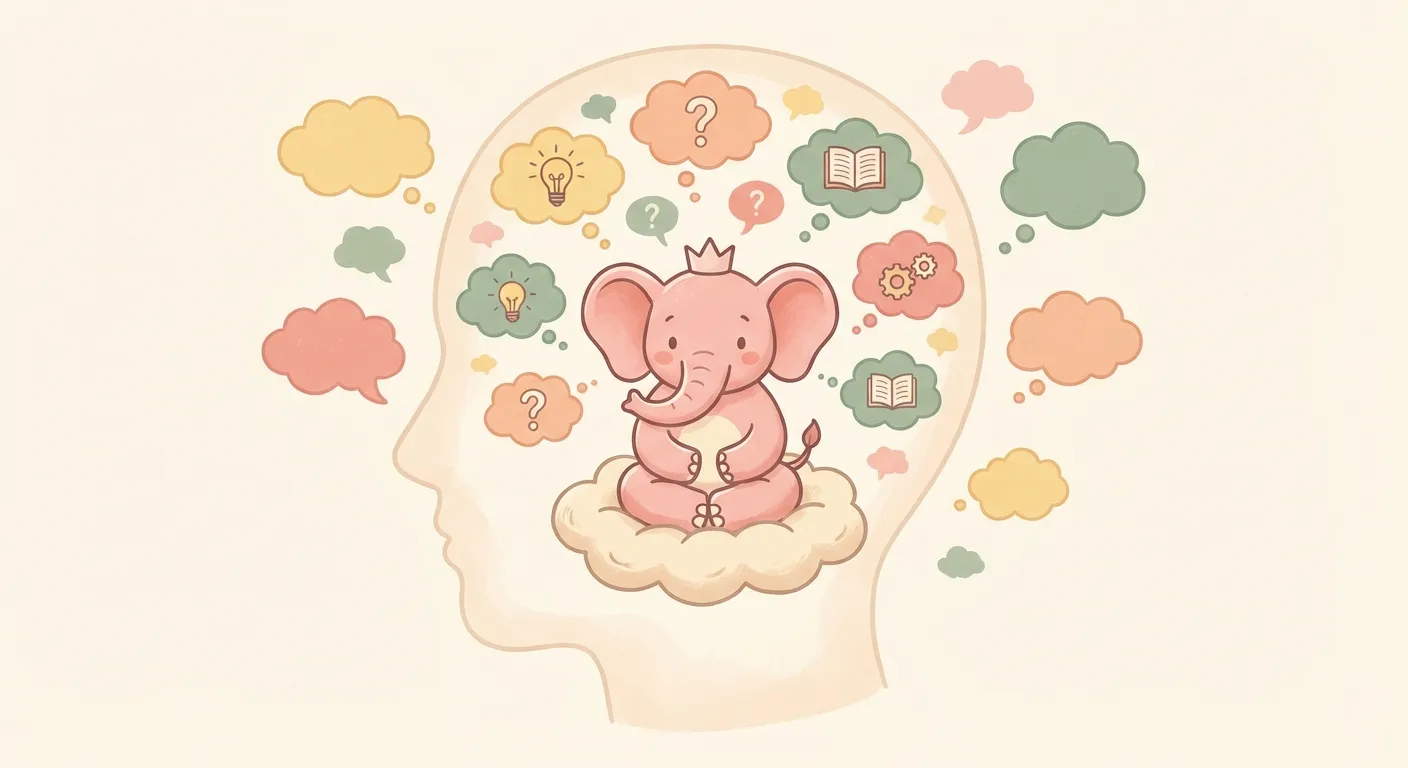
Whatever you do for the next 30 seconds, do NOT think about a pink elephant.
How'd that go?
If a big, goofy, pink elephant just paraded through your mind — congratulations. Your brain works perfectly. And you just experienced one of the most replicated findings in cognitive psychology: the thought suppression paradox.
Here's why this matters for your kid.
The Problem With "Just Don't Think About It"
Every teen has heard some version of this advice. From friends, from teachers, from well-meaning parents. "Stop stressing." "Think positive." "Just don't worry about it."
It sounds reasonable. But Daniel Wegner's famous "white bear" experiments in 1987 proved something that every anxious person already suspected: telling your brain NOT to think about something makes it think about it more.
Not a little more. A LOT more.
This is called ironic process theory. Your brain has to keep checking whether the thought is gone — which means it has to keep bringing it up. It's like asking someone to monitor whether they've stopped looking at a red dot. The monitoring IS the looking.
Turn This Into a 30-Second Experiment
This is the part where you stop being the lecturer and become the scientist. Your teen runs the experiment on their own brain — and the result teaches itself.
Say this to your teen, exactly like it's a game:
"I want to try something. For the next 30 seconds, think about anything you want. Anything at all. But there's one rule: do NOT think about a pink elephant. Ready? Go."
Wait the full 30 seconds. Then ask: "What happened?"
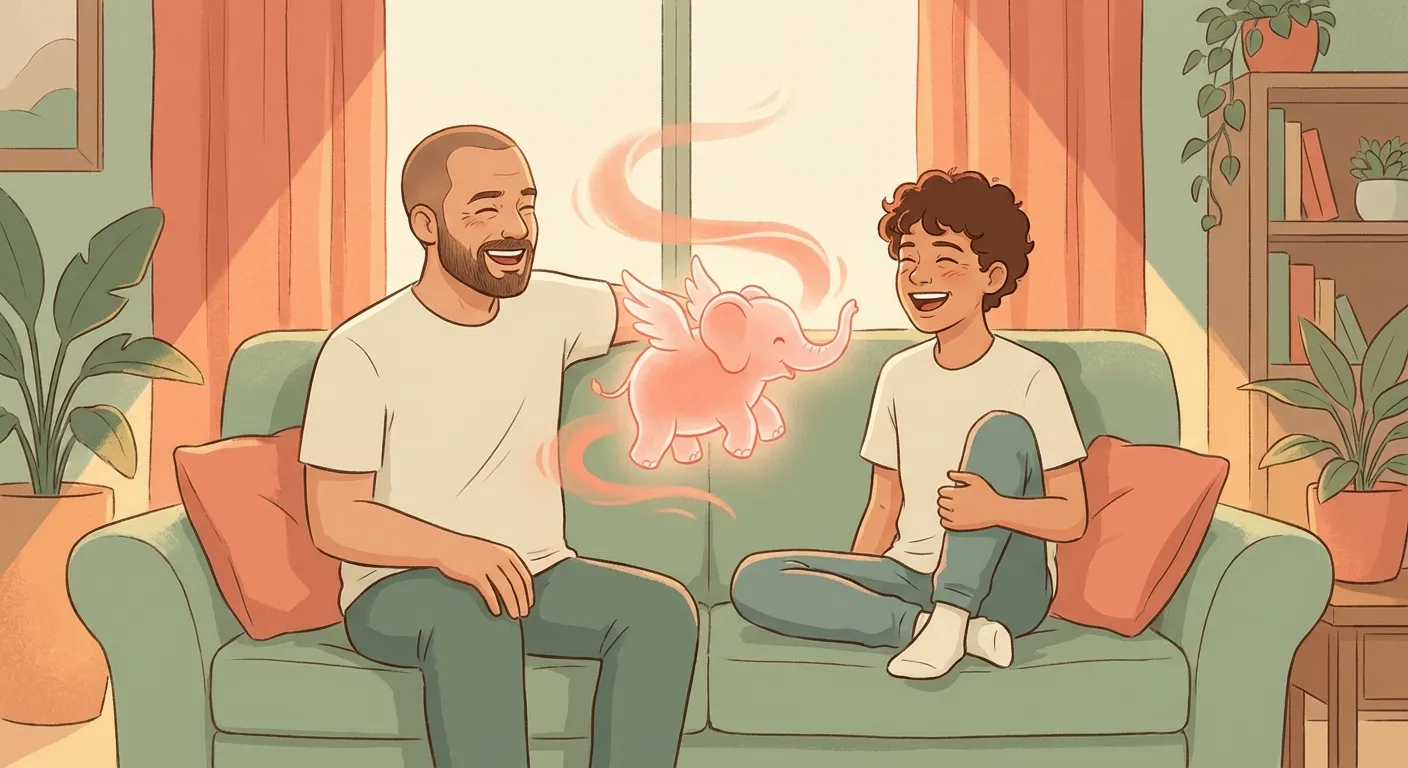
They'll laugh. They thought about a pink elephant almost immediately. Maybe they managed to push it away for a few seconds before it came crashing back. Either way, the demonstration is complete.
Now Connect the Dots
This is where a silly game becomes genuinely powerful. Draw the parallel — gently:
That last line matters. "Every human brain." Not broken. Not weak. Universal.
The Alternative That Actually Works
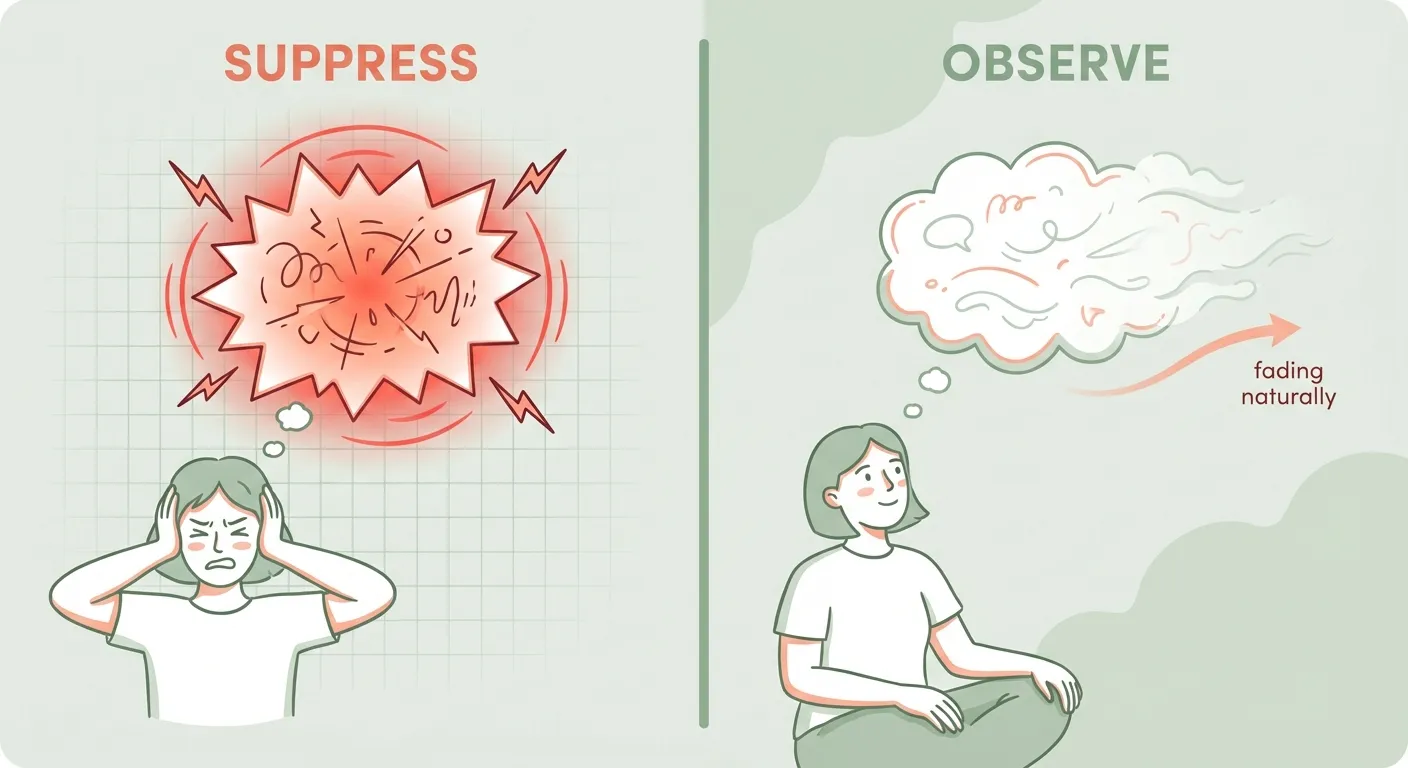
Fighting the Thought
- Thought gets louder
- Uses mental energy
- Creates frustration ("why can't I stop?")
- Feels like something is wrong with you
- Gets worse under stress
Noticing the Thought
- Thought fades naturally
- Frees up mental energy
- Creates calm ("oh, there it is again")
- Feels like a normal brain event
- Gets easier with practice
Plant the seed lightly:
That's it. Don't push further. Don't turn it into a therapy session. The experiment already did the teaching.
How to Run This Well
This is a game, not an intervention. Grinning energy, not serious face.
Resist the urge to jump in early. The experience needs to land in their body, not just their ears.
Only if they've already shared what they're stuck on. "Remember how you said you keep thinking about the exam? Same thing happening."
Shorter is better. Drop the insight, then let it sit. You can come back to it another day.
What will ruin this
- Turning it into a lecture about psychology or mindfulness
- Saying "See? I told you positive thinking doesn't work"
- Forcing them to talk about their specific worries right after
- Expecting one experiment to fix everything
The more you fight a thought, the louder it gets. The moment you stop fighting, it starts to fade.
This works for your teen. And honestly? It works for you too. Next time you catch yourself trying to suppress worry about your kid — notice it, let it pass, and watch what happens.
Published by kungfu.family · Strategy #1568