
Your Kid's Brain Is Lying to Them. Here's How to Fight Back.
Thinking is a skill — your kid can learn to catch bad thoughts mid-flight.
- Kids trained this way handle a missed quiz question without melting down, try hard things without predicting disaster, and own mistakes without shame spirals.
- The move: pair a 3-step framework with five named traps so your child has language for what their brain is doing.
Five thought traps that hijack confidence — and a dead-simple method to disarm every one.
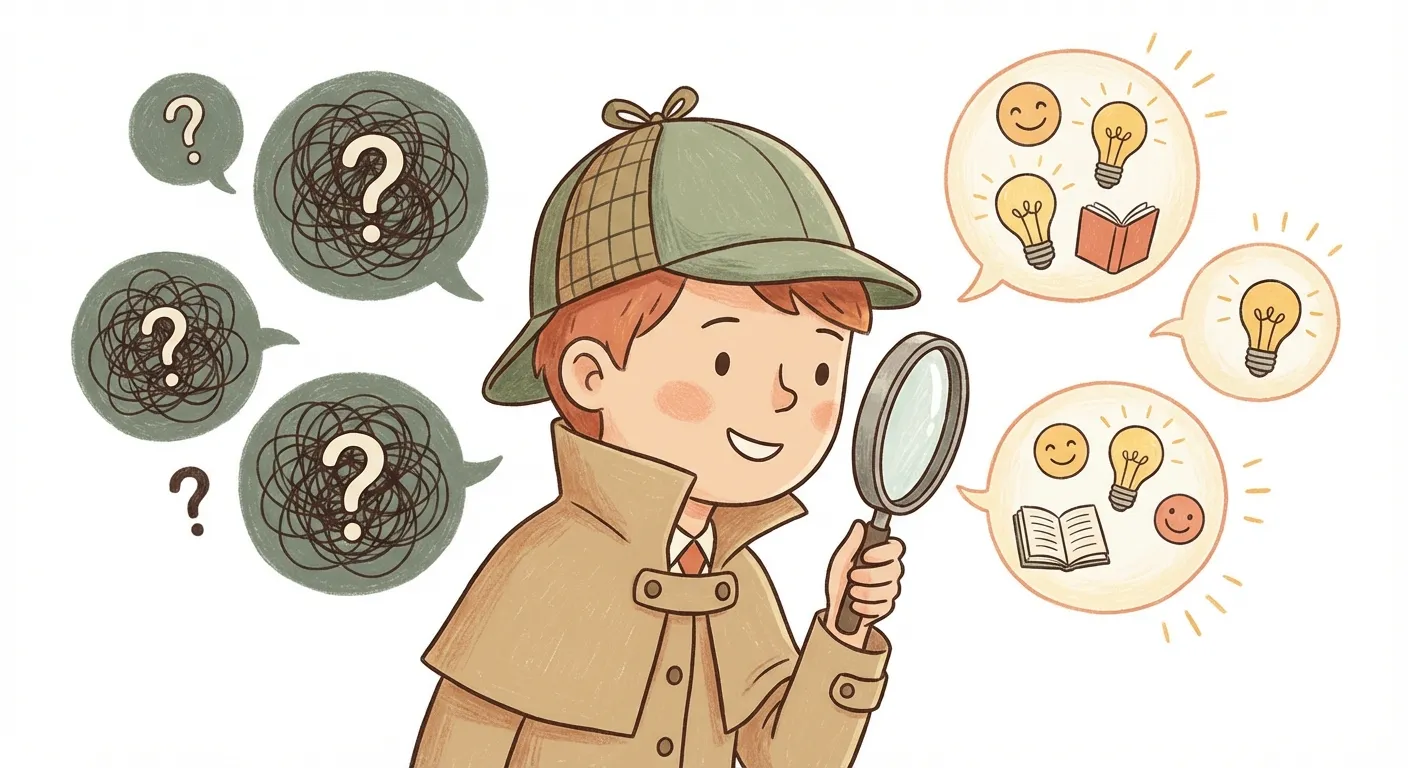
Your kid comes home, drops their backpack, and says: "I'm so dumb."
You know it's not true. They know you're going to say it's not true. And nothing you say next will land — because the thought already moved in, unpacked its bags, and started redecorating.
Here's what's actually happening: their brain pulled a fast one. It took one rough moment — a missed answer, a stumble during reading, a friend's weird look — and turned it into an identity. That's not drama. That's a wiring feature. Human brains prioritize threats over good news. It kept our ancestors alive. It's terrible for fourth grade.
But here's the thing that changes everything: thinking is a learnable skill. Just like catching a baseball or playing a scale on piano, your kid can learn to catch a bad thought mid-flight and swap it out for something accurate. Not fake positivity. Real, evidence-based thinking.
And you can teach it at the dinner table.
The SPOT Method: Three Moves, Any Situation
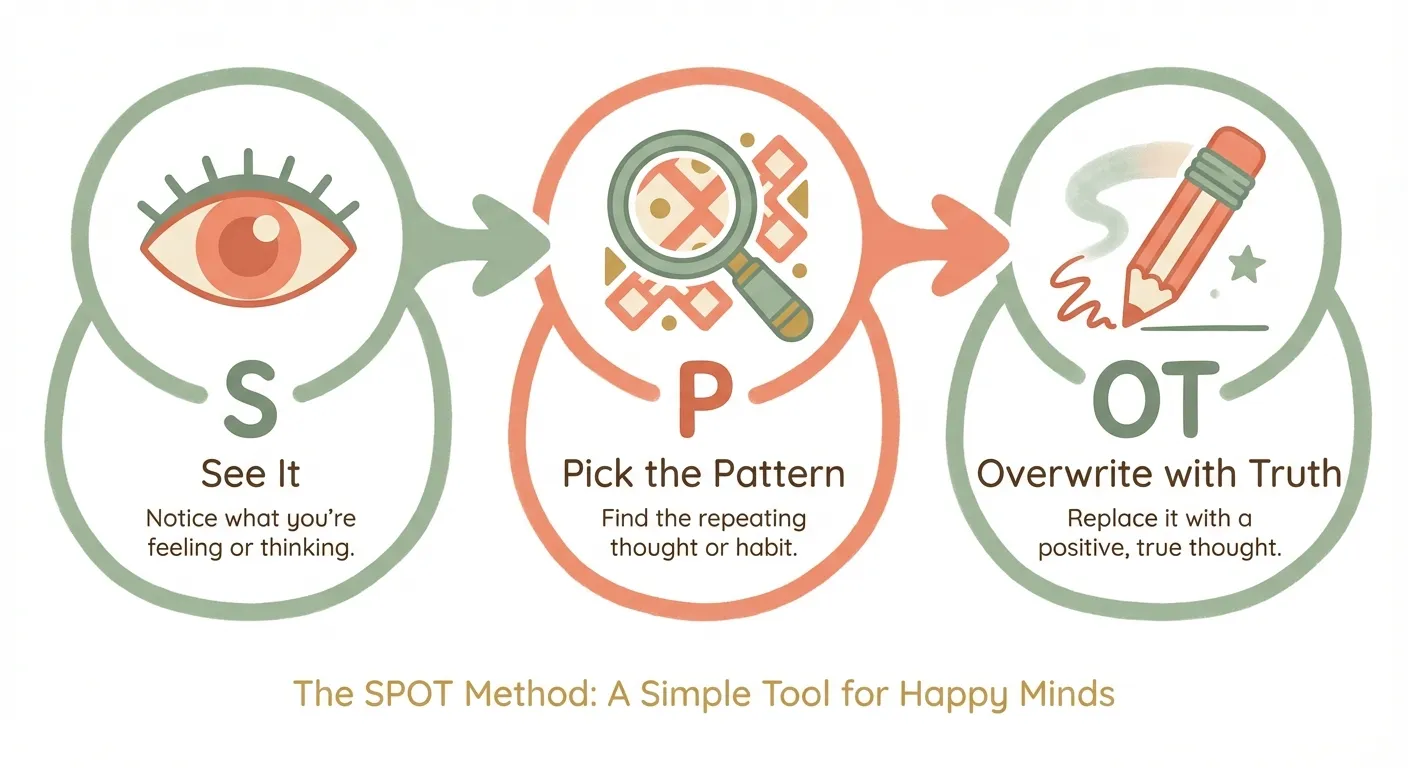
See It
Help your child notice the thought behind the feeling. A kid who says "I want to quit" usually has a thought hiding underneath — something like "I'll never get this right."
Pick the Pattern
Name which of the five traps it falls into (see below). Naming creates distance. The thought stops being truth and becomes something to examine.
Overwrite with Truth
Replace the trapped thought with something honest. Not cheerful nonsense — real, evidence-based thinking that stands up to scrutiny.
That's the whole framework. Three moves. Works on a five-year-old, works on a teenager, works on you at 2 AM worrying about their future.
The Five Traps Your Kid Needs to Know
Once your kid can name these, they can spot them. And once they can spot them, the thoughts lose their grip.
| Trap | What It Does | Telltale Words |
|---|---|---|
| The Extreme | Turns one bad moment into a universal law | Always, never, every time, nobody |
| The Filter | Zooms in on the one bad thing, erases everything good | Bombed it, ruined, terrible |
| The Label | Turns a moment into a permanent identity | I'm dumb, I'm the worst, that's just who I am |
| The Crystal Ball | Predicts disaster before anything has happened | Everyone will, they probably think, it's going to be |
| The Blame Shift | Puts all control outside their hands (or loads up guilt inside) | It's their fault, I should have known, there's nothing I can do |
In Action: What Each Trap Sounds Like (and What Replaces It)
The Extreme
The Filter
The Label
The Crystal Ball
The Blame Shift
Making It Stick: The Detective Game
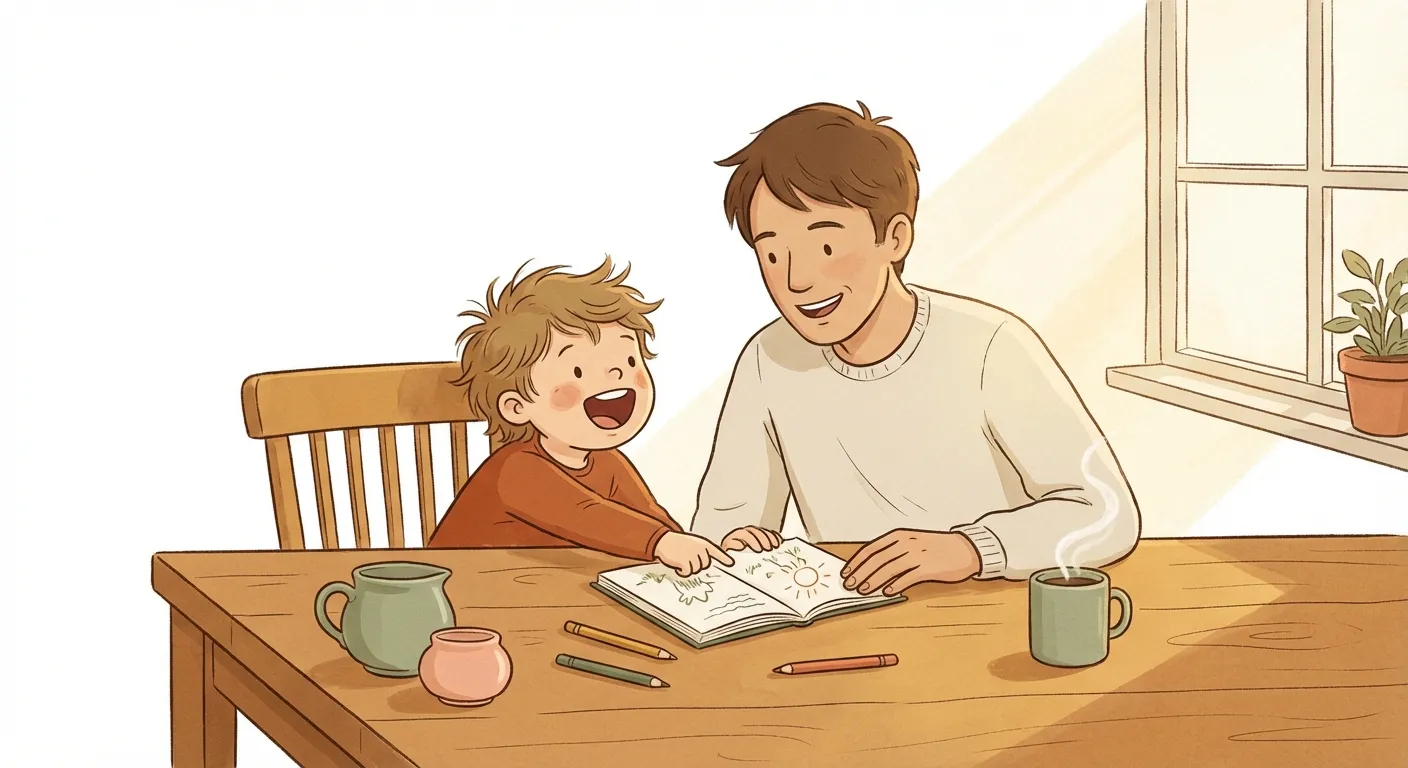
Knowing the traps is step one. The real magic is when your kid starts catching them without your help. Here's how to build that muscle:
The Nightly Check-In
- At dinner or bedtime, ask: "Did your brain try to trick you today?"
- Let them describe the thought, name the trap, say what they'd tell it back
- Keep it light — this is detective work, not therapy
Model It Yourself
- Share your own traps out loud: "I just caught myself thinking 'I'll never figure out this recipe.' That's a Crystal Ball!"
- Kids absorb more from watching you do it than from being told to do it
- When you say "You always forget your lunch" — catch it: "Wait, that's an Extreme. You forgot it today."
The Trap Notebook
- Small notebook: trapped thought on the left, rewrite on the right
- Seeing the pattern over a week is powerful
- For younger kids who prefer drawing — let them sketch the traps as characters
Adjusting by Age
Call them "brain tricks." Draw them as silly characters. Start with just two (The Extreme and The Label). Make it physical — stomp on them, crumple the paper, roar at them.
Teach all five. Use the notebook. Gamify it — points for catching traps in movies, ads, even your own speech. Kids this age love collecting evidence.
Share the brain science. Teens respond to understanding why something works. Explain the negativity bias and how thoughts trigger chemical changes. Give them ownership — check in periodically, but let them run it.
Your child's brain will lie to them. The most powerful thing you can teach them is how to talk back.