
The Invisible Drag on Your Kid's Potential
Every parent has hidden habits that silently cap their child's growth. Spot them, remove them, and watch what happens.
Eight parenting behaviors predict lasting emotional damage -- most look completely normal.
- Kids raised without these patterns can sit with discomfort, ask for what they need, and walk into relationships without bracing for abandonment.
- The move: run your own behavior through the friction map, then use the catch-repair-trace-bank cycle to break inherited patterns.
Here's something nobody tells you about the kids who seem to crush it at everything -- piano, sports, friendships, school, creative projects, all of it.
Their parents aren't doing more. They're doing less of something specific.
They've found and removed the invisible patterns that act like friction on a child's engine. The kid's potential was always there. The parents just stopped dragging the brakes.
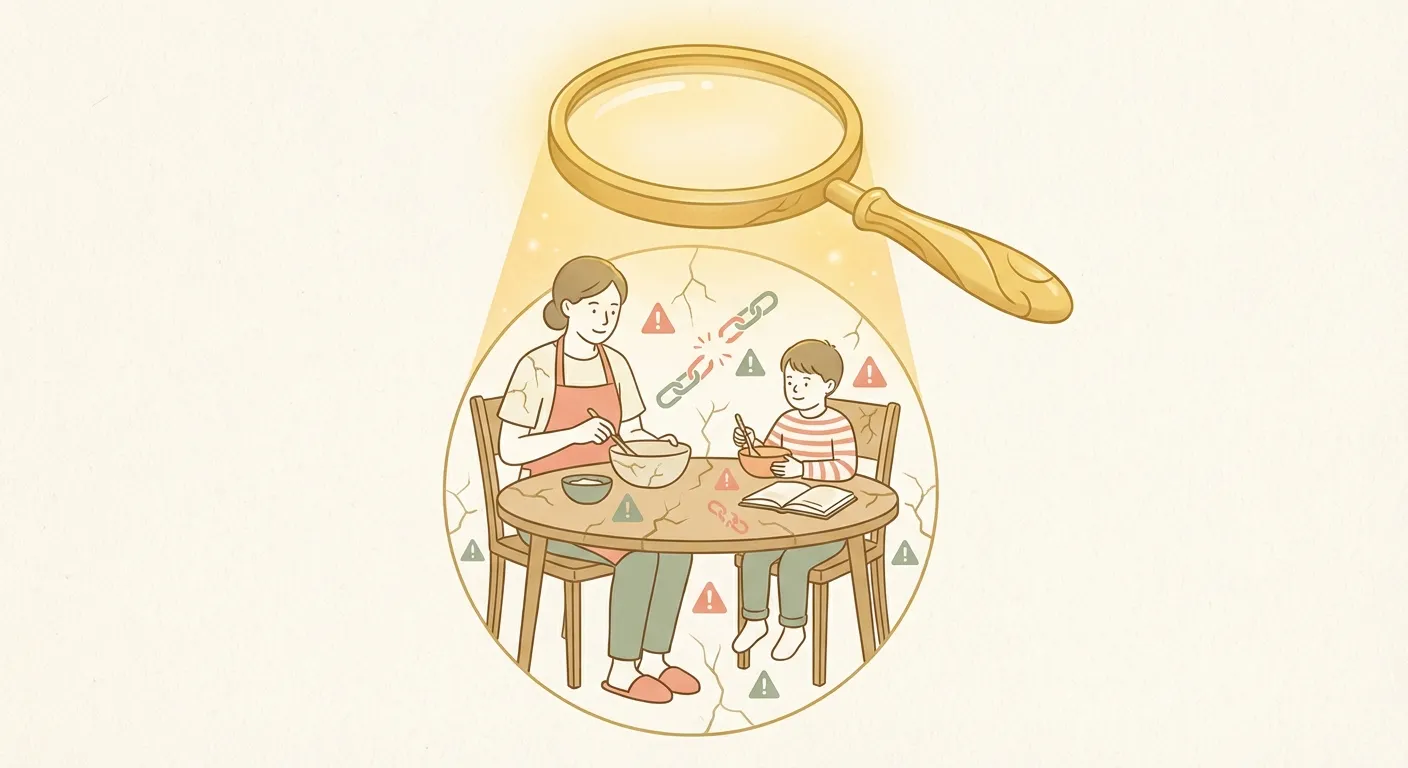
This isn't about being a "bad parent." It's about behaviors so normalized that most families run them like background software -- never realizing they're eating up processing power.
Decades of attachment research have cataloged exactly which behaviors create the most drag. Here's the field guide.
The Friction Map
Not all patterns are equal. Some create hairline cracks. Others shatter foundations. Knowing the difference matters because it tells you where to focus first.
| Level | What It Targets | Impact |
|---|---|---|
| Critical | The child's core sense of safety | Rewires threat detection permanently. Every relationship feels dangerous. |
| High | The child's trust in reality and love | Builds a "fake self" that hides everything real. Chronic self-doubt. |
| Stealth | The child's identity and independence | Looks like closeness. Actually blocks self-reliance and authentic development. |
Critical: The Safety Destroyers
These exploit a child's single deepest need -- the certainty that the person keeping them alive will keep doing so. When this certainty breaks, nothing else works right.
Threatening to Leave
"Keep it up and I'm dropping you at the fire station." "Maybe you'd be happier living somewhere else."
Research finding: threats of abandonment are worse than actual separations. The child never fully relaxes again. Every future relationship carries the same question: "Will this person disappear?"
Threats of Self-Harm
"You're going to give me a heart attack." "If this keeps up I don't know what I'll do."
The child becomes a hostage. They can't express needs, frustration, or even joy -- because anything might "push you over the edge." Their entire childhood becomes a management exercise.
Why These Hit So Hard
Both patterns weaponize the one thing a child can't negotiate: their parent's presence. A kid can adapt to almost anything -- except the person they depend on disappearing.
High Impact: The Reality Benders
These are harder to spot because they look like normal parenting. But they systematically teach a child to distrust their own experience.
The pattern
Conditional love: "I won't love you if you keep acting like this."
Silencing reality: "That never happened. You're being dramatic."
Weaponizing secrets: "Don't you dare tell anyone what happened."
What the child learns
"If they really knew me, they'd leave." Hides everything real.
"I can't trust my own eyes and ears." Chronic self-doubt.
"I'm trapped and can't ask for help." Permanent isolation.
The common thread: each one teaches the child that being authentic is dangerous. They build a polished shell and bury everything real underneath. On the surface, they look fine. Underneath, they're running on fumes.
Stealth Drag: The "Close Relationship" Trap
This is the one that surprises people. These patterns look like intimacy. The child seems mature, responsible, deeply bonded. Everyone comments on how close you are.
But the child is doing a job, not having a childhood.
| Pattern | What It Sounds Like | The Real Cost |
|---|---|---|
| Child-as-therapist | Sharing your marriage problems, work stress, financial worries with them | They build a false self: endlessly giving, never needing. Spend adulthood caretaking everyone while feeling hollow. |
| Guilt as control | "After everything I've sacrificed for you." "Look what you've done to your mother." | They learn that having needs hurts people. Can't set boundaries as adults. |
| Blocking independence | Discouraging friendships, sleepovers, solo activities -- not for their safety, but for your comfort | Separation feels dangerous. School refusal, panic attacks, lifelong anxiety about being alone. |
Identity Wounds: Attacking Who They Are
The patterns above target what a child does or feels. These target who they are. The damage sits deeper because there's nothing to fix -- the child believes they themselves are the problem.
"We were hoping for a boy."
Letting a child know they weren't planned, you wanted a different gender, or their existence was a mistake. Can be communicated through subtle rejections, chronic disappointment, or comparisons to siblings. The child spends their whole life trying to earn the right to be here.
"Everything was fine before you came along."
Blaming the child for family problems, financial stress, or marital strain. The core belief becomes: "I am the problem." This follows them into every job, relationship, and conflict -- when things go wrong, their first instinct is to blame themselves.
"You're exactly like your father."
Seeing the child through the lens of someone from your past -- a critical parent, an ex, a sibling you resented. They get punished not for who they are, but for who they remind you of. Nothing they do will ever be enough.
The Upgrade Protocol
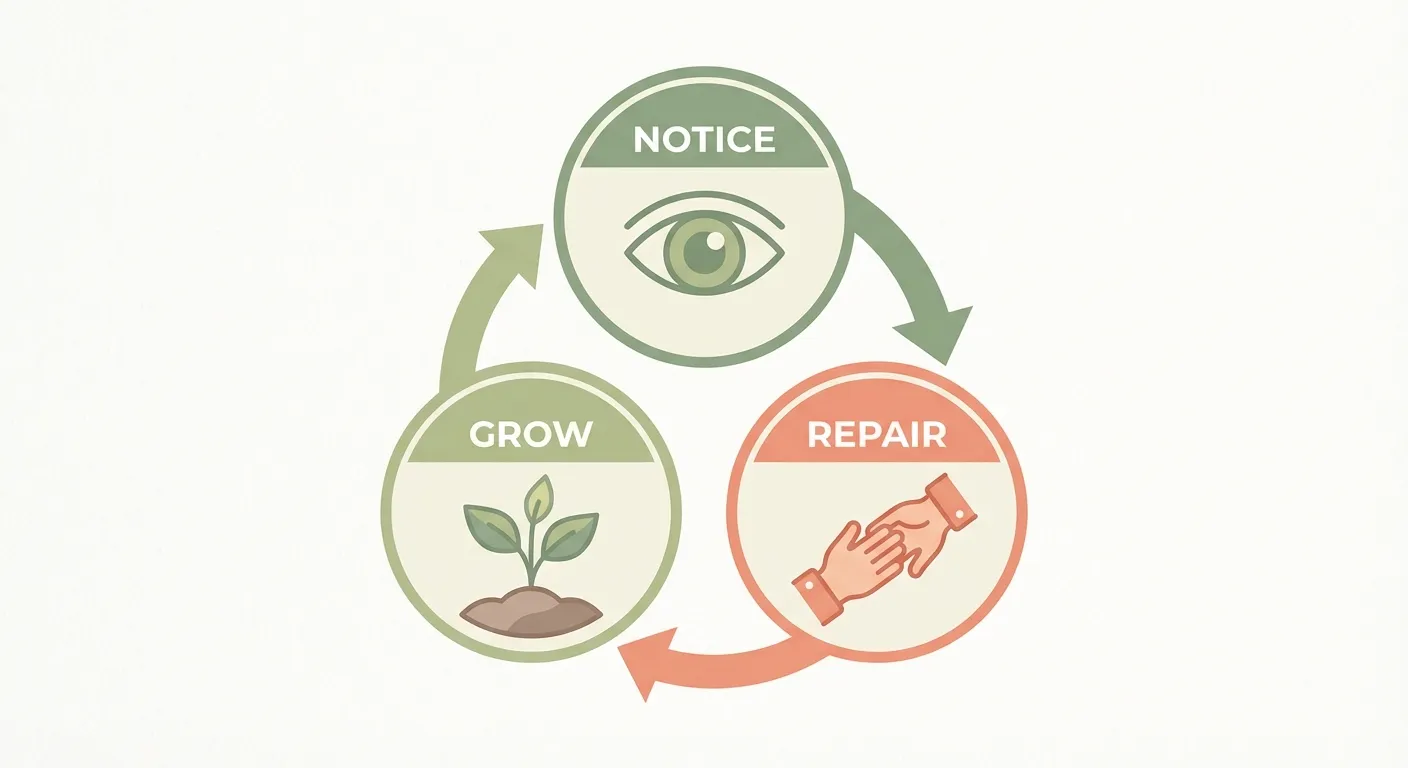
Reading this list honestly is the hardest part. If you recognized yourself in any of it, that recognition is the upgrade. Here's what to do with it.
Catch it mid-sentence
The first time you hear yourself saying something from this list, stop. Just stop talking. Kids are astonishingly forgiving when you interrupt your own pattern.
Repair when you slip
Repair doesn't erase harm, but it teaches something profound: ruptures can be fixed. That's one of the most important things a child can learn.
Trace it back
Most parents who run these patterns had them run on them. When you sound like your own parents, that's the signal. Research consistently shows: parents who honestly examine their own childhood can break the cycle.
Bank deposits during calm
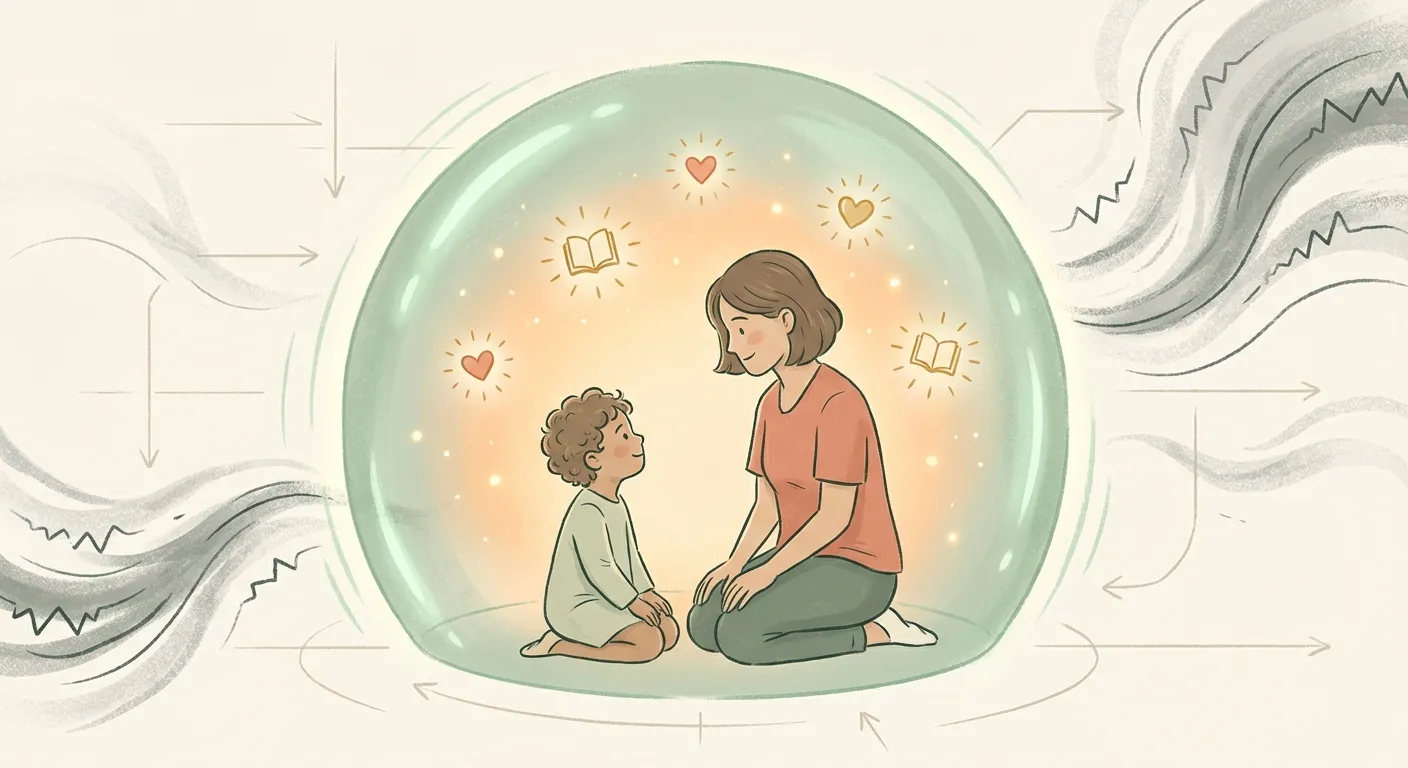
These patterns flare when you're stressed, tired, or triggered. The more connection you build in peaceful moments -- play, listening, physical affection -- the less damage the occasional withdrawal causes.
The Single Most Powerful Parenting Move
"You know, you tell me."
Listen. Believe. Respect your child's reality.
That alone prevents most of the patterns on this list.
This isn't about guilt. These behaviors are almost always inherited, not invented. Most parents running them had the same patterns run on them. The fact that you read this far? That's the upgrade already installed.
What matters now is what you do next.