
Thinking · Ages 7–9
The 30-Year Exercise
How 5 minutes of movement at age 8 shapes thinking for life
Five minutes of physical exercise at age 8 builds thinking that lasts decades.
- Kids who do these exercises develop spatial reasoning, quick coordination, and perceptual sharpness that shows up as genuine wisdom in their thirties.
- The move: replace desk-based drills with three body exercises — form completion, cross-body commands, and color harmony.
Your child can’t sit still during homework.
They fidget. They tap. They swing their legs under the table. You’ve tried everything — shorter sessions, reward charts, removing distractions. The standard advice says: more focus, more discipline, more stillness. Sit down and think.
In 1924, Rudolf Steiner told a room full of teachers the opposite: stop trying to develop thinking through the head.
“Doing these exercises when children are eight years old will teach them how to think — to think for the rest of their lives.”
Rudolf Steiner, The Kingdom of Childhood, Lecture 4 (1924)He wasn’t talking about meditation or brain games. He was talking about drawing half-finished shapes, touching your right ear with your left hand, and painting red next to green. Physical exercises. Done in five minutes. With effects, he claimed, visible thirty years later.
What If the Best Thinking Exercise Isn’t Mental?
Steiner made a distinction that sounds strange at first: there are two kinds of thinking. One is built “directly through the head” — worksheets, drills, memorization. This kind, he argued, makes people “thought-tired” later in life. It wears out.
The other kind is built through the body — through physical activity and spatial perception. This kind lasts.
Thinking developed through movement and spatial perception lasts a lifetime. Thinking developed “directly through the head” makes people thought-tired later. The body builds the mind that endures.
The claim sounds bold. But the exercises themselves are surprisingly concrete. Steiner described three types, each targeting a different mode of body-based thinking.
What Are the Three Types of Exercises?
Each type works a different channel: visual-spatial perception, body awareness, and color sensitivity. Together, they develop what Steiner called “observation permeated with thought, and thinking permeated with imaginative observation.”
Type 1: Form Completion
Draw an incomplete figure on paper or a board. Ask the child: “Does this look complete? What’s missing?” The child must feel the missing part before drawing it.
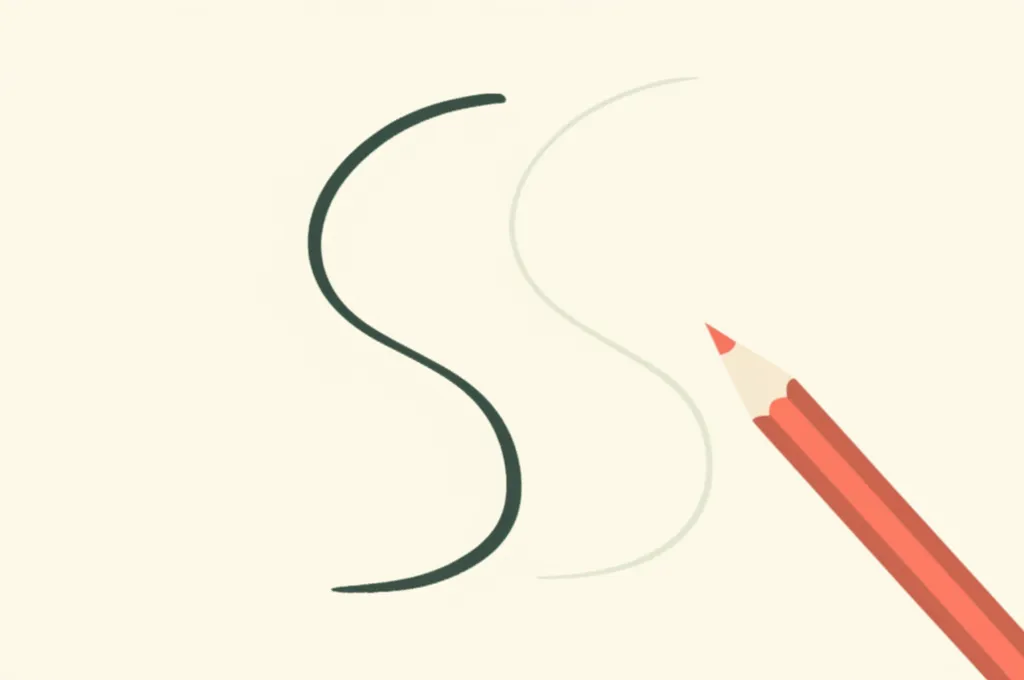
Form Completion Exercises
Start simple, progress as the child develops confidence. These build spatial reasoning and the ability to “see” what isn’t there yet.
1. Simple Asymmetry
Draw a figure that’s unfinished on one side. The child completes the other half.
“Look at this shape. Does it feel finished? Draw what’s missing.”
Start with obvious gaps. Let attempts be clumsy at first.
2. Complex Symmetry
Show a flowing curve (an S-shape, a wave). Give the outer line. The child must find the inner line — close where the outer is wide, wide where the outer is narrow.
“Here’s the outside. Can you draw the inside line that belongs with it?”
3. Curved to Straight
Show a curved figure with its inner line. Then show the same figure made straight (with angles). The child discovers what the inner line should become.
“This curved shape became this straight shape. What happened to the inside?”
This is hard for 8-year-olds but “a wonderful achievement.”
4. Mirror Reflection
Draw a “water line” and an object above it. The child draws the reflection below.
“Imagine water here. What would this look like reflected?”
Leads to perception of “harmony found in the world.”
Notice what’s happening. The child isn’t solving a math problem or answering a question. They’re training their perception — learning to sense what’s incomplete, what belongs, what fits. That’s a thinking skill, built without a single abstract concept.
How Does Cross-Body Coordination Build Thinking?
The second type is faster, louder, and more physical. Rapid-fire commands that require the child to think about their own body: which hand, which side, which direction.

Cross-Body Coordination Drills
Give these as rapid commands. Start slow, then speed up as the child gains confidence. The goal is alertness and forethought, not perfection.
Touch Exercises
Circle Exercises
Finger Exercises
These exercises demand something specific: the child must think before moving. Right ear, left hand, from behind. Each command forces a split-second of spatial planning. That planning — fast, physical, embodied — is the thinking Steiner believed lasted.
What Do Colors Have to Do With Thinking?
The third type is the quietest. Give the child paints. Show them how colors “belong together.”
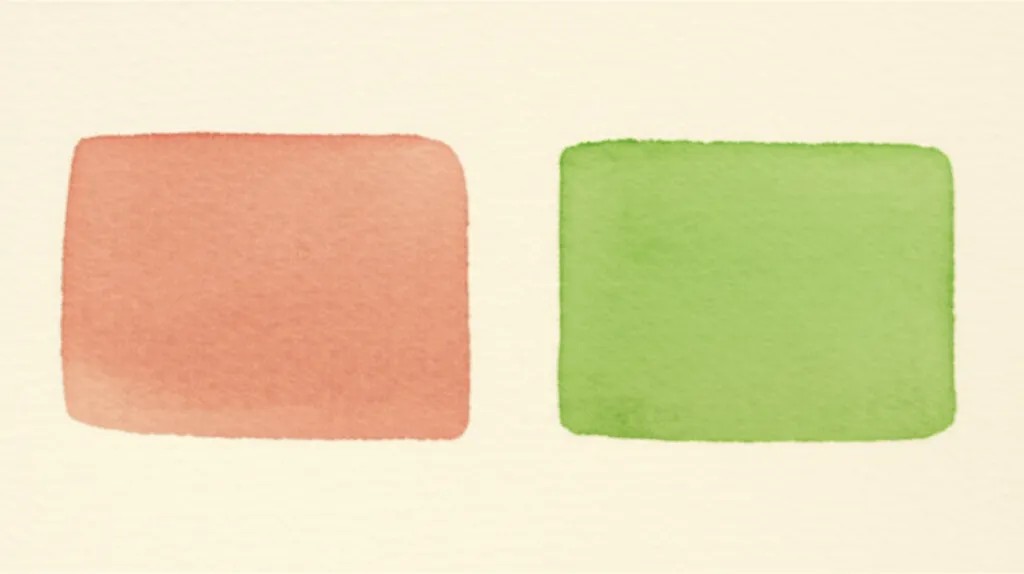
Paint a red surface. Place green beside it. Ask: “Do these belong together?” The child sees it — yes, they do. Something about the combination feels right.
Then reverse it: “I’ll put green in the middle. What color should go around it?”
The child discovers: if red inside needs green outside, then green inside needs red outside. They’re not told. They see it. The perception develops through experience, not explanation.
Red needs green
Green needs red
Why Would This Last 30 Years?
Here’s Steiner’s core claim, the one that sounds almost impossible:
“There will be a noticeable connection between the wisdom of such people in their thirty-fifth or thirty-sixth year and the exercises they did as a child of six or seven.”
Rudolf Steiner, The Kingdom of Childhood (1924)His reasoning: intellectual thinking — the kind built through worksheets and drills — lives in the head. It depends on memory, repetition, and the energy to maintain focus. That energy fades with age.
But thinking built through the body lives deeper. A child who has trained their perception — who can feel what’s missing in a shape, who can coordinate opposite limbs without hesitation, who can sense which colors belong together — has built a foundation that doesn’t require ongoing effort to maintain.
Head-based thinking
“Think harder”
Built through drills and memorization. Requires ongoing effort. Leads to “thought-tiredness” later.
Body-based thinking
“Move and perceive”
Built through physical coordination and spatial awareness. Becomes part of who you are. Lasts.
How Can You Use This at Home?
You don’t need a Waldorf classroom. These exercises take five minutes and need nothing more than paper, pencils, and a willing child.
Form completion: Draw half a butterfly, half a house, half a snowflake. Ask your child to finish it. Start obvious, get harder. The key: let them feel it before they draw. Don’t explain symmetry — let them discover it.
Body coordination: Make it a game. Rapid-fire commands at breakfast. “Touch your right knee with your left hand!” Speed up as they get faster. They’ll love it — it feels like play, not school.
Color harmony: Get watercolors. Paint a blob of red. Ask: “What color wants to be next to this?” No right answer at first. Let them experiment. Then show them how green “completes” the red.
The Core Idea
The thinking that endures isn’t built at the desk.
It’s built through movement, perception, and the body’s own intelligence.
Five minutes of form, coordination, and color — and the results last decades.
Want More Strategies Like This?
We extract actionable parenting techniques from research and books — no fluff, just what works.
Browse All Strategies