
Why Your Kid's Eyes Snap Open at 2am (And the Snack That Fixes It)
The blood sugar trick that turns night-wakers into solid sleepers
Sleep doesn't start at bedtime. It starts at breakfast.
- Kids on this system fall asleep faster, stay asleep longer, and stop needing you at 3am. Focus and mood improve within two weeks.
- Morning light plus protein breakfast sets the clock, then a 6-step sequence from tryptophan foods to magnesium baths carries them through to solid sleep.
You know this scene. The house is silent. Everyone's been down for hours. Then at 2am — sometimes 3, sometimes 3:47 — your child is suddenly wide awake, wired, and absolutely not going back to sleep. It looks like a mystery. It's actually chemistry.
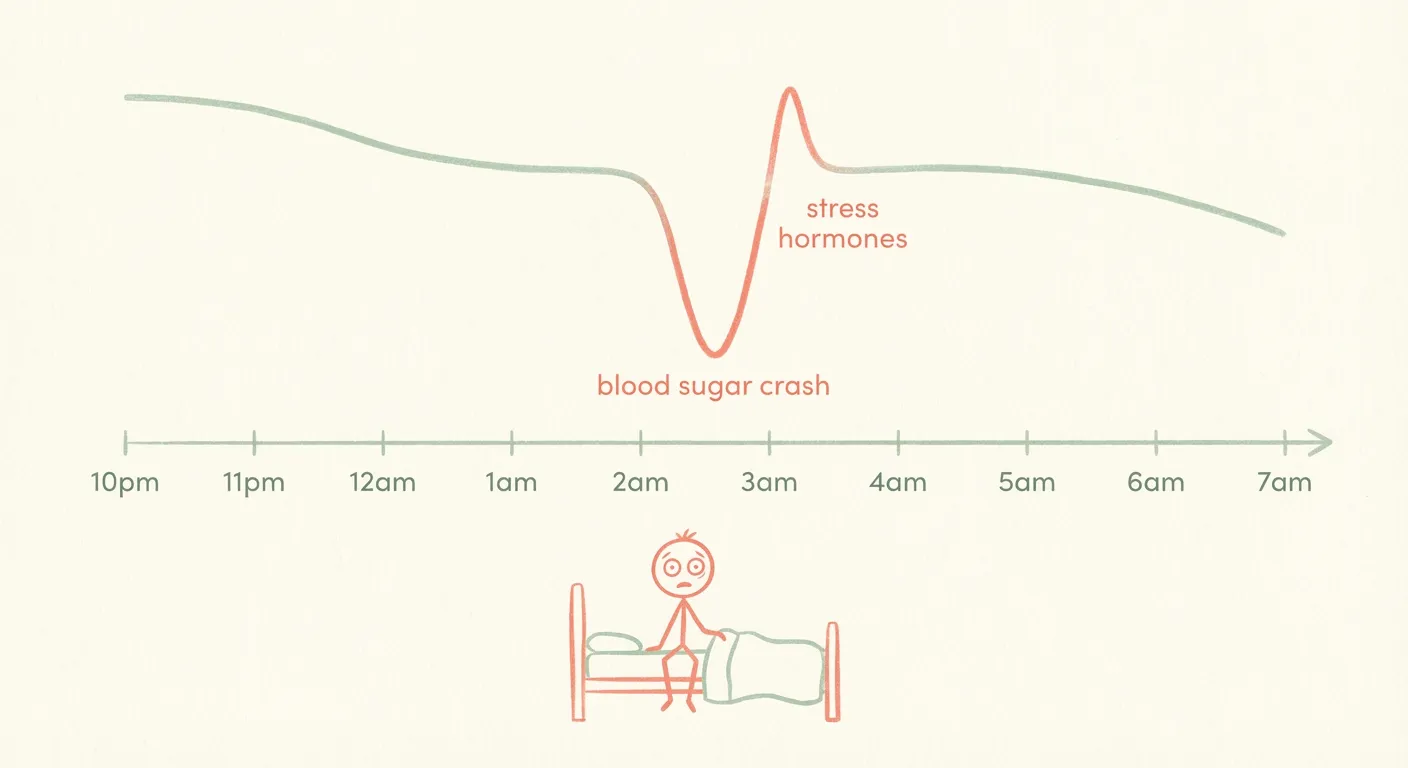
The 2am Crash, Explained in 30 Seconds
While your child sleeps, their blood sugar gradually declines. Normally, the body manages this gently. But if they went to bed without enough slow-burning fuel, their blood sugar drops too far, too fast — and the body panics.
It fires off cortisol and adrenaline. Stress hormones. The same ones that wake you up when you hear a loud noise. Except there's no loud noise. There's just a kid sitting bolt upright at 2am, heart racing, totally alert, with no idea why.
A small bedtime snack that combines slow-digesting carbs with protein acts like a time-release fuel capsule. It keeps blood sugar stable through the night so the body never hits that panic threshold.
Six Bedtime Snacks That Actually Work
The formula is simple: slow carb + protein. Each of these combos gives your child steady fuel for 6-8 hours.
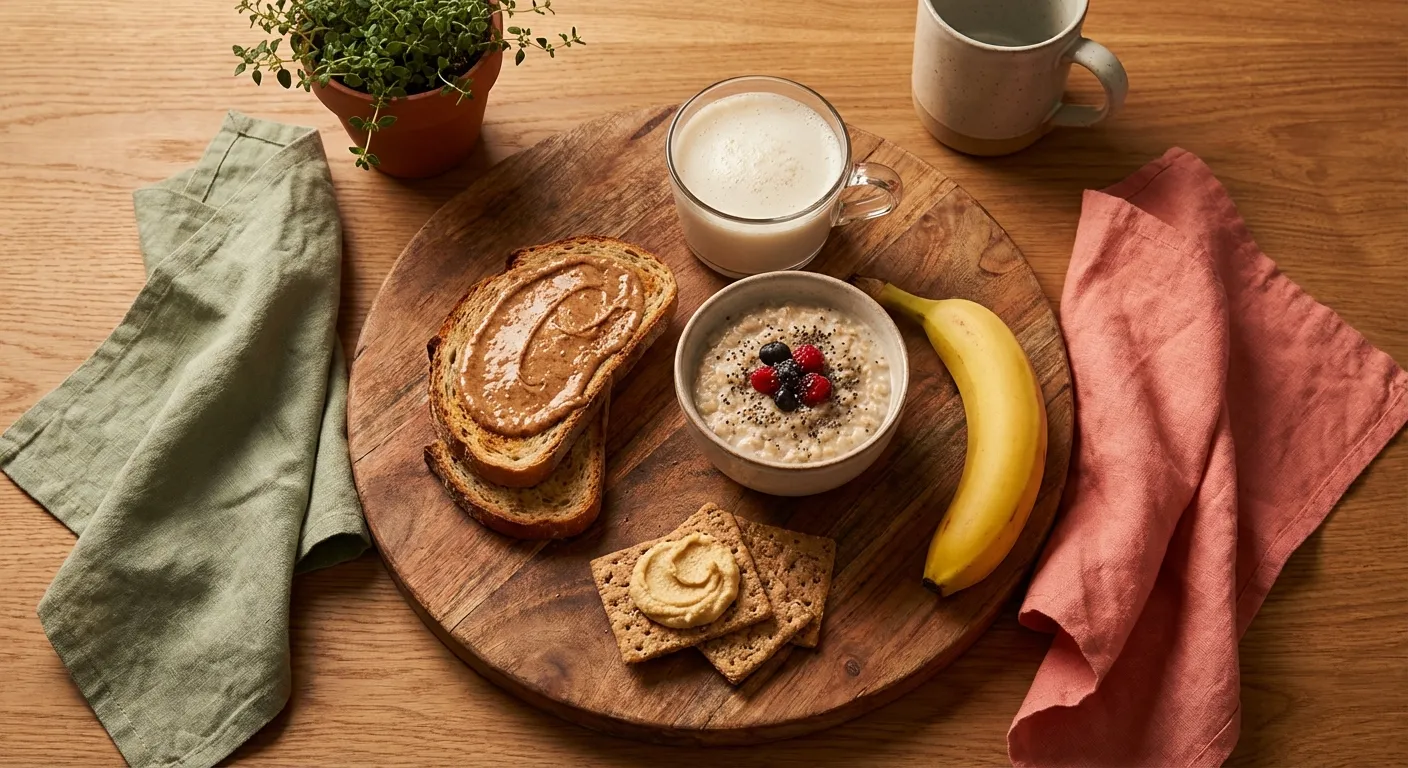
But Sleep Doesn't Start at Bedtime
The bedtime snack fixes the 2am crash. But if your child is still wired at 10pm, can't wind down, or fights the whole process — the problem started hours earlier. Sleep is a system, and it runs on three inputs: light, food, and environment.
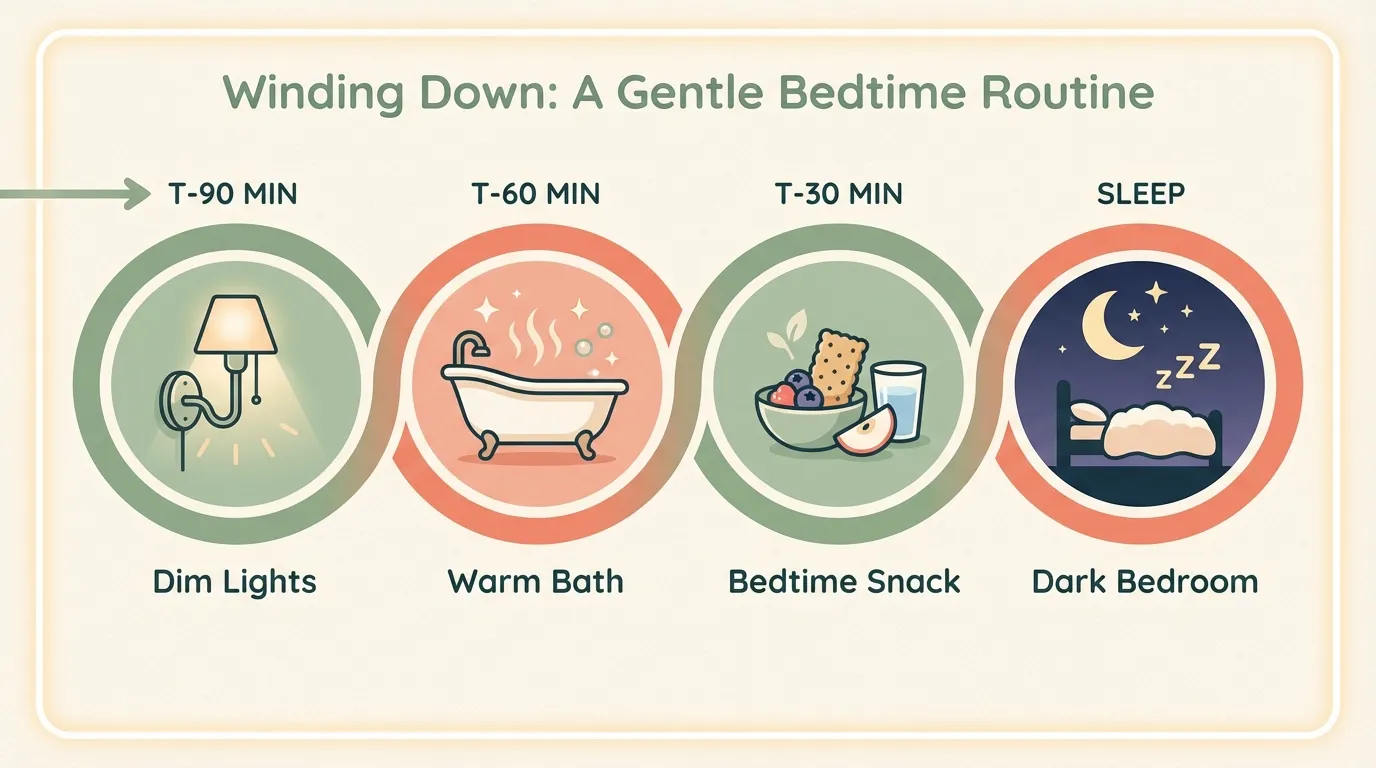
The Full System: Morning to Midnight
Morning: Bright light + protein breakfast
Get outside or near a sunny window within the first hour. Eggs, yoghurt, nut butter on toast — anything with protein. Morning light resets the body clock. Protein keeps blood sugar steady all day.
Daytime: Tryptophan-rich foods
Poultry, eggs, bananas, oats, nuts. These contain an amino acid that converts to serotonin, then to melatonin. You're pre-loading your child's sleep chemistry.
90 minutes before bed: Dim the world
Overhead lights off. Lamps only. Screens off (or warmest settings if unavoidable). The brain reads fading light as the signal to start making melatonin.
Bath time: Magnesium soak
Warm water + magnesium bath salts. Magnesium absorbs through the skin and calms the nervous system directly. A longer soak works better than a quick dip. Follow with magnesium lotion for a calming sensory cue.
Evening snack: Tart cherries
One of the few foods that naturally contains melatonin. A splash of tart cherry juice or a handful of frozen tart cherries gives a gentle, natural boost.
Bedroom: The sleep cave
Blackout curtains. Cool temperature. White noise. If your child craves pressure, a weighted blanket changes everything. The room should be a sensory cocoon built for one thing: sleep.
Decode the Wake-Up Pattern
When your child wakes up matters. The timing tells you what's going wrong.
| Pattern | What's Happening | Fix |
|---|---|---|
| Still wired at 10pm+ | Not enough melatonin, body clock shifted late | Morning light, tart cherry, magnesium bath, strict screen cutoff |
| Wakes 2-4am | Blood sugar crash triggering stress hormones | Bedtime snack (slow carb + protein) |
| Wakes 4-4:30am consistently | Stress hormones spiking too early | Chamomile tea before bed, daytime stress reduction, magnesium |
| Restless legs or twitching | Likely low magnesium | Magnesium baths, supplement (check with practitioner), leafy greens |
| Night sweats | Possible high-histamine state | Reduce fermented foods at dinner, add vitamin C and quercetin-rich foods |
Start Here (Not Everywhere)
Don't overhaul everything tonight. Layer changes in. These three alone often make a visible difference within a week or two:
Tonight looks like
- Overhead lights blasting until bedtime
- Screen time right up to lights-out
- No snack or a sugary one
- Bright nightlights, inconsistent routine
Switch to
- Lamps only from 90 min before bed
- Warm bath with magnesium salts
- Toast + nut butter before brushing teeth
- Dark room, consistent wake time
Give it two weeks. Most kids need that long for the body to recalibrate. If nothing has shifted after 3-4 consistent weeks, talk to a practitioner who understands neurodivergent sleep — there may be an underlying issue (iron deficiency, sleep apnoea, anxiety) that needs its own attention.
Sleep is the foundation everything else rests on. When sleep improves, focus, mood, emotional regulation, and learning all follow. Three changes. Two weeks. That's the starting line.