
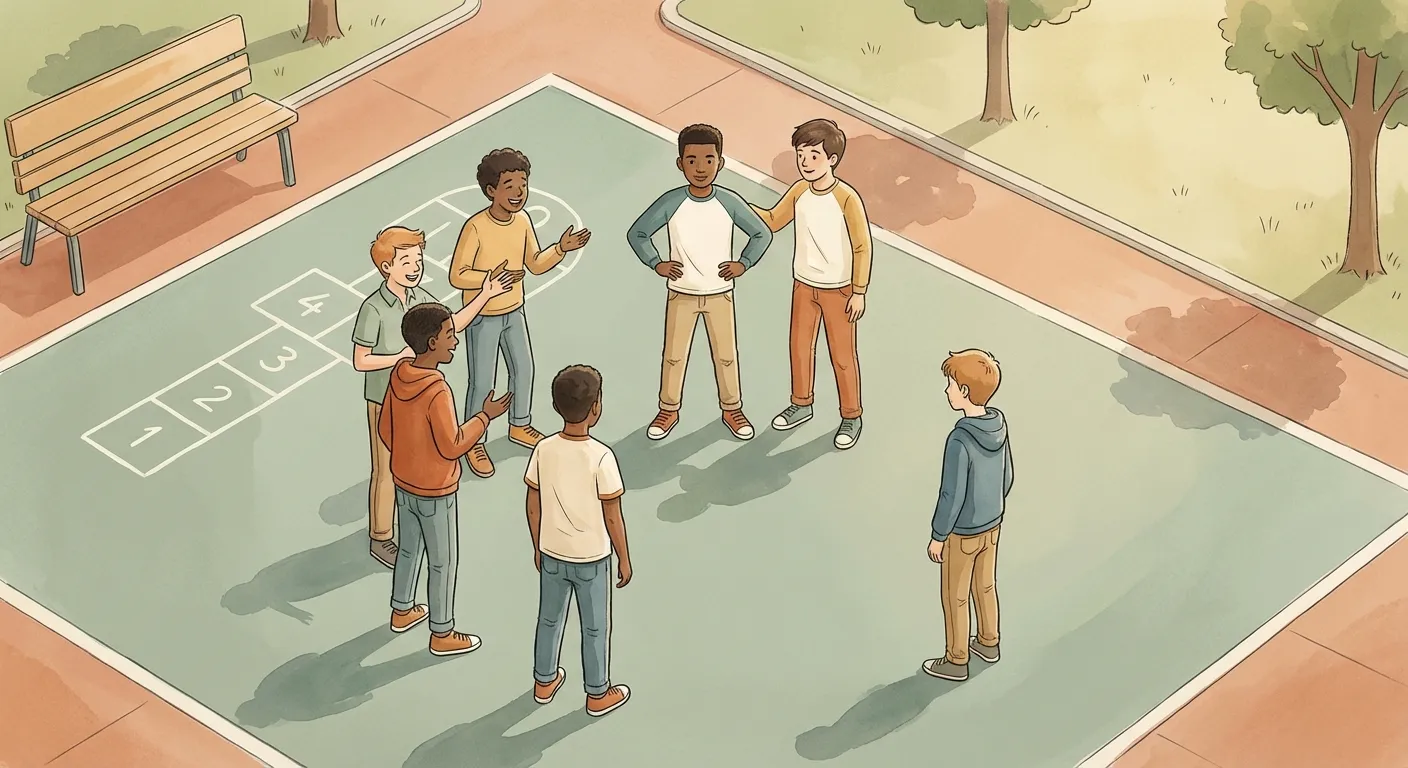
The 8 Roles Boys Play in Every Friend Group
Boys' friend groups run on a status economy most parents never see.
- Kids raised to read group dynamics hold their own under social pressure, pick better friends, and don't sacrifice their identity just to stay included.
- The move: describe the roles in general terms and let him identify what he sees — he's the expert on his world.
Your son is doing social math every single day. Here's the cheat sheet.
Your son comes home and laughs off a story about his friends roasting him at lunch. He says it's fine. They're just joking. But something about the way he tells it makes you wonder -- is this actually fine?
Here's what's happening: every boy's friend group has a hidden power structure. Not a conspiracy -- just the natural way groups organize. And every boy in the group has figured out, mostly unconsciously, which role keeps him safe, included, and relevant.
Once you can see the roles, your son's behavior stops being mysterious.
The Playbook: 8 Roles, 8 Trade-Offs
Each role has a price tag. Some are worth it. Some aren't. Scan these and notice which ones sound familiar.
The Shot Caller
High CostSets the tone for the whole group.
- Decides what's funny, who's in, what happens next
- Quick to spot insecurity in others -- and use it
- Adults find him charming and impressive
The Right Hand
High CostThe Shot Caller's closest ally and intel pipeline.
- More socially fluent -- people genuinely like talking to him
- Collects information and feeds it to the top
- Rarely challenges the Shot Caller publicly
The Enforcer
High CostThe physical presence who backs up the group's power.
- Often bigger or taller than the other boys
- Loyal to a fault -- takes the blame without question
- Gets pushed into confrontations by boys who won't do their own dirty work
The Comic
MixedMakes everything lighter. Everyone wants him around.
- Breaks tension with humor, often at his own expense
- Instinctively puts people at ease
- Can't stop performing once he gets going
The Moral Compass
MixedThe one who worries about consequences.
- Follows rules, thinks things through
- Gets used as a cover because adults trust him
- Sometimes does something reckless to prove he's not boring
The Punching Bag
High CostLoved by the group, relentlessly roasted by them.
- Target of constant jokes -- done "with love"
- If outsiders come after him, the group defends him fiercely
- Laughs along because protesting would make things worse
The Orbit
High CostCircles the group but never quite gets in.
- Hovers at the edges, misreading when he's welcome
- May try to buy his way in -- offering rides, money, games
- Parents sometimes make it worse by providing more things to offer
The Anchor
HealthyRespected because he's genuinely secure in who he is.
- Handles criticism without falling apart or lashing out
- Steps in when someone is targeted -- quietly, not performatively
- Comfortable with boys from all different social circles
The Shift That Matters
In middle school, these roles are rigid -- always on, always enforced. As boys mature, the roles become situational, surfacing mainly during conflict or social stress.
How to Actually Talk About This
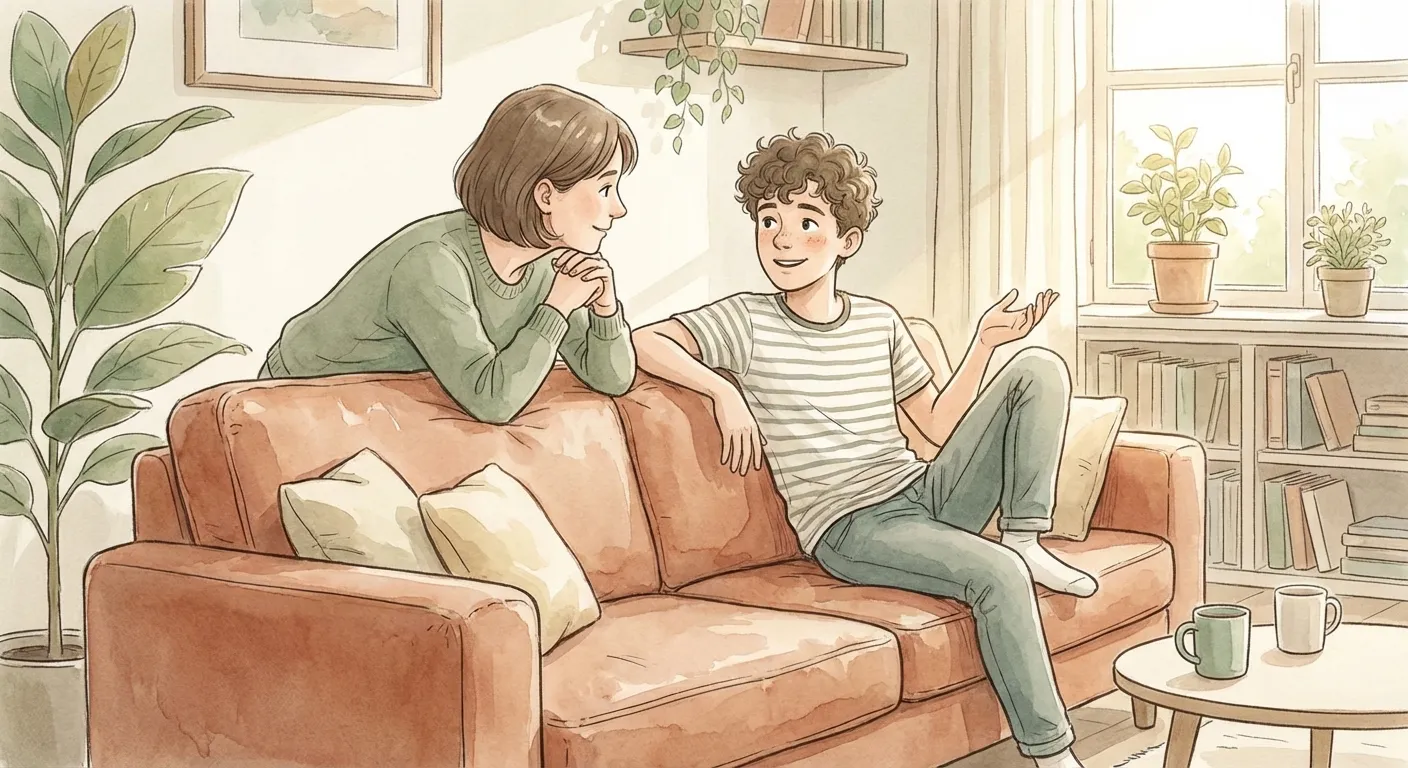
You've spotted the pattern. Now what? The conversation matters more than the diagnosis. Get it wrong, and your son shuts down for months. Get it right, and he starts telling you things you never expected.
The One Rule: Never Label Him
Even if you're certain he's the Punching Bag or the Orbit, telling him will feel like an attack. He'll shut down instantly and the conversation is over -- possibly for a long time.
Also: avoid words like "clique" or "crew." Boys associate those with judgmental adults, and you'll lose the conversation before it starts.
| Instead of this... | Try this |
|---|---|
| "You're the one they always make fun of." | "I read about how friend groups work -- these roles sounded interesting. Do any of them sound familiar from what you've seen?" |
| "Those aren't real friends." | "It sounds like being funny keeps things chill, but it might be hard when you actually want people to take you seriously." |
| "You need to stand up for yourself." | "What do you think would happen if you said something about it?" |
| "You're the class clown." | "You're really good at reading a room. I bet people rely on that." |
The trick is to describe the roles in general terms and let him identify what he sees. He's the expert on his social world. Let him lead.
What You Can Do This Week
-
1
Watch for role lock-in. If your son seems stuck in a position that costs him more than it gives, that's worth a conversation. Not about the role itself -- about how he feels with his friends.
-
2
Diversify his social world. Boys with connections across multiple groups -- sports, neighborhood, family friends -- are less trapped by the dynamics of any single one.
-
3
Model the Anchor. How you handle disagreements, stand up for people, and stay grounded under pressure teaches him more than any lecture ever will.
-
4
Name the trade-offs, not the role. "It sounds like being the go-to guy has some downsides" opens doors. "You're the enforcer" slams them shut.
Every friend group has a structure. That's normal. The warning sign isn't that roles exist -- it's when your son consistently sacrifices his wellbeing just to keep his spot.
Now you can see it. And that changes everything.