
Your Kid's Brain Is a Camera. Misspellings Are Permanent Photobombers.
Spelling is not about rules. It's about which photograph the brain stored first.
- Kids who learn this way don't need spelling drills. They recall words the way you recall a friend's face — instantly, without thinking, from a single clean image.
- The shift: never let them see it wrong — study the correct spelling before the pencil touches paper.
The technique that makes spelling effortless — by making sure they never see it wrong in the first place.

Here's something wild: your child's brain takes a snapshot of every word it sees. Not a rough sketch — a full photograph. Letter by letter, shape by shape, burned into visual memory.
And here's the part that changes everything: once a misspelled version gets photographed, it never fully goes away.
Even after correction. Even after practice. The wrong image sits there, competing with the right one. That nagging "wait, is it one L or two?" feeling that follows adults around for decades? That's a bad photograph taken in third grade, still causing interference.
Spelling is not about memorizing rules. It's about making sure the only photograph your child's brain ever takes is the correct one.
Why "Practice and Correct" Is Working Against You
The standard spelling workflow — dictate words, let kids attempt them, mark the errors, have them write corrections — feels logical. It's also doing damage with every red mark.
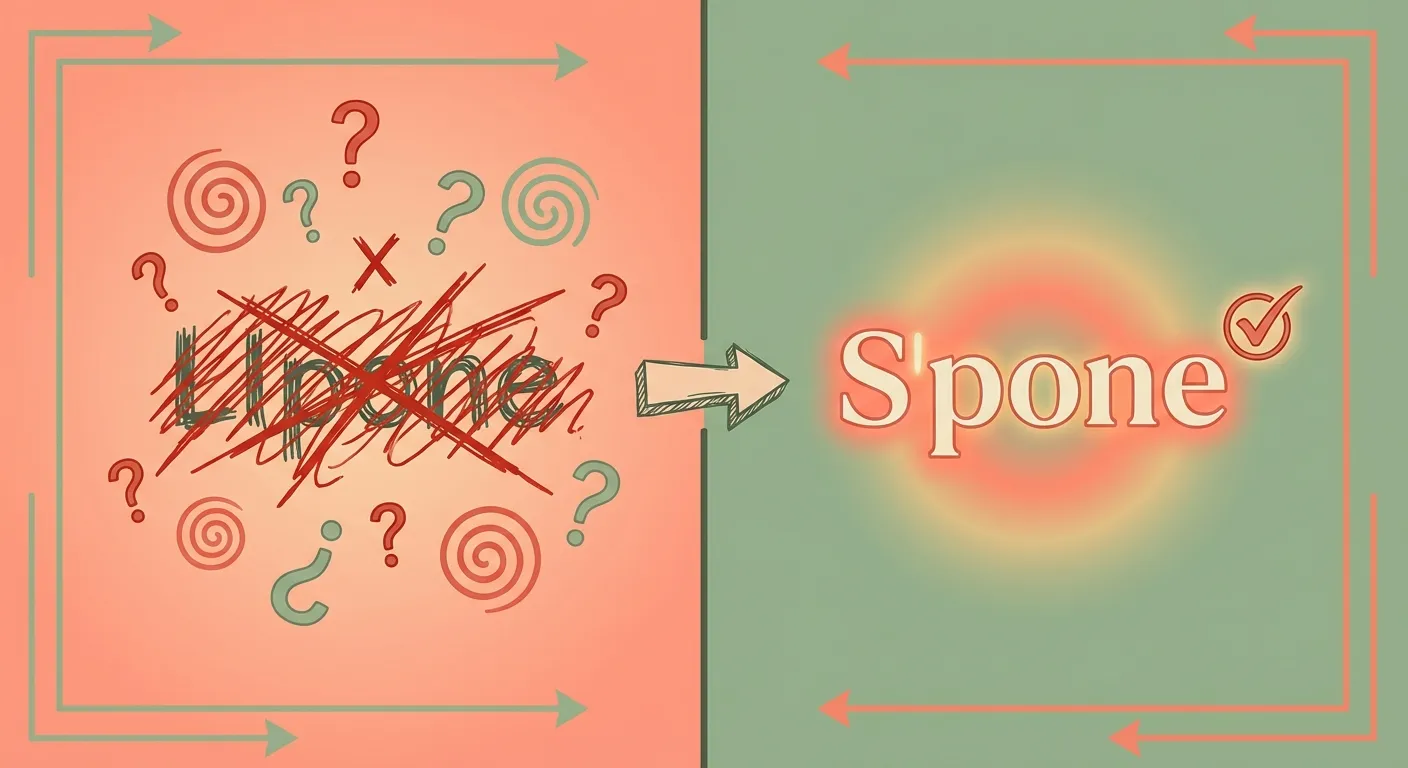
Two approaches, two very different outcomes in visual memory.
| Correct-After-Error | Prevent-Before-Writing |
|---|---|
| Child writes "necesary" | Child studies "necessary" first |
| Brain photographs the wrong spelling | Brain photographs only the right spelling |
| Teacher corrects it | Child confirms the mental image |
| Now TWO images compete forever | ONE clean image, no competition |
| Lifelong hesitation on that word | Instant, confident recall |
The correction doesn't erase the mistake. It just adds a second photograph. Now the brain has to choose between two every time that word comes up. That's not learning — that's installing permanent doubt.
The Visual Lock: Four Steps, Total Confidence
This is the actual technique. It takes about 60 seconds per word and it's borderline magical.
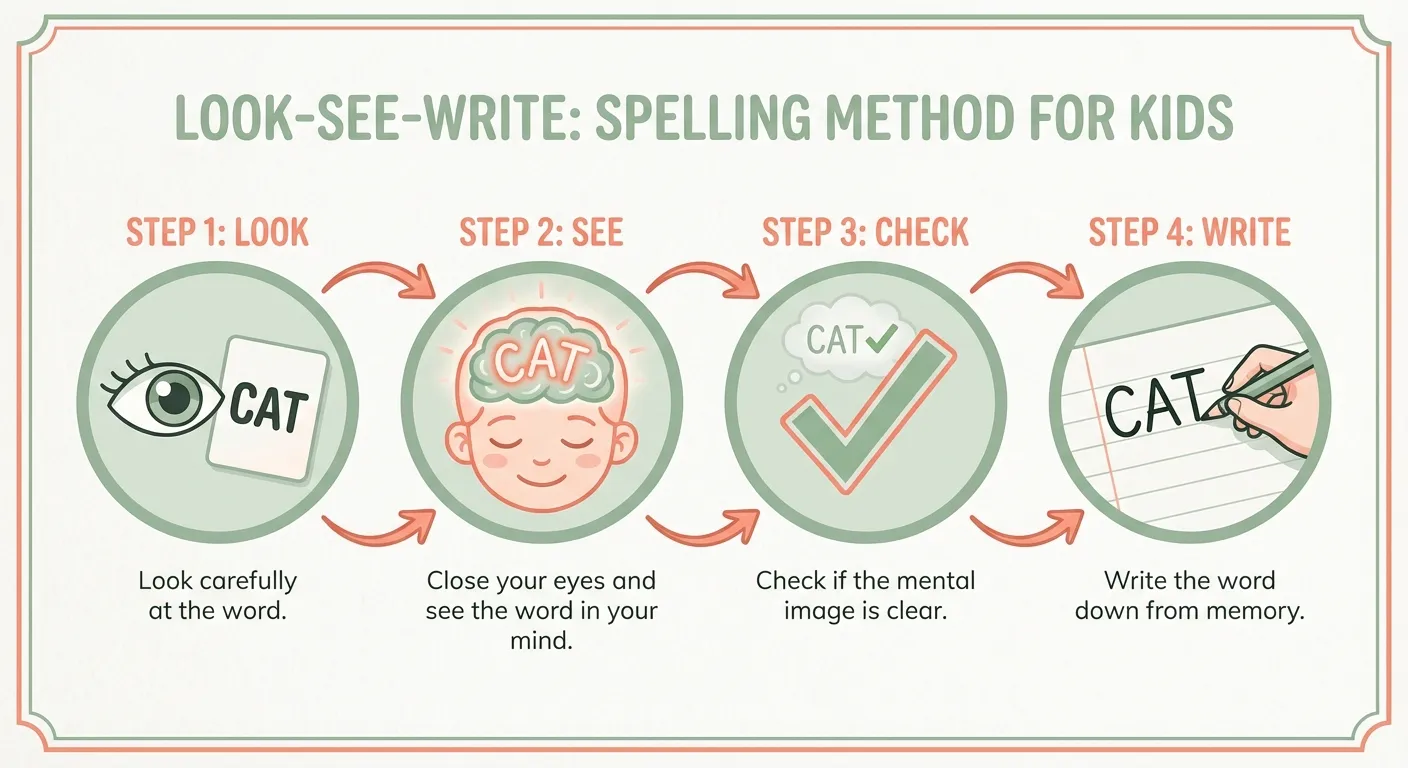
The visual lock: eyes closed, word crystal clear.
Scan and Flag
Before any writing happens, your child reads through the passage and flags every word they're not 100% sure about. No guessing allowed.
Photograph It
For each flagged word, run the visual lock:
Repeat until the mental image is sharp. They'll know when it clicks.
Confirm and Clear
Write the tricky words on a whiteboard. Let your child study them. Then erase them. They write from memory, not from copying. Copying trains the hand; this trains the brain.
Write From Clean Memory
Now dictation begins. Every word they write comes from a verified mental photograph. No guessing, no competing images, no doubt.
When a mistake slips through anyway
- Cover or erase it immediately — don't leave it visible
- Don't discuss the mistake — attention strengthens the wrong image
- Flash the correct spelling — let them photograph it again
- Move on fast — the less airtime the error gets, the weaker its trace
Why This Actually Works
Spelling is a visual skill, not an auditory one. Think about how you spell a tricky word right now — you don't sound it out. You see it. You picture the word in your mind and check if it "looks right."
That's exactly what this technique builds: a library of clean, high-resolution mental photographs. One image per word. No competitors. No static. Just instant, confident recall.
Kids who learn this way don't struggle with spelling. They don't need to. The right answer is the only image they have.
What This Looks Like Over Time
The best part? You can start tonight. Pick one word your kid always gets wrong. Run the visual lock. Watch them nail it. Then never go back to red-pen corrections again.